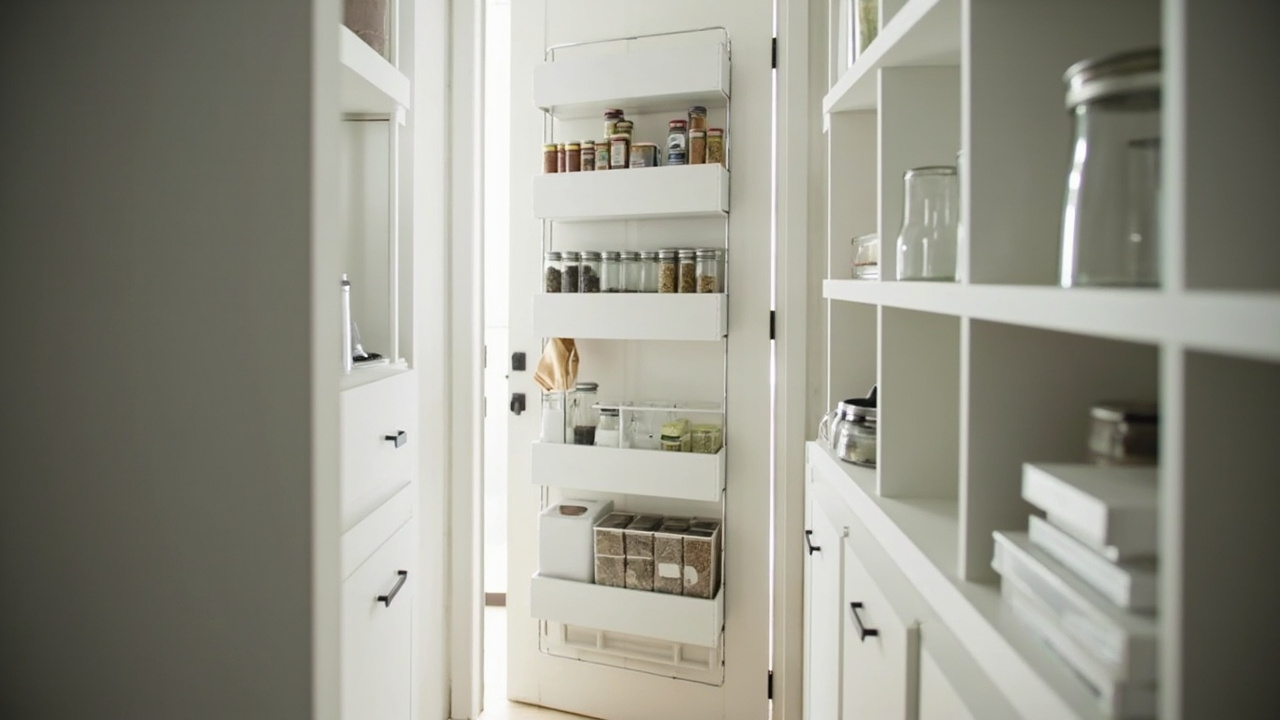
A small pantry usually fails at the edges: the door is too narrow for a standard rack, the back row disappears on a deep shelf, or an awkward corner swallows usable width. That isn’t a willpower problem. It’s a geometry problem, and the fix is to match a storage system to the inches you actually have.
Start with the pantry organization hub for the five-zone map. This guide goes deeper into small pantry organization: over-door, wall-mounted, pull-out, tiered, and no-pantry systems. Do the pre-organization declutter pass first, then measure before you buy.
Why Small Pantries Stay Messy
Small pantry ideas often begin with a container set. That skips the harder question: where can storage go without blocking a door, hiding food, or stealing walking clearance? A 12-inch reach-in needs a different answer from a shallow cabinet.
Measure shelf depth, vertical clearance, and full door width with its swing. For a corner, measure the straight run and angle separately. Renters should mark surfaces that can’t be drilled or taped. Choose a system first and containers second. In my own pantry projects, I’ve measured first and saved my share of return trips.
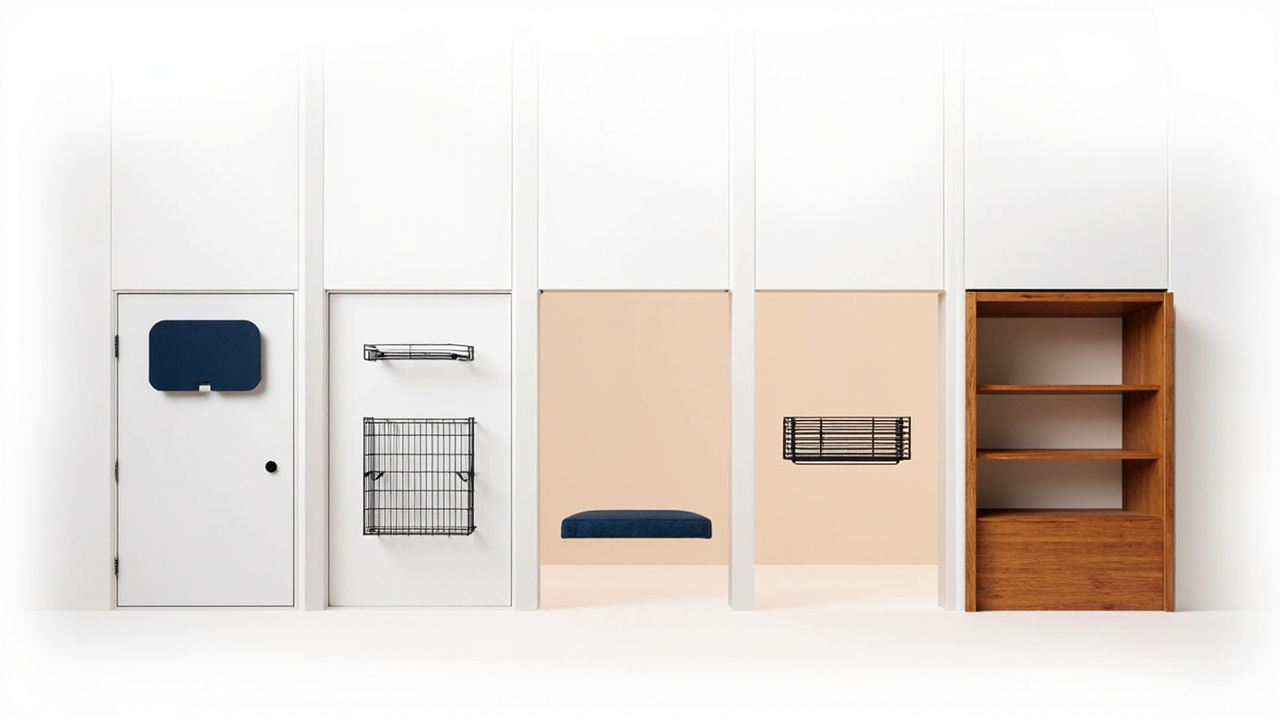
The Five Space-Saving Systems
Each system solves a different constraint:
- Over-door: uses door width when shelf depth is limited.
- Wall-mount or magnetic: uses a narrow side wall or metal appliance without taking floor space.
- Pull-out wire: turns a deep shelf into a drawer.
- Tiered shelf: uses height when the shelf footprint is already full.
- No-pantry alternative: creates a compact pantry from a cart, bookcase, cabinet, or wall gap.
The useful shift is simple: don’t ask which organizer looks best. Ask which surface is unused. The same small kitchen pantry can need two systems if it has a narrow door and a deep bottom shelf.
System 1: Over-Door Storage for Narrow Doors
An over-door rack works when the back of the door has clear width and the hooks don’t collide with the frame. The VyGrow 12.3-inch narrow pantry organizer is a good fit for a 24–30 inch door because its narrow body leaves more clearance than a full-width nine-tier rack. Put small jars and packets high, then reserve lower baskets for light boxes.
Before ordering, check the frame, hinges, and nearby wall with a tape measure or cardboard mock-up. A rack that prevents the door from closing isn’t storage; it’s a new obstruction. Keep glass jars off a swinging rack, and don’t overload the top baskets.
For the container layer after the hardware is chosen, use container selection by shelf depth. That sister guide focuses on bins, jars, and racks; this article focuses on the geometry that gives those containers a place to live.
System 2: Wall-Mount and Magnetic Storage
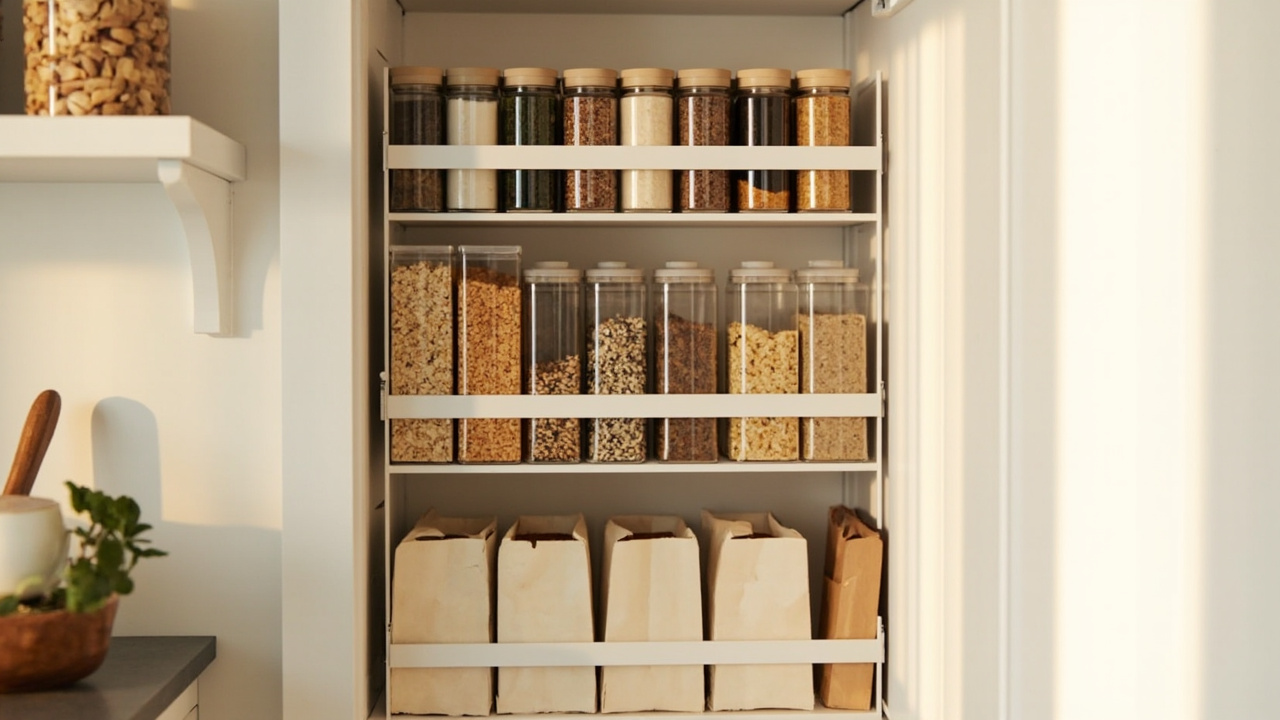
A refrigerator side, metal cabinet, or 4–6 inch wall gap can become vertical storage. The Sevenblue magnetic spice rack with hooks keeps spices and measuring tools off the shelf. It’s especially useful in a rental because the magnetic mount doesn’t claim floor space or require a hole.
Test the surface before you plan the whole system. A stainless-looking refrigerator may not hold a magnet if its outer panel is nonmagnetic. If the surface isn’t suitable, use the product’s compatible wall-plate option only where the material and anchor support it. The hooks and racks vertical-storage guide explains how to choose hardware for drywall, wood, metal, and tile.
Keep this zone light: spices, packets, and measuring spoons belong here; canned goods don’t.
System 3: Pull-Out Wire for Deep Shelves
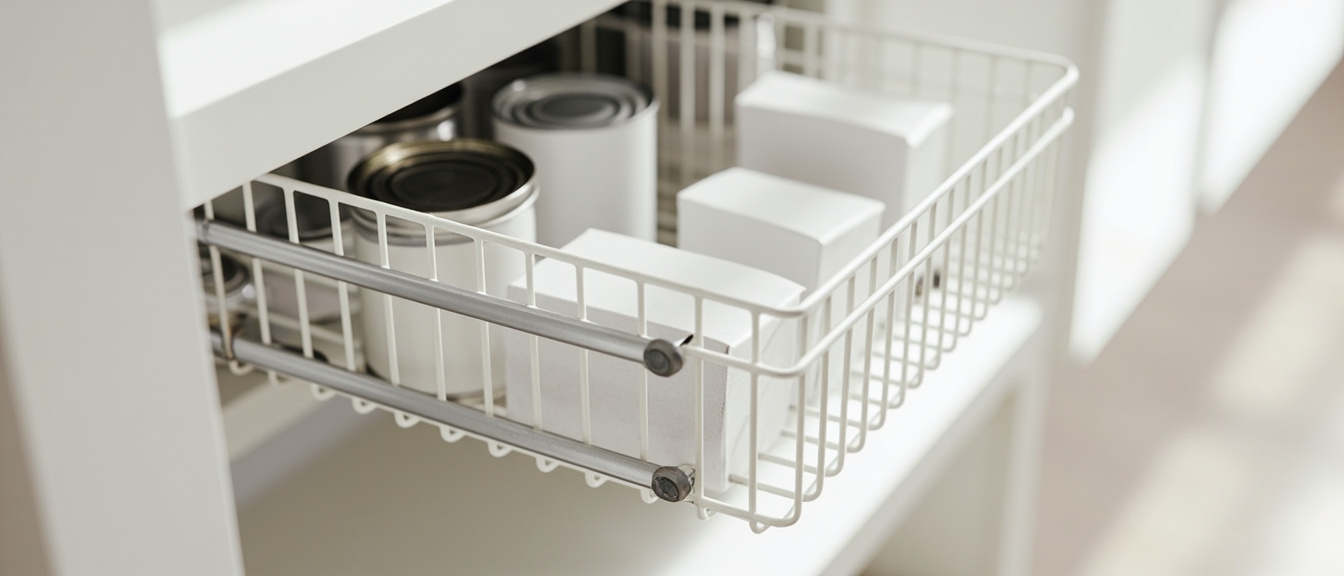
If your shelf is 8–12 inches deep, the back row is probably acting like a blind spot. A Simple Houseware pull-out cabinet basket slides forward so you can see cans, packets, and small boxes as one group. It’s a better geometry fix than stacking another opaque bin in front of the food.
Leave front clearance for the basket to extend without hitting the door. Group one category per basket, place heavier items low, and label the front edge. Don’t fill every inch just because the slide moves; an overstuffed basket still hides its contents.
For a full shelf-by-size method, link readers to pantry zone layout by size. The cross-collection guide handles the larger workflow; this pull-out system handles the narrow, deep shelf.
System 4: Shelf Risers and Can Stacks
Standard 12–16 inch shelves often have more height than the food needs. The X-cosrack expandable cabinet shelves split one broad shelf into visible levels. Measure the inside width before extending the riser, and leave a little room at each side so cans and boxes can be removed without scraping the frame.
For a can-heavy zone, the JKsmart stackable can rack gives cans guided rows. Use it low, load older cans toward the front, and check the shelf’s load limit. Pair it with a riser only when the remaining clearance fits the cans.
The kitchen pantry organization workflow is useful when you need to assign the new levels to food categories rather than simply stacking more food.
System 5: No-Pantry Alternatives
A kitchen without a built-in pantry still has storage geometry. Look for a shallow rolling cart beside the refrigerator, a narrow bookcase in a dead corner, an upper cabinet with a door rack, or a wall section that can safely carry a light shelf. Choose the option that leaves the walkway and appliance doors clear.
A narrow bookcase can act as an open pantry when each shelf gets one category and the lower shelf holds heavier cans. A cart is better for renters or anyone who wants to roll food into a closet at night. A cabinet conversion is quieter, but it has less depth. Don’t buy a freestanding unit until you mark the door swing.
Use the KonMari category-not-location principle: food categories stay together even when the pantry is split across a cart and cabinet. The small-space decluttering framework can help you decide what deserves the limited footprint. A no-pantry setup can be distributed; it just needs a clear map.
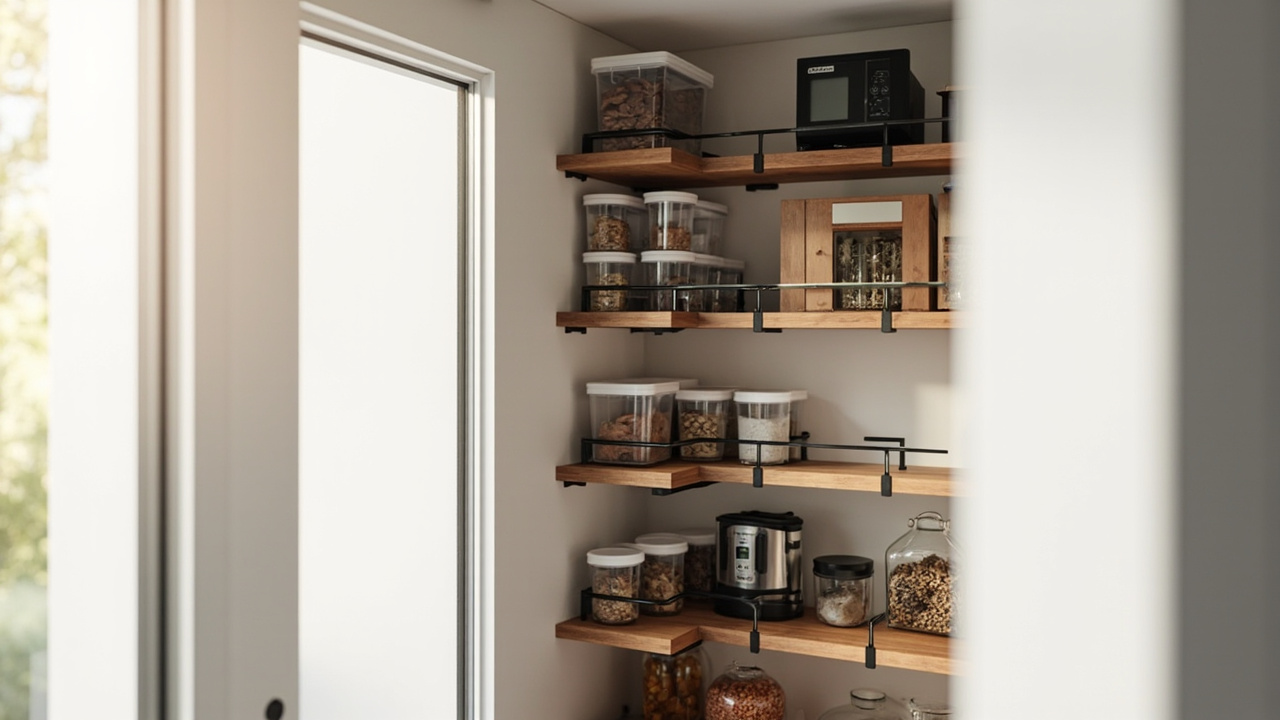
Layout by Small-Pantry Type
Choose by geometry, not by total square footage. Start with the closest match below, then adjust for door clearance and the items you actually store.
Narrow reach-in, 12–18 inches deep
Use the over-door rack for spices and packets, a pull-out basket for the back row, and a shelf riser for the middle shelf. Keep one category per visible level. If the door is narrower than the rack body, skip the door system rather than forcing it.
Awkward corner pantry
Put light items on a magnetic side-wall rack and use a riser on the straight shelf run. A corner isn’t a reason to fill the angled back with loose rows; access matters more than capacity.
Shallow cabinet, 10 inches deep or less
Use the door or cabinet side first. A magnetic rack can hold spices, while a short shelf riser uses the height. Measure hinge clearance before considering a pull-out.
Under-stairs pantry
The ceiling changes height, so use the low end for short cans and the tall end for a riser or upright boxes. Keep heavy food near the floor and don’t install an over-door system without a full-height door.
No-pantry open kitchen
Choose one shallow cart or bookcase as the category anchor, then add a magnetic rack only if it doesn’t narrow the walkway. Keep the visual line calm with matching labels, but don’t buy containers until the footprint works.
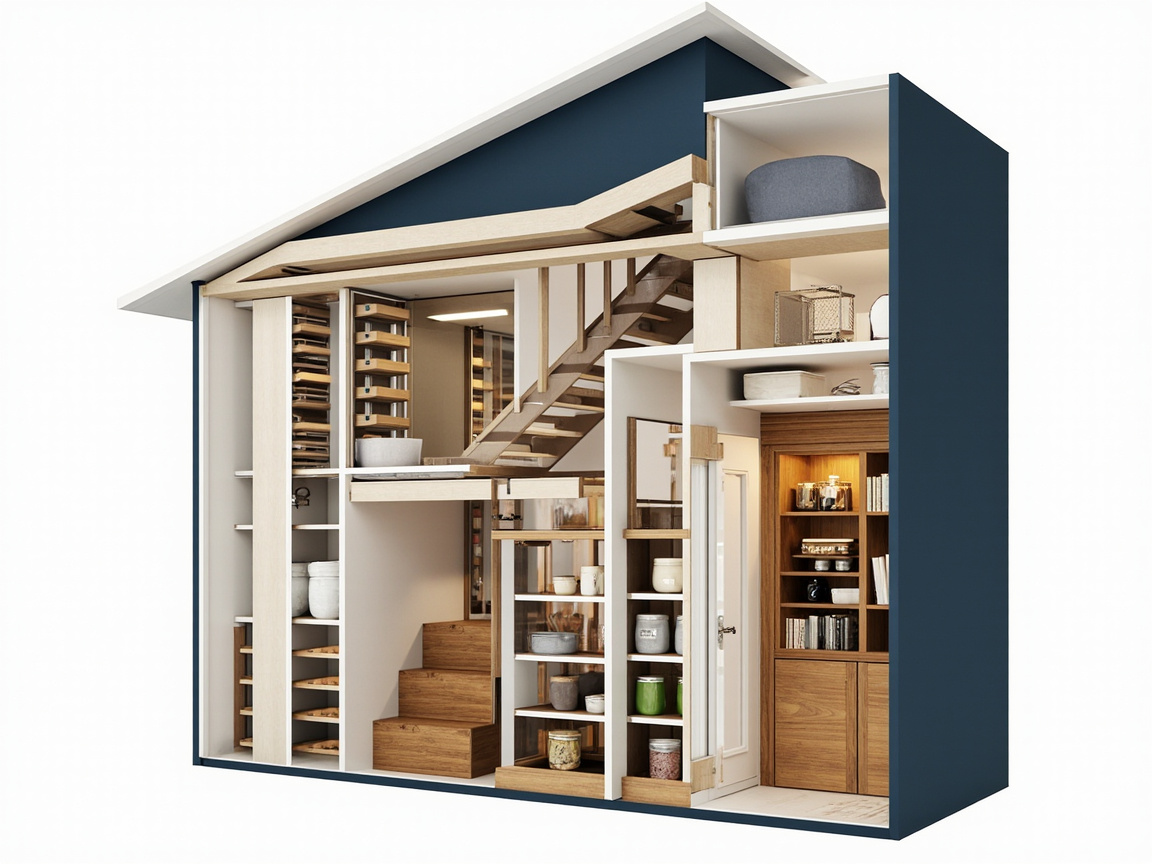
Constraint Guide
Pick the branch that matches your actual limitation. You can reuse one product in more than one branch because the constraint, not the product count, changes.
If you rent and can’t drill
Start with the VyGrow over-door organizer and add the Sevenblue magnetic rack if the refrigerator or cabinet is magnetic. Both use unused surfaces. Don’t use adhesive on a dusty, textured wall.
If your cabinet is shallow
Measure the cabinet with the door closed, then use the Sevenblue magnetic rack on a suitable side and the X-cosrack shelf riser inside. Skip a pull-out if its extension would hit the hinges.
If your pantry has no door
Use the X-cosrack riser for height and the JKsmart can rack for a low, visible can zone. A shallow cart or bookcase can hold the rest, but don’t let open storage shrink the walking path.
If the corner is angled
Put light, often-used items on the Sevenblue magnetic rack, then use the X-cosrack shelf riser only on the straight run. The wall-mount and over-door hardware guide has more material-specific choices.
If your starter budget is under $50
Start with the Sevenblue magnetic rack at $13.99 and the Simple Houseware pull-out basket at $25.87. The $39.86 pair fixes both a lost side surface and a hidden back row. Add a door rack or riser only after those two measurements prove you need one.
Common Mistakes
Buying containers before measuring
A bin can be attractive and still be too deep, too tall, or impossible to pull past the door. Measure first, then compare the organizer’s outside dimensions with the clear opening. It’s cheaper to spend five minutes with a tape measure than to rebuild a full shelf.
Loading a door rack with glass
A swinging door creates movement. Keep glass jars on a stable shelf and use plastic or metal containers on the door. Leave enough clearance for the rack to move without scraping the frame.
Ignoring the mounting surface
Magnetic storage needs a magnetic surface. Adhesive needs a smooth, clean surface. Screw-mounted hardware needs the right anchor. If you can’t verify the material, choose a freestanding or over-door system instead.
Treating a deep shelf as one row
One row wastes depth and invites forgotten food. The pull-out basket is built for this geometry, while a riser solves height. Don’t combine both until you’ve checked the remaining clearance and load.
Maintenance: The Ten-Minute Monthly Reset
A small pantry stays useful when the system is checked, not when it looks perfect on day one. Once a month, sweep each shelf, check the rack hooks and magnetic mounts, and return stray food to its category. Rotate older cans forward. Remove one item per zone that hasn’t moved in 60 days. I run mine on the first Saturday of every month, paired with my weekly trash reminder.
Use the declutter-fast triage pattern for the reset: keep what you use, relocate what belongs elsewhere, and let go of duplicates. If a label peels, replace it before the category spreads. You’ll catch a loose mount or blocked door early.
Quick Picks by Household and Rental Setup
For one or two people, start with the over-door and magnetic racks; they add access without consuming another shelf. For cans, use the pull-out basket on one shelf and the can rack below. If height is the problem, use the shelf riser before buying more containers.
Renters can begin with the magnetic and over-door systems, then add a cart if the walking path stays clear. Owners have more mounting choices, but a permanent installation still needs a measured fit. The shelf organizer buying guide compares risers, racks, and fixed shelves.
Related Guides
For the broader pantry map, read the pantry hub and the pantry landing page. For container depth, see pantry storage solutions. Continue with the kitchen pantry workflow, pantry organization method, or pantry checklist. For small-space thinking, read the KonMari method and small-space decluttering guide. The hooks and racks guide covers mounting surfaces.