
Most hooks and racks buying guides lead with product picks. This one starts with measurement. The most common reason people return hooks: they buy adhesive hooks for items heavier than the weight rating, or they screw hooks into drywall without anchors. Spend 10 minutes measuring wall material + door thickness + stud spacing, and the rest of the decision falls into place.
The right hook system triples your hanging capacity without taking a single inch of floor space. Most entryways, bathrooms, and closets lose 30 to 50% of usable vertical space because nobody’s mounted hooks yet.
This guide walks through the 5 factors that actually matter — Weight Capacity, Install Method, Material, Hook Style, Durability — then matches each one to room-specific picks.
Measure First: Wall, Door, and Weight

Before browsing Amazon, write down four numbers for each installation point:
- Wall material (drywall, plaster, concrete, tile) — determines anchor type
- Stud spacing (typically 16 inches on center in US homes)
- Door thickness (standard 1.375 inch interior, 1.75 inch exterior)
- Weight you’ll hang (light = keys, medium = coat, heavy = bike)
Now apply three rules:
- Match hook weight rating to your heaviest item, with 25% safety margin. A hook rated 5 lbs should not hold items over 4 lbs.
- Use anchors on drywall for screw-mounted hooks. Plastic handles 10 to 25 lbs, metal handles 25 to 50 lbs, toggle bolts handle 50+ lbs.
- Verify door clearance for over-the-door hooks. The hook adds 1.5 to 2 inches of depth; doors must still close freely.
For pantry door hook setups, see our kitchen pantry guide. For closet rod + hook combinations, our wire-cube-vs-wood-closet-system guide (in progress) covers the closet infrastructure. Pre-declutter before measuring — you may need fewer hooks than you think. The KonMari method guide covers deciding what sparks joy; decluttering before organizing covers rapid triage.
Types of Hooks and Racks
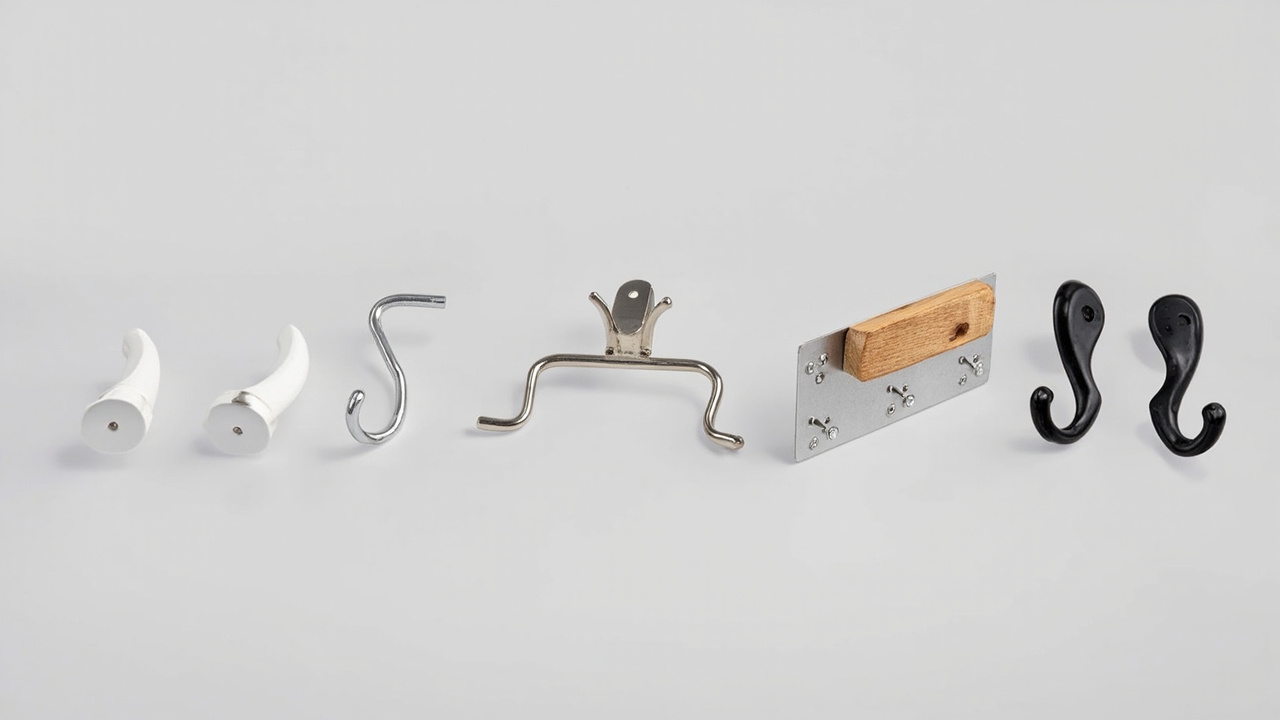
Five categories cover roughly 95% of what’s sold on Amazon. Each fits a different installation scenario.
Adhesive Hooks (Damage-Free)
Command-style hooks that stick to surfaces with adhesive strips, remove without residue. The Command Large Utility Hooks hold up to 5 lbs per hook on smooth surfaces — best for renters, temporary setups, and any smooth surface (glass, tile, painted drywall).
For lightweight items like keys, small tools, jewelry, and lanyards, the Command Small Wire Toggle Hooks 16-pack covers 16 hook points for under $17. Drawbacks: limited weight capacity (1 to 7.5 lbs typical), loses grip in humid environments.
Over-the-Door Hooks
Hooks that hang over the top of a door, no installation required. The Optish 6-hook over-the-door rack fits standard 1.4 to 1.8 inch doors — best for bathroom towels, bedroom robes, dorm rooms.
For multi-door setups, the FYY 4-pack includes rubber bumpers that protect door frames from scratches. Drawbacks: door-swing interference, limited weight per hook (5 to 15 lbs typical).
Wall-Mounted Hooks (Screw or Anchor)
Single or multi-hook plates that screw into wall studs or use anchors. The Optish Wood Coat Rack mounts on entryway walls and doubles as a hat rack. For bathroom and bedroom walls, the VAEHOLD 5-hook black metal rack at $15 handles robes, towels, and bags. Drawbacks: requires drill + level + anchors, permanent installation.
Pegboard Systems
Wall-mounted perforated hardboard with movable hooks, bins, and accessories. The Wall Control metal pegboard pack is stronger than MDF and accepts all standard 1/4 inch hooks — best for garage, workshop, craft room, and kitchen utensil walls. Drawbacks: requires stud mounting for heavy loads, aesthetic is utilitarian.
Heavy-Duty Utility Hooks
Reinforced steel hooks with anti-slip coating, typically 4 to 6 inches long. The KOFANI 16-pack heavy-duty hooks hold up to 50 lbs per hook when screwed into studs — best for garage, shed, basement: bikes, ladders, tools, extension cords. Drawbacks: industrial aesthetic, requires stud mounting.
How to Choose: 5 Key Factors
We evaluate every hooks-and-racks purchase using 5 factors. Skip any one and you’ll likely regret it within a year.
Factor 1: Weight Capacity
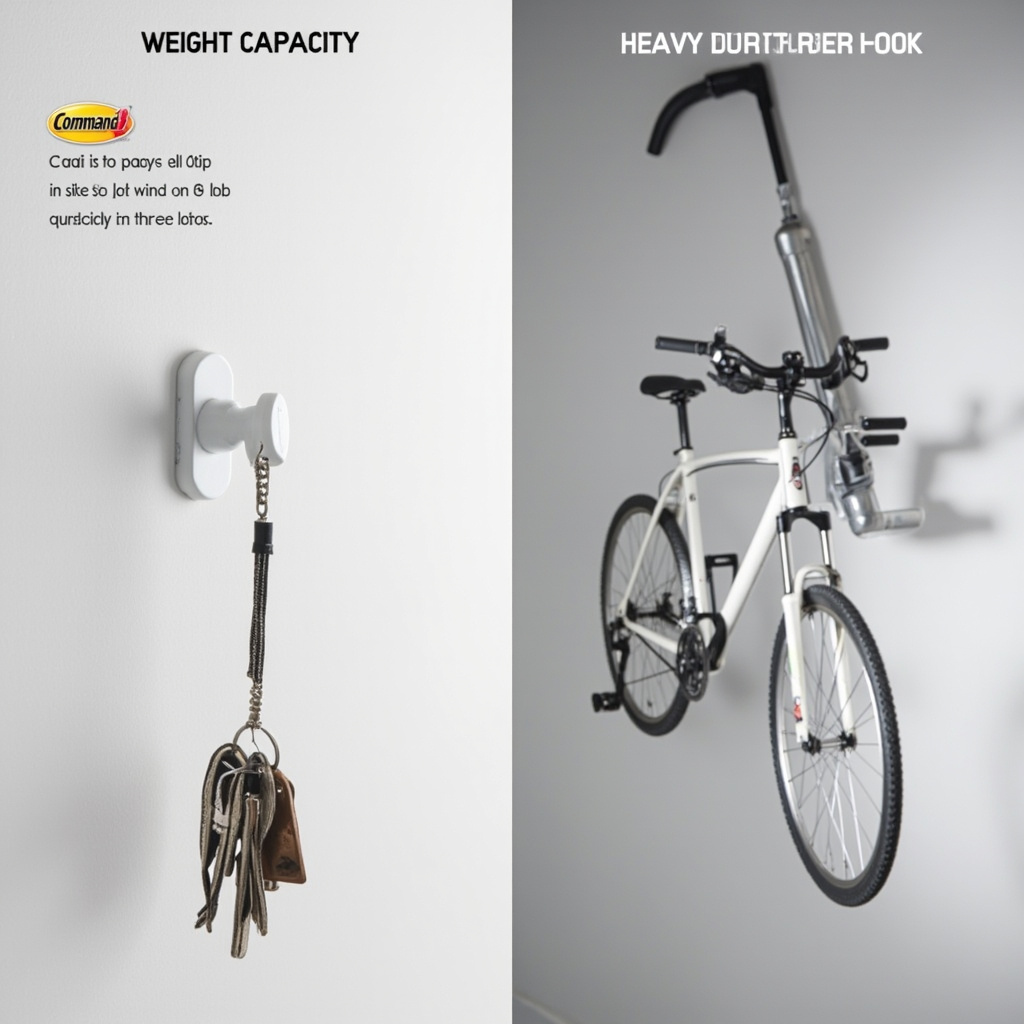
Weight rating is the #1 spec to check. Hooks typically rate from 1 lb (small Command hooks) to 100 lbs (heavy-duty garage hooks). Match to your heaviest item plus 25% safety margin. For a coat + bag + scarf on one hook, choose 15+ lb rating.
Command hook ratings by size: small wire 0.5 lb, medium 2 to 3 lbs, large utility 5 lbs, XL 7.5 lbs. On textured or porous surfaces, real capacity drops 50 to 75%.
Factor 2: Install Method (Damage-Free vs Permanent)
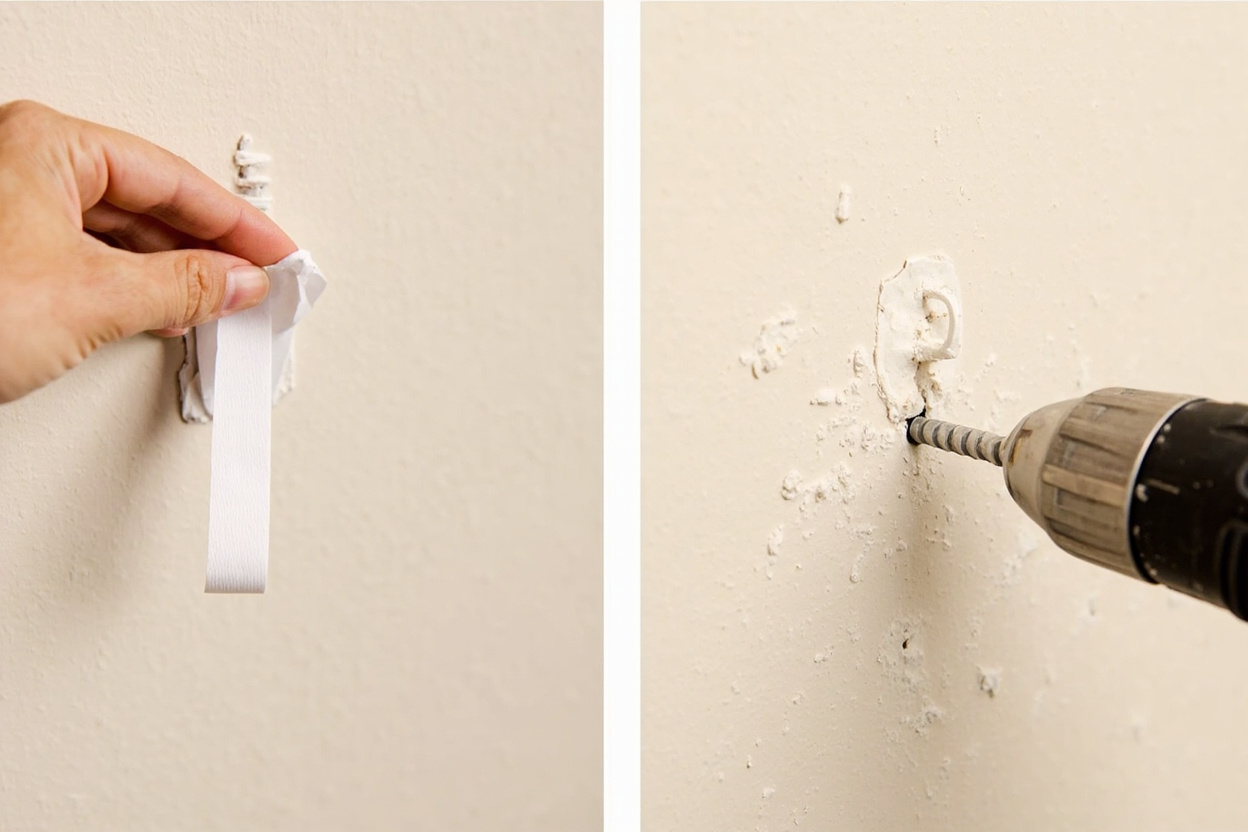
Damage-free (Command adhesive, over-the-door) is essential for renters. Permanent (screw-mounted, anchored) is essential for heavy items.
The most common renter mistake: hanging a 5 lb coat on a Command hook rated for 1 lb. The adhesive fails within hours, the item crashes, and the paint peels — leaving a mark worse than a drilled hole would have left.
Factor 3: Material
Material affects durability, aesthetic, and corrosion resistance. Stainless steel wins for bathroom moisture. Powder-coated steel wins for garage and entryway. Plastic + adhesive works for low-weight temporary. Brass or bronze wins for decorative entryways.
The same material principles apply to other vertical storage: our shelf organizer buying guide covers material overlap with hooks, and our storage bin buying guide covers the full vertical organization system.
Factor 4: Hook Style (Single vs Multi vs Adjustable)
Single hooks suit one heavy item. Multi-hook racks (5 to 8 hooks) suit entryway families — the Optish 6-hook wood rack holds a family’s worth of coats and bags. Pegboard hooks are adjustable — reposition as needs change. Over-the-door racks come in 4 to 12 hook configurations.
Factor 5: Durability and Build Quality
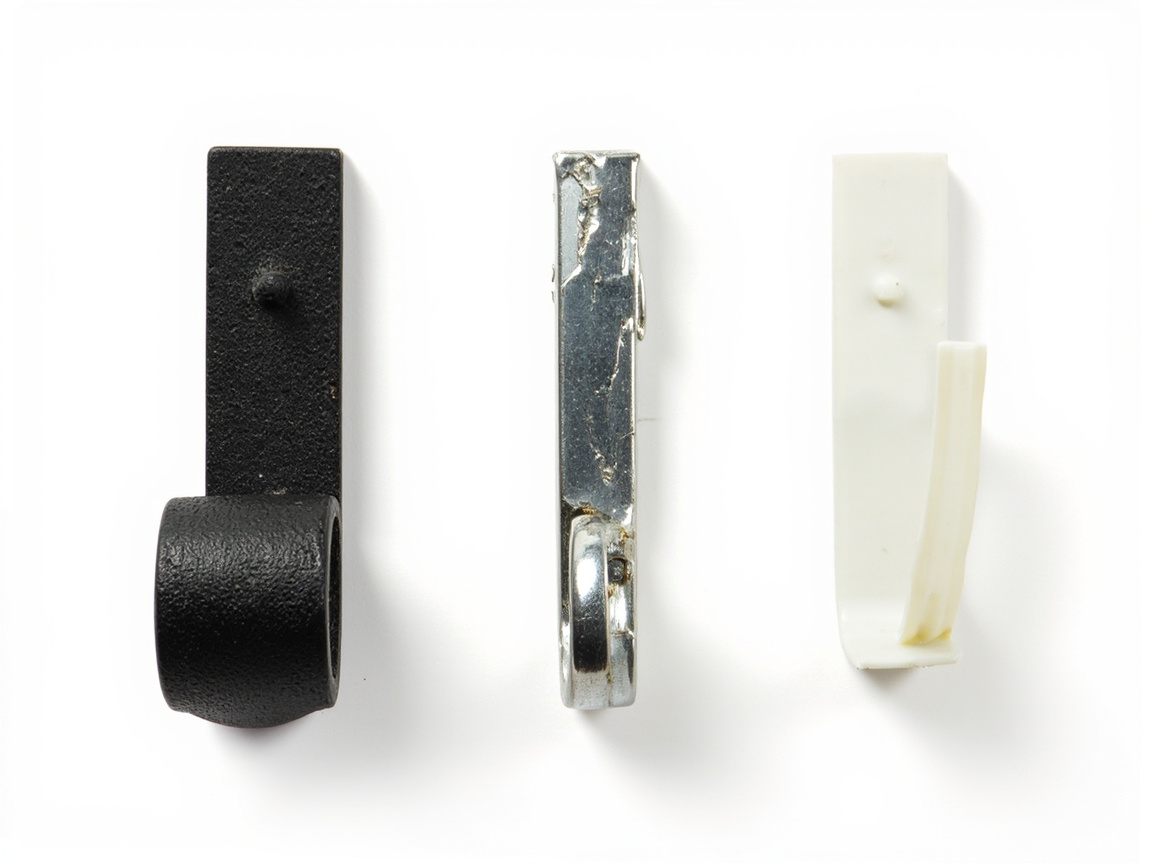
For metal hooks: thickness (12-gauge steel beats 16-gauge), weld quality (smooth beats rough), coating (powder-coat beats paint beats bare). The KOFANI 16-pack uses thick steel with anti-slip coating — built for garage weight cycles over years.
For adhesive: Command dominates, generic brands fail in humidity within days. For pegboard: metal beats MDF beats hardboard — MDF sags under tool weight, hardboard splinters at the hook holes.
Room-by-Room Recommendations
Entryway and Mudroom

Wall-mounted coat racks with 5 to 8 hooks (wood or metal). For families: choose multi-hook racks with lower hook heights for kids. Pair with small Command wire hooks at door height for keys. See our small kitchen organization guide for related small-space logic.
Bathroom
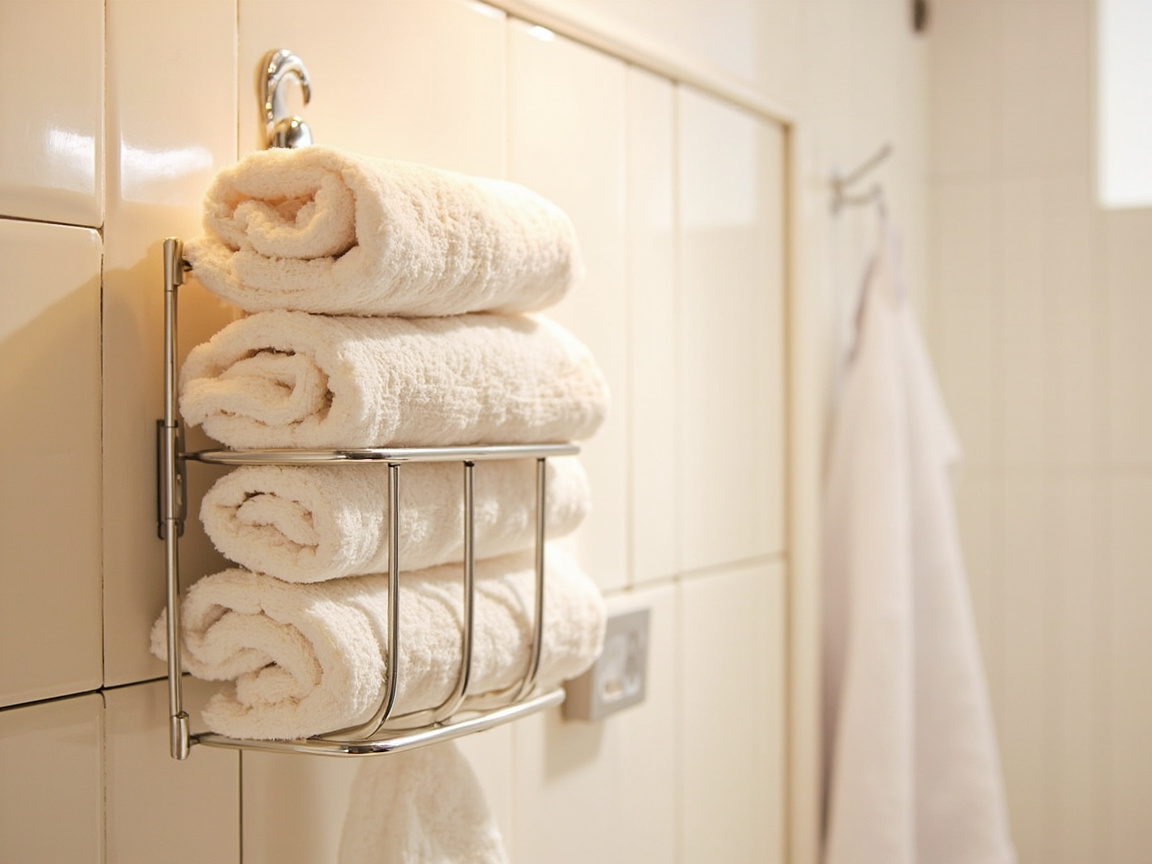
Over-the-door hooks for towels and robes. Adhesive hooks for lightweight items (loofahs, washcloths). For shared bathrooms, multi-hook over-the-door racks handle 4+ towels.
Skip wood or decorative brass in bathrooms — humidity corrodes them within 6 to 12 months. Stainless steel or powder-coated metal is the right call.
Kitchen and Pantry
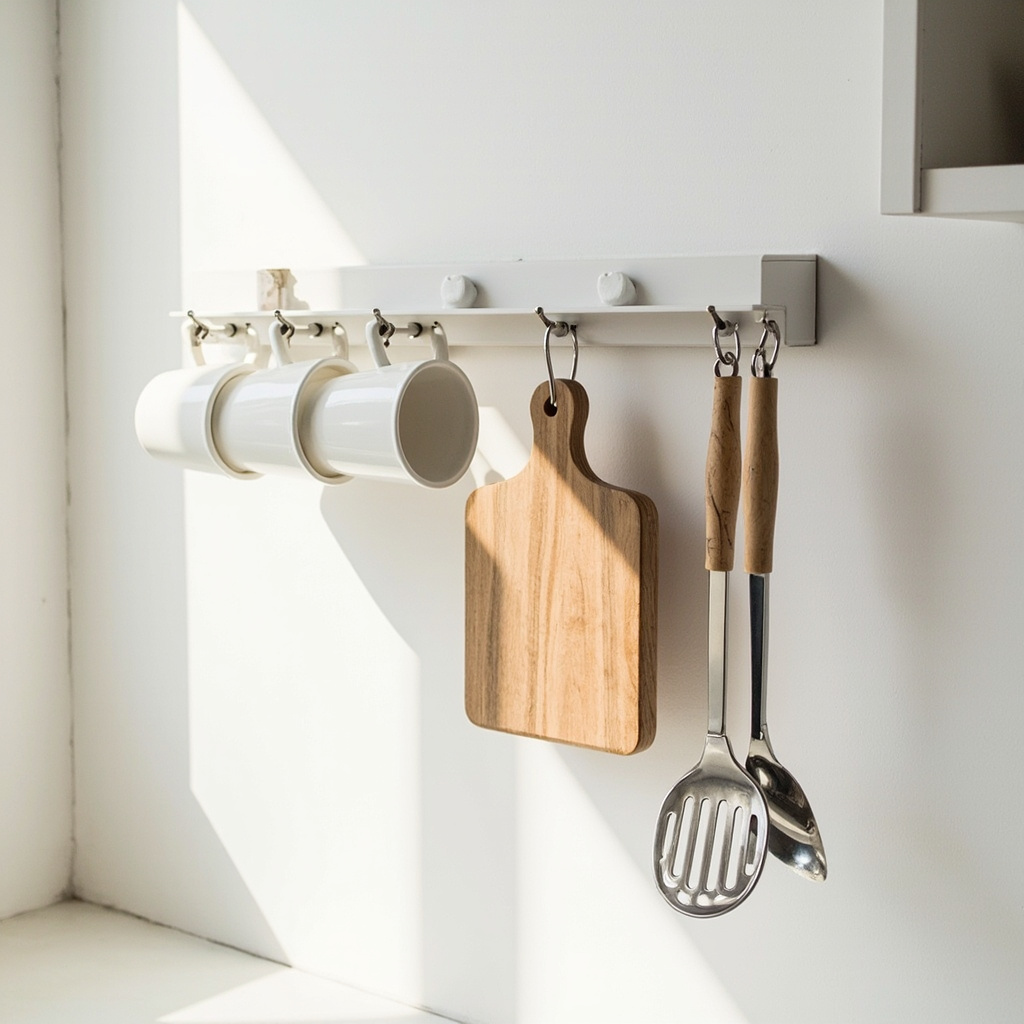
Over-the-door pantry hooks for pot holders, dish towels. Wall-mounted rails (IKEA SKÅDIS / FINTORP) for utensils, mugs, small cutting boards. For pantry door hooks, see our kitchen pantry guide and our spice organization guide for spice rack wall hooks.
Closet and Bedroom
Wall-mounted hooks for bags, hats, robes. Over-the-door hooks for guest-room items. Pegboard inside closet doors for jewelry, scarves, accessories. Closet context: our wire-cube-vs-wood-closet-system guide (in progress) covers the closet infrastructure. that hooks hang from.
For hook-zone labels and pegboard tool markers, our labeling-system guide (in progress) covers the full labeling workflow. For the sister drawer system that complements a hook-based closet, our drawer organizer buying guide covers the drawer side of the same organized-closet goal.
Garage and Workshop
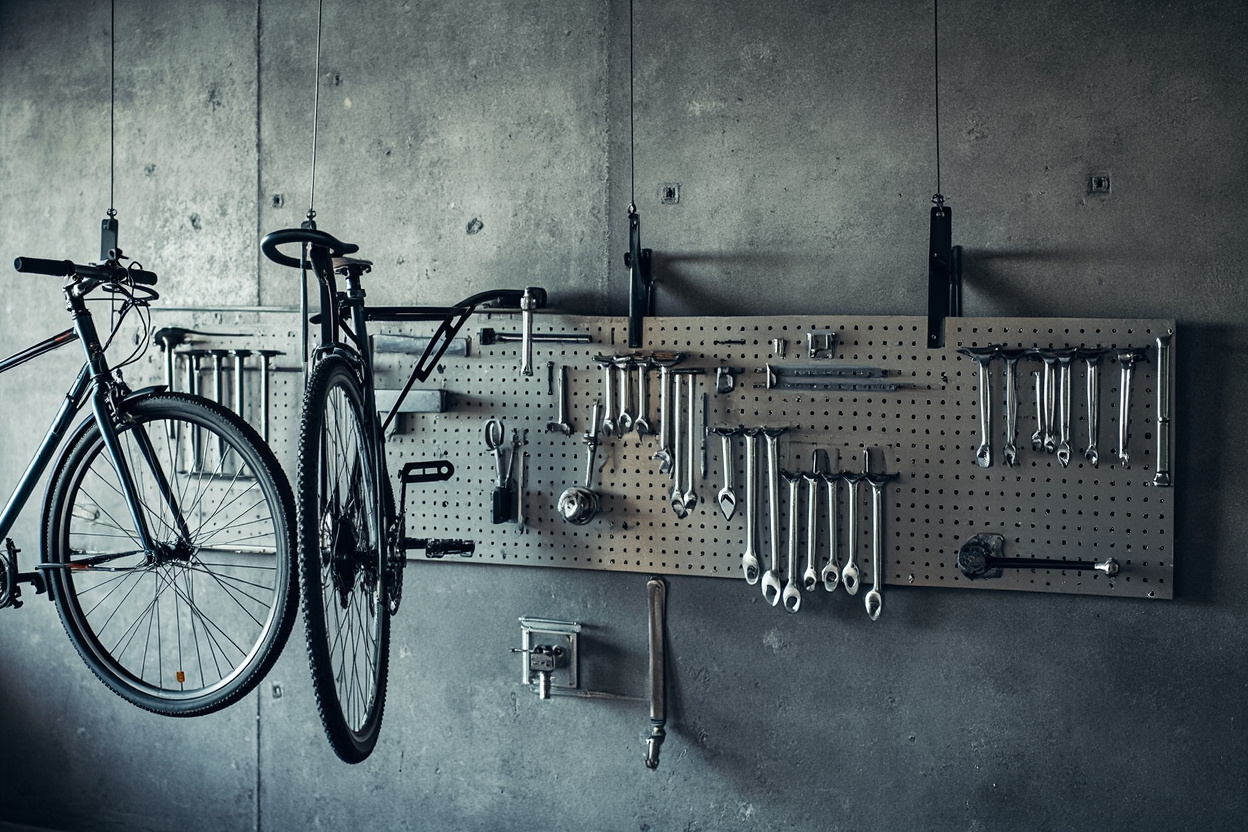
Heavy-duty utility hooks for bikes, ladders, extension cords. The KOFANI 16-pack holds up to 50 lbs per hook when screwed into studs.
The Wall Control metal pegboard organizes tools by category. Adhesive hooks fail in garage temperature swings — always use screw-mounted in garage.
Common Mistakes to Avoid
Five mistakes show up consistently across Reddit home improvement threads, Amazon 1-star reviews, and contractor forums:
- Buying hooks without checking wall material — Reddit r/HomeImprovement plus owner reviews on heavy-duty utility hook sets cite “didn’t include anchors” and “anchors not strong enough” as the top complaint. A hook rated for wood studs in drywall without anchors pulls out within weeks.
- Using adhesive hooks beyond weight rating — owner reviews on popular adhesive hook brands cite “paint peeled when removing” and “hook fell after 2 days.” Hang a 5 lb coat on a hook rated for 1 lb and the adhesive fails within hours.
- Overloading over-the-door hooks — Reddit r/Homeorganization plus owner reviews cite door frame stress cracks after 6 to 12 months. A single hook rated 5 lbs cannot hold a 15 lb coat + backpack combo.
- Installing pegboard without studs — owner reviews on pegboard kits cite “sagging under weight” and “pulled out of wall.” Mount 4’ x 2’ pegboard with drywall anchors only and 30 lbs of tools pulls the anchors out within months.
- Choosing decorative brass or bronze hooks for wet areas — owner reviews on decorative brass hook sets cite “rusted in bathroom” and “stained wall.” Use stainless steel or powder-coated instead.
Constraint Guide: Pick by Situation
Six if-then branches to pick the right hook system in under 60 seconds:
- If you rent and cannot drill holes → use Command adhesive hooks (light items) or over-the-door hooks (medium items); avoid screw-mounted wall hooks.
- If you hang bikes, ladders, or tools over 15 lbs per item → use heavy-duty utility hooks (KOFANI 16-pack) screwed directly into wall studs; avoid adhesive or hollow drywall anchors.
- If your wall is concrete, brick, or cinder block → use masonry anchors (plastic or lead expansion) with stainless steel hooks; avoid drywall screws and plastic drywall anchors.
- If your bathroom has ceramic or porcelain tile walls → use Command hooks rated for tile surfaces OR over-the-door hooks for towels; avoid drilling tile without a diamond bit.
- If you want to reconfigure your hook layout as needs change → use a pegboard system (IKEA SKÅDIS, Wall Control metal pegboard) with movable hooks; avoid fixed-position screw hooks.
- If your entryway sees daily use by family members → use a wall-mounted multi-hook coat rack (5 to 8 hooks) + small Command hooks for keys; avoid single hooks scattered on the wall.
Recommended Options
Eight products spanning all 5 Key Factors.
For entryway and mudroom, the Optish Wood Coat Rack at $20 covers 16.5 inches of wall — best for family coats and bags.
For bathroom and bedroom at value pricing, the VAEHOLD 5-hook black metal wall rack at $15 handles robes, towels, and bags.
For rental damage-free installation, the Command Large Utility Hooks at $13 hold up to 5 lbs per hook.
For lightweight items in bulk, the Command Small Wire Toggle Hooks 16-pack at $17 gives you 16 hooks at 0.5 lb each.
For garage heavy-duty use, the KOFANI 16-pack Steel Garage Hooks at $25 hold up to 50 lbs per hook in studs.
For bathroom and dorm over-the-door use, the Optish 6-hook over-the-door rack at $14 fits standard 1.4 to 1.8 inch doors.
For multi-door setups with rubber protection, the FYY 4-pack at $17 includes rubber bumpers that prevent door frame scratches.
For reorganizable workshop and craft storage, the Wall Control Metal Pegboard Pack at $50 is stronger than MDF and accepts all standard 1/4 inch hooks.
Closing Notes
Hooks and racks selection comes down to measurement first — wall material, door thickness, weight rating — then matching 5 factors to the room and the items.
For the broader vertical organization system, see our shelf organizer buying guide and drawer organizer buying guide — hooks + shelves + drawers together cover the full vertical space. For the closet infrastructure that hooks hang from, our wire-cube-vs-wood guide (in progress) covers the rod + cube setup decisions. For hook-zone labels and pegboard tool markers, our labeling-system guide (in progress) covers the full labeling workflow.
For room-specific hook context — kitchen pantry, small kitchen, bathroom, bedroom, closet — follow the room hubs linked throughout this guide.