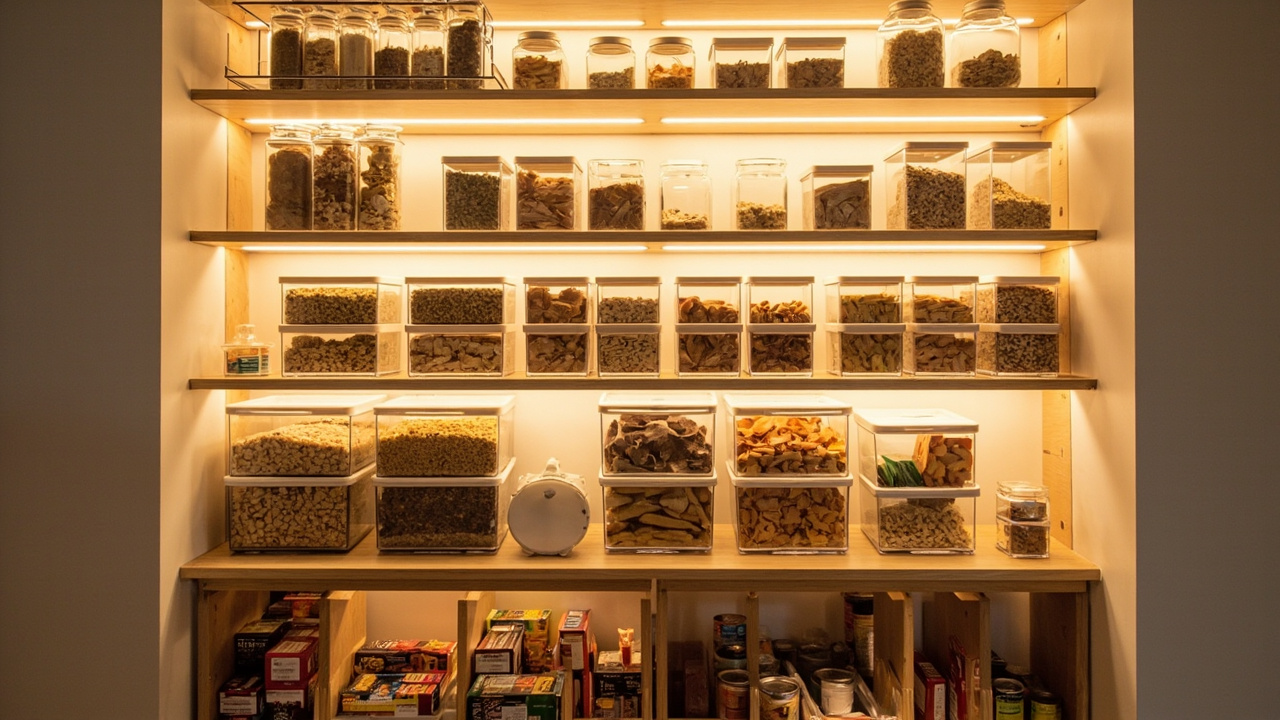
Pantry organization is the practice of arranging food + supplies by category zone (Baking / Cans / Snacks / Breakfast / Spices), then mapping containers to your actual pantry size (reach-in / walk-in / cabinet / no-pantry). A clear zone map makes duplicates easier to spot and keeps cans from disappearing behind newer stock.
This hub is the anchor for the pantry collection. You’ll find the full 5-zone system, layout by size, the no-pantry constraint guide, and a 4-tier maintenance rhythm. For a deeper zone-by-zone walkthrough, see the kitchen pantry organization sister guide. For the broader kitchen system that this pantry sits inside, start at the kitchen organization hub.
Why Pantry Organization Matters
Three problems stack against any pantry that lacks a system:
Expired food hiding in the back. Deep shelves hide old cans and flour until they expire. The fix is FIFO rotation: the oldest can comes out first, so the new cans behind it never get forgotten. Without it, food can sit untouched until it is past its best-by date.
Buying duplicates of what you already own. If you cannot see it, you rebuy it. A 5-zone layout with one category per shelf stops the grocery double-tap. The declutter-fast 4-quadrant system covers the broader pattern, and the KonMari method teaches the category-by-category thinking that makes zone organization stick.
Kids snack chaos every afternoon. A labeled snack zone at kid height keeps the rest of the pantry from exploding daily. Without one zone dedicated to kid-reachable bins, snack wrappers migrate to every shelf and the daily “where’s the granola bar?” hunt starts again.
A pantry without a system also creates daily friction: “where is the cumin?” and “are we out of oats?” A 5-zone system gives those items a fixed home, so the scan is faster and duplicates are easier to spot.
The 5 Pantry Zones
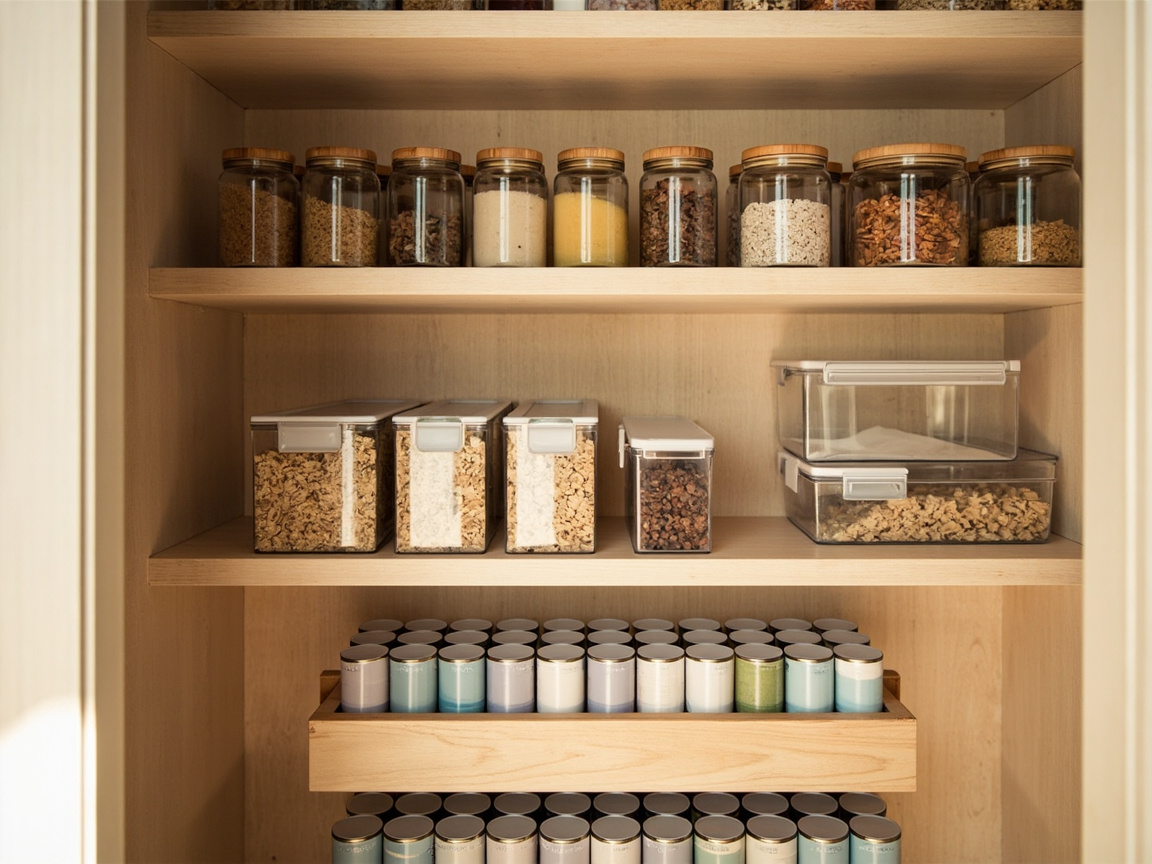
The 5-zone system is the structural anchor of every organized pantry. Each zone gets one shelf height, one container type, and one label set. The map is the same whether you have a 24-inch cabinet, a 5-foot reach-in, or an 8-foot walk-in. What changes is how much of each zone you can fit.
The order matters: zones are stacked from heavy-and-frequent (Zone 2 Cans, bottom) to light-and-occasional (Zone 5 Spices, top). Putting heavy cans on a high shelf is a back injury waiting to happen; putting fragile glass spice jars on the bottom guarantees broken jars. The system draws from the zone cleaning method and the 5S Method for Home but applies to dry-goods storage specifically.
For deeper product-comparison context (clear vs opaque, plastic vs fabric, stackable vs single-tier), see the storage bins decision guide.
Zone 1: Baking & Dry Goods
Shelf rule: Middle shelf, eye level. Keep frequently used baking staples within easy reach. This zone is the workhorse — flour, sugar, brown sugar, oats, cornstarch, baking soda, baking powder, vanilla extract, and any dry mixes.
Container type: Airtight rectangular containers. The original paper bag lets in moisture and weevils; the right plastic or glass container can protect dry goods better than an open bag. A 24-piece set like the Vtopmart airtight container set ($29.98) covers flour through spice sizes in one uniform set. Uniform sizes are a hidden win — the eye reads a wall of matching rectangles as “calm,” and you can rearrange the row without gaps.
Label rule: Minimalist black-on-white label on the front of every container. The VITEVER 308 pantry labels ($9.98) include 308 preprinted labels in 3 sizes, enough to label the containers in this five-zone setup, with spares for replacements. Skip the chalkboard-style labels here; the chalk smudges against flour dust and the writing fades.
Zone 2: Canned Goods
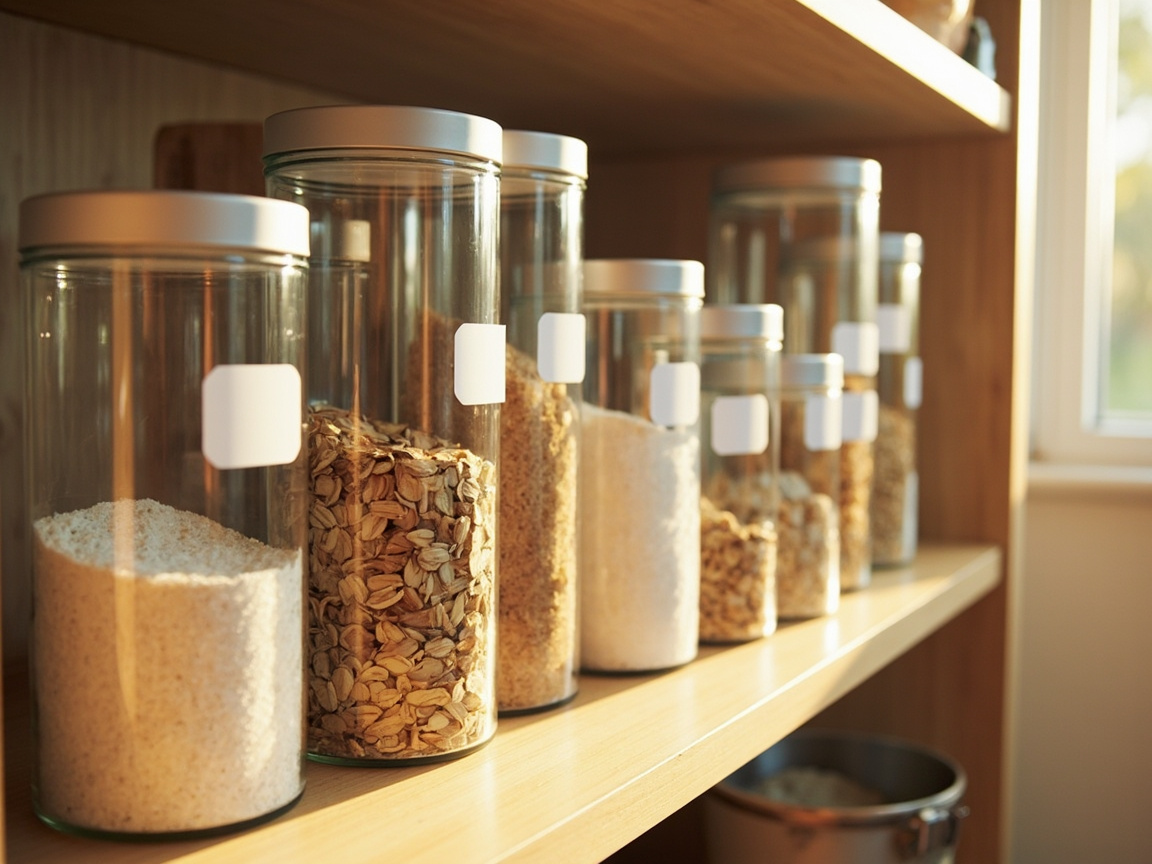
Shelf rule: Bottom shelf, ground level. Cans are heavy (1-2 lb each), and the bottom shelf is the safest place for 30-60 of them. Bottom placement also lets gravity-fed can racks work without a top anchor.
Container type: FIFO can rack. The Shelf Reliance FIFO can tracker ($49.99) uses gravity to feed the oldest can to the front row, so newer cans do not bury older stock. The 54-can capacity fits many households; for smaller pantries, a 3-tier rack (about $25) gives 18-24 can capacity with manual rotation.
Sub-zones within Zone 2: Group by cuisine. Beans in one row, tomatoes in another, soup in a third, vegetables in a fourth. This makes meal planning faster because the “what can I make tonight” scan becomes a 5-second visual.
For a deeper can-specific walkthrough, the pantry checklist guide covers quarterly FIFO audits. For sub-zone deep-dives across other rooms, the kitchen cabinet organization guide shows the same bottom-heavy approach for non-pantry cabinets.
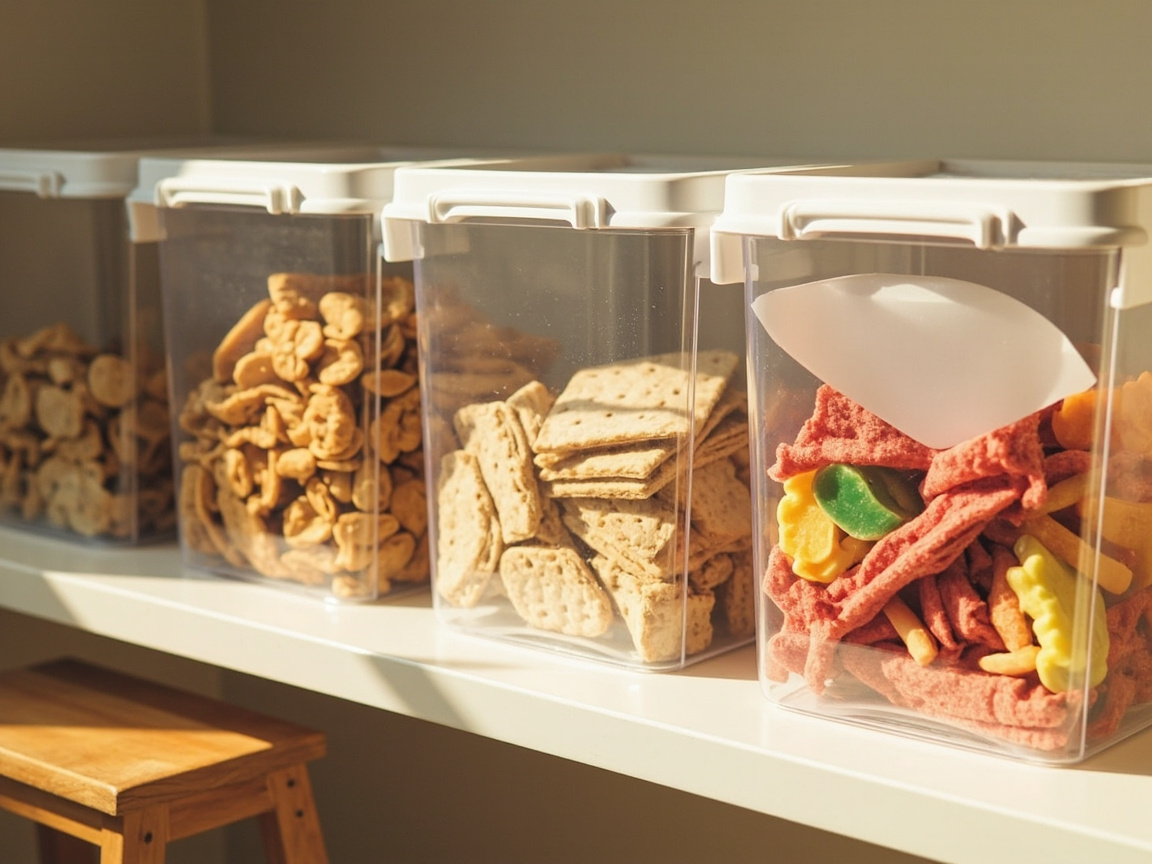
Zone 3: Snacks & Kid Food
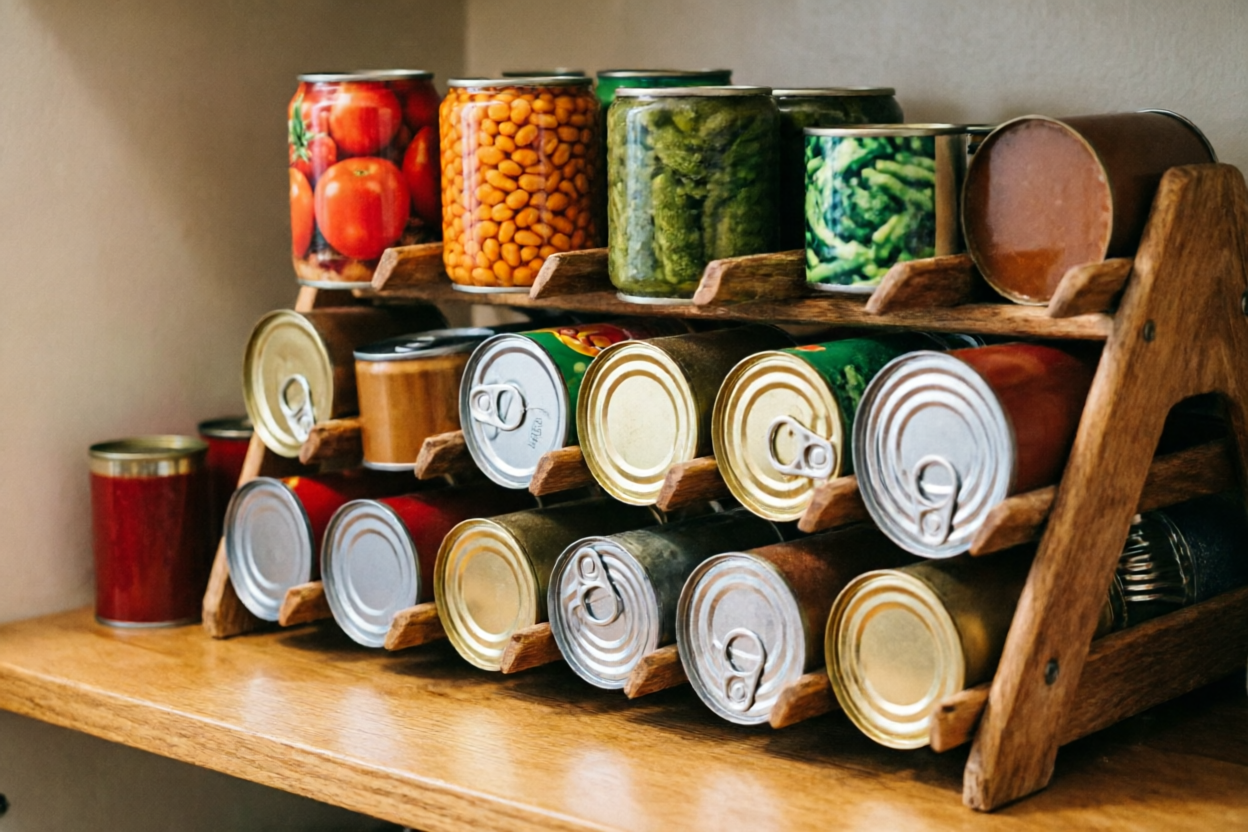
Shelf rule: Lower-middle shelf, kid-reachable height. The trick is one shelf below adult eye level so kids can reach their own snacks without toppling Zone 1 or Zone 2.
Container type: Clear bins with handles. The Tiawudi 12-pack clear bins ($27.99) come with ergonomic side handles that kids can pull without dropping the whole bin. Clear beats opaque here because the kid can see what’s inside without opening every bin (which is when the chaos starts).
Sub-zones within Zone 3: Savory on one side, sweet on the other, “lunchbox” in a third bin. The lunchbox sub-zone is the 5-minute morning time-saver — one bin holds everything that goes into a school lunch.
Rotation rule: Weekly 5-minute audit. Snacks have the shortest shelf life of any pantry zone, and a forgotten granola bar in the back row is a wasted dollar. Pair with the declutter maintenance routine for the broader 5-minute-daily habit.
Zone 4: Breakfast & Cereal
Shelf rule: Mid-shelf, above Zone 3 but below Zone 1. Cereal boxes and breakfast bars get their own shelf so they don’t bleed into Zone 3 (kids’ snack chaos) or Zone 1 (baking ingredients that look similar).
Container type: Decanted into matching airtight containers. The same Vtopmart 24-pc set ($29.98) that covers Zone 1 also covers Zone 4 — moving cereal out of bulky boxes can free shelf space and makes portions easier to see.
Label rule: Same VITEVER minimalist labels as Zone 1. Visual consistency across zones 1 and 4 makes the pantry read as a system, not a collection of leftover containers.
For the kitchen-wide breakfast-and-meal-prep pattern, the kitchen pantry zone map sister guide pairs Zone 4 with a weekly reset rhythm that the 5-zone system doesn’t cover on its own.
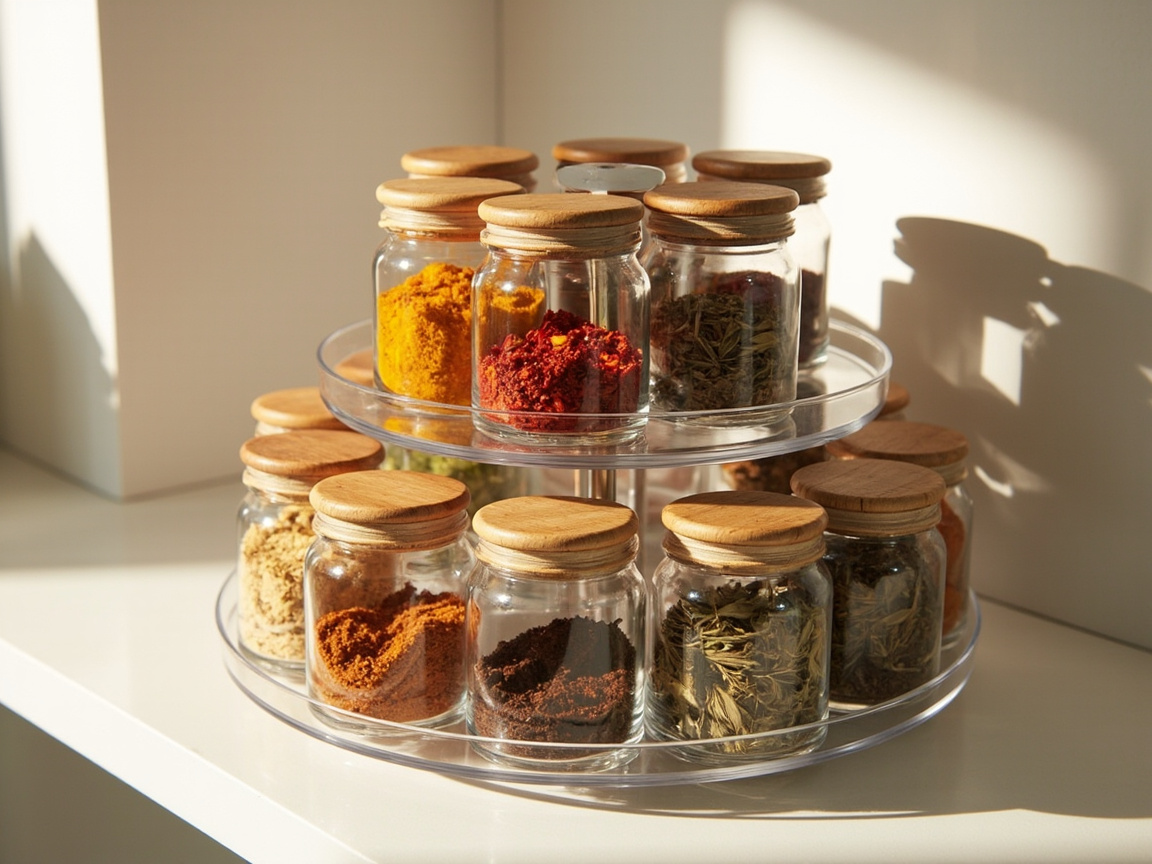
Zone 5: Spices & Oils
Shelf rule: Top shelf, door, or counter stand. Spices are light and accessed regularly, so they fit well on a top shelf or door. Oils need a cool, dark spot; keep them away from the stove.
Container type: Glass jars + lazy susan. The HHMJSM 20-piece glass spice jar set ($30.89) includes 20 thick-walled 4oz glass jars with bamboo airtight lids plus 131 waterproof labels — enough for a fully stocked spice rack with room to grow. Pair with a LAMU 3-pack lazy susan ($19.99) and you can spin to find the cardamom without unstacking the cumin.
Sub-zones within Zone 5: Sweet spices (cinnamon, nutmeg, vanilla) on one lazy susan, savory (cumin, paprika, oregano) on another, heat (red pepper, cayenne, chili flakes) on a third. This matches how you actually cook — by flavor profile, not alphabetically.
For a deeper Zone 5 walkthrough, the spice organization guide covers drawer inserts, wall-mounted racks, and a rotation rule so older ground spices do not linger for years.
Pantry Layout by Size
The 5 zones are the same regardless of pantry size, but how much of each zone fits changes. For planning, group pantries into three common shapes:
Reach-in pantry (24-48 inches wide, 12-24 inches deep, 5-6 shelves). All 5 zones fit, but Zone 2 may need to compress to a single-tier rack (instead of a 54-can tiered rack) and Zone 5 may need to live on the door instead of the top shelf. Use a shelf riser on the middle shelf to add a second tier — it can increase usable levels without changing the footprint. The shelf organizers decision guide covers riser depth, load rating, and adjustability.
Walk-in pantry (5+ feet wide, 3+ feet deep, floor-to-ceiling). Every zone gets its own wall, and you can add a sixth sub-zone (paper goods / bulk overflow) on the top shelf. Add a rolling cart in the center for overflow cans; the harder work is keeping the floor clear.
Cabinet-only “pantry” (no walk-in space at all). This needs a compressed version of the same system. See the next section.
When You Don’t Have a Pantry
If your kitchen has no built-in pantry, you have three options that all work without drilling.
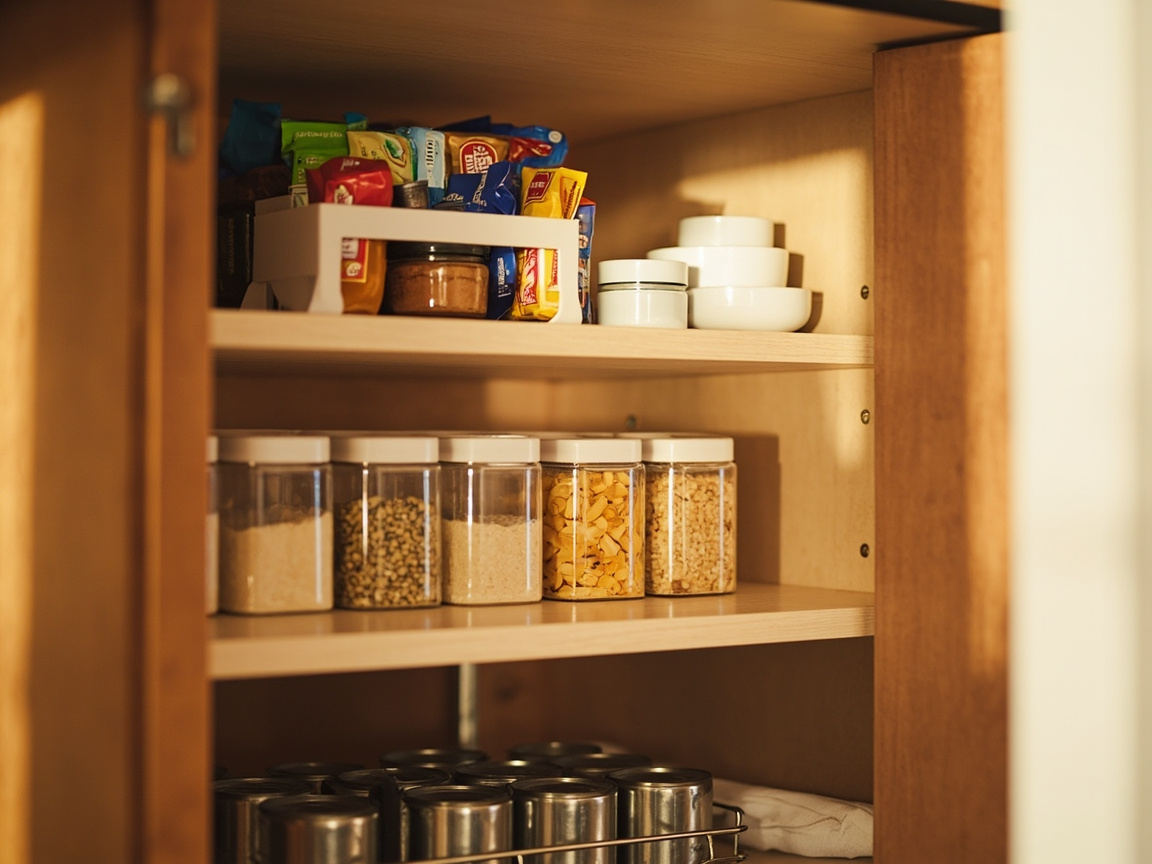
If You Have a Cabinet-Only Pantry
Convert one upper cabinet into a 4-sub-zone micro-pantry. An over-door rack can turn the cabinet door into Zone 5 (spices + sauce packets) and free the top shelf for Zone 1 baking. A single-tier can rack on the bottom shelf handles Zone 2 (18-24 cans), and the middle two shelves split between Zone 1 (Vtopmart 24-pc, $29.98) and Zone 3+4 (Tiawudi clear bins, $27.99). Use the products you already own first, then add only the pieces that solve a measured gap.
The kitchen cabinet organization guide covers the same 4-zone approach for non-pantry cabinets, and the small kitchen organization guide addresses the broader constraint of counter + cabinet space when you don’t have a pantry at all.
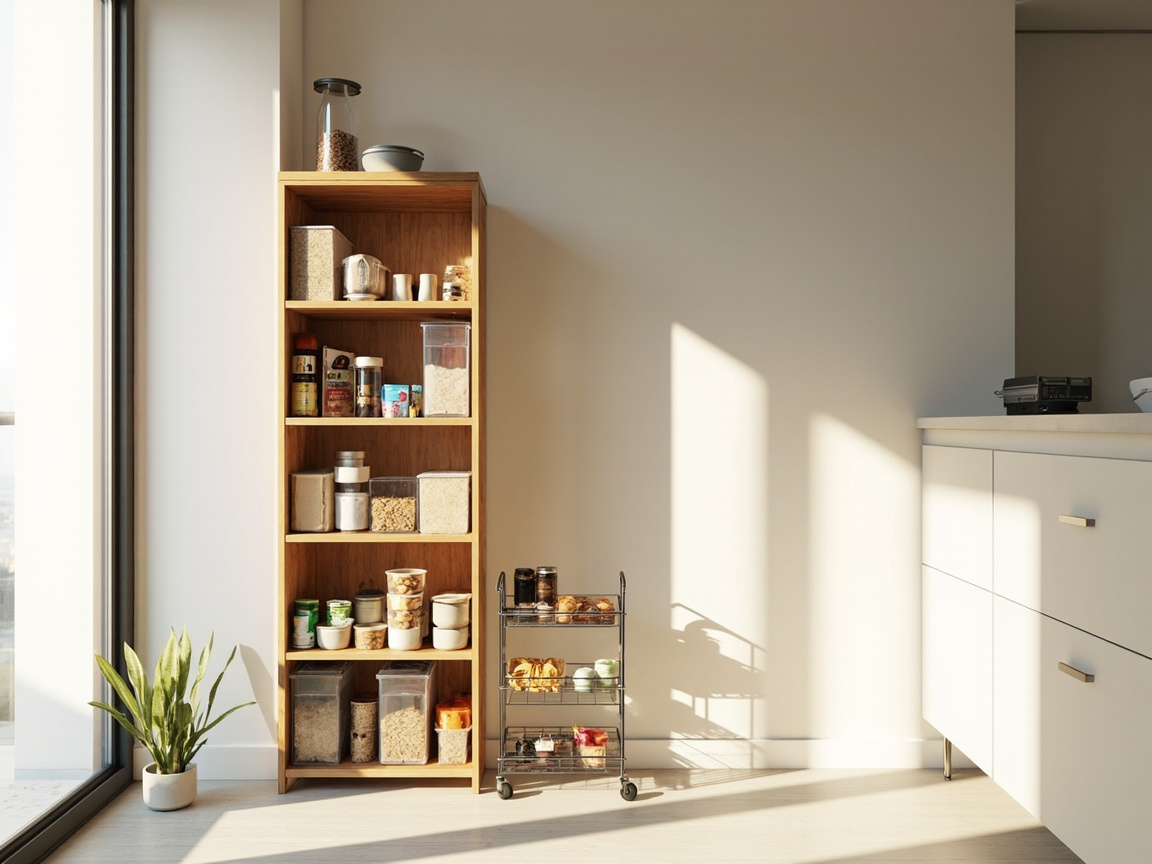
If You Have 0 Pantry (Rental / Apartment)
No upper cabinet, no walk-in, no built-in. The fix is freestanding furniture. A 5-tier bookshelf against a kitchen wall becomes a 5-zone vertical pantry — Zone 5 on the top shelf (lightest), Zone 1+4 on the next two shelves (baking + cereal), Zone 3 snacks on the fourth shelf (kid-reachable), Zone 2 cans on the bottom (heaviest). A 3-tier rolling cart adds Zone 5 overflow + paper goods.
This setup is fully rental-friendly — no drilling, no wall damage, and the bookshelf can move to the bedroom when you upgrade apartments. Pair with the small bedroom organization cross-cluster guide if your kitchen is so small the bookshelf has to live in an adjacent room.
The declutter-on-a-budget guide covers a Dollar Tree version of this setup with woven baskets, clear bins, and labels.
The 4-Tier Maintenance Rhythm
The pantry only stays organized if you give it a few minutes most days plus a longer quarterly reset. Breaking maintenance into 4 tiers keeps each task small enough to actually do.
Daily (30 seconds). Return items to their zone after use. Without this tier alone, no amount of containers or labels will save the pantry.
Weekly (5 minutes). Wipe shelf fronts with a damp cloth, scan Zone 3 snacks for expired items, refill any bins that hit half-empty. Tie this to a specific weekday so it doesn’t disappear from the calendar.
Monthly (15 minutes). Rotate the lazy susan, re-label any label that peeled, and check Zone 2 cans for ones you haven’t used in 6 months. If you find an unused can, it’s a donation candidate, not a “maybe someday” item.
Quarterly (45 minutes). Empty one zone entirely, refresh the decanted items, do a duplicate-grocery check against your last 3 grocery receipts, and adjust the zone layout if your cooking has shifted (more baking, less cereal, etc.). The pantry checklist guide walks through this audit step by step.
The 4-tier rhythm works because no single tier is long enough to skip. A 30-second daily habit is invisible. A 45-minute quarterly reset is short enough to fit a Saturday morning. The middle tiers handle drift between those extremes.
Common Pantry Mistakes
Five mistakes show up repeatedly in disorganized pantries:
-
Decanting everything (even things used once a year). Decanting makes sense for flour, sugar, oats, rice, cereal — daily or weekly items. Decanting specialty items (cake flour, almond flour, fancy salts) into the same containers wastes labels and creates visual clutter. Keep the rarely-used items in their original packaging with a label on the outside, and only decant what you actually reach for.
-
Putting glass spice jars on the bottom shelf. Glass breaks. Spices are light. The Zone 5 rule (top shelf or door) keeps fragile jars away from heavy cans and unnecessary knocks.
-
Skipping labels because “I can see what’s inside.” You can see the contents today. After a year of shifting items around, you cannot. Labels are cheap ($9.98 for 308 of them) and they prevent the daily “is that sugar or salt” guessing game that ruins dinners.
-
Buying the can rack before measuring the shelf depth. Most reach-in pantries are 10-12 inches deep. A 17-inch-deep FIFO rack won’t fit. Measure first, then buy. The shelf organizers decision guide covers this and other common measurement mistakes.
-
Skipping the quarterly FIFO audit. FIFO only works if you actually pull the oldest can to the front. The pantry checklist guide walks through the audit, and the seasonal closet rotation guide shows the same pattern applied to seasonal clothing — quarterly rotation is a habit that pays off across every storage system in the house.
Sources & Verification
Editorial standards
Product selections and listed prices match the six-item research brief completed on 2026-07-21. Amazon prices and availability can change after publication.
Cross-collection universality
The 5-zone system generalizes to any storage space: the bedroom declutter guide uses a 4-zone variant for clothes, the closet storage solutions guide uses a 4-zone map for hanging vs shelf vs floor vs door, and the bathroom under-sink guide uses a 5-pipe + zone system for plumbing-aware storage. The pattern is the same: assign each item a zone, choose a container per zone, label everything, maintain daily.
Pricing tiers
Budget tier ($9.98-$27.99): VITEVER 308 labels + Tiawudi clear bins cover Zones 1-4 visibility without breaking the bank. Mid tier ($19.99-$29.98): the Vtopmart 24-pc set + LAMU lazy susan cover the full 5-zone system for about $50 total. Premium tier ($30.89-$49.99 for one zone upgrade): the HHMJSM glass spice jars + Shelf Reliance FIFO rack are the two higher-priced upgrades in this list.
Related Guides
For the zone-by-zone deep-dive, the kitchen pantry organization sister guide covers each of the 5 zones in 200-400 words with constraint guides. For the 4-step method (declutter → zone → contain → maintain), the kitchen pantry zone map pairs the 5-zone system with a weekly reset rhythm. For Zone 5 specifically, the spice organization guide is the full deep-dive on spice storage. For pantry decluttering, the pantry checklist guide covers the 30-60-90-day rotation rule.