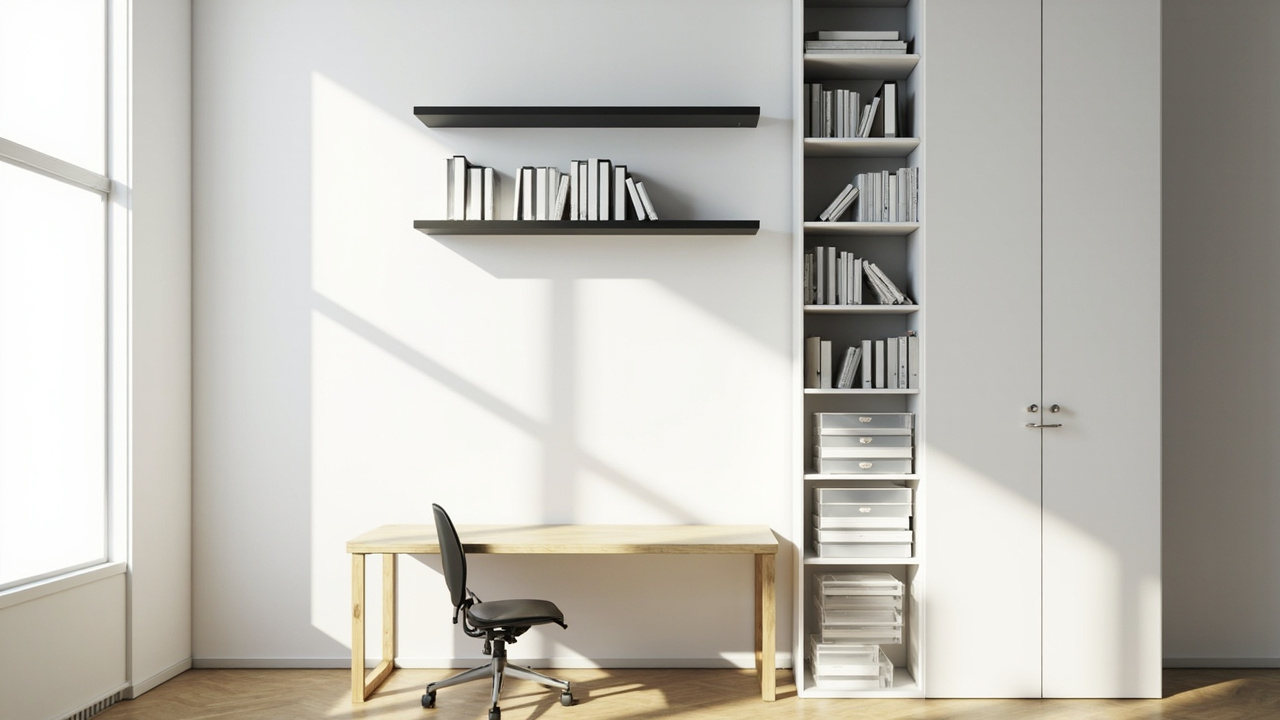
Small home office storage is the cubic systems that hold paper, supplies, books, and backup gear off the desk surface when the room is under ~80 sq ft. I’ve rebuilt storage in closet nooks and apartment alcoves enough times to know the pattern: after the desk, chair, and door swing take their share, residual floor is tiny — so vertical towers, under-desk drawers, wall shelves, and closet or over-door racks have to carry the load. This guide sits inside the home office organization hub and the whole-room home office organization system. Desk-surface zones live on the home office desk organization guide; cords and power routing live on home office cable management. Here we map off-desk storage only.
Why Small Home Offices Run Out of Storage First
A tiny office fails storage for one boring reason: residual cubic feet collapse after furniture lands. Desk depth, chair roll radius, and door swing eat the floor before a single bin arrives. Paper, printer supplies, backup ink, and Amazon boxes re-clutter weekly because there’s no assigned cubic home off the work surface.
Floor-first furniture makes it worse. A wide lateral cabinet blocks the chair path and the door, so you stop using the cabinet and the pile returns to the desk. Vertical, wall, and door systems win in rooms this size. Before you buy more bins, run a quick small-space decluttering method pass — purge dead inventory first so new storage holds what you actually keep.
Measure Before You Buy
Skip this step and you’ll return half of what you order — I’ve done that with a pedestal that looked fine online and jammed under a thick desk crossbar.
- Residual width beside the chair — keep a clear roll path; if a tower leaves less than ~24 inches of travel, it’s too wide.
- Under-desk height clearance — most sitting desks need a pedestal under ~25 inches; measure knee zone and crossbar height.
- Door swing and closet depth — closet offices fail when an over-door rack plus a tower both fight the same swing arc.
- Wall studs vs rental limits — heavy floating shelves need studs; damage-free hooks only hold light loads within their rating.
- Weight ratings — binders beat decorative anchors every time. Check the label before you load a shelf with reference books.
These five checks feed Common Mistake #1 below.
What You’ll Need: 5 Picks Mapped to 4 Systems
| System | Pick | Role |
|---|---|---|
| Vertical | FOTOSOK 8-tier slim tower ($69.99) | Max height on a ~12-inch footprint |
| Under-desk | Letaya 3-drawer rolling file ($99.99) | Locked paper + mobile pedestal |
| Wall | BAYKA floating shelves ×3 ($19.94) + EasyPAG 5-tier wall file ($18.47) | Books/binders + paper off the desk |
| Closet / door | ULG over-door organizer ($16.99) | No-drill rental anchor |
Inside tower shelves, clear stackable drawers keep pens and backup supplies visible — see how to choose storage bins before you default to opaque decorative boxes. Under-shelf wire baskets reclaim dead air under fixed shelves; how to choose shelf organizers covers the fit rules. Damage-free utility hooks handle headphones and bags — browse hooks and racks for vertical storage for weight limits.
The 4-System Small-Office Storage Map
Four systems cover almost every tiny-office layout I’ve seen. Pick two or three based on residual floor and wall access — you don’t need all four on day one.
Vertical Towers & Slim Cabinets
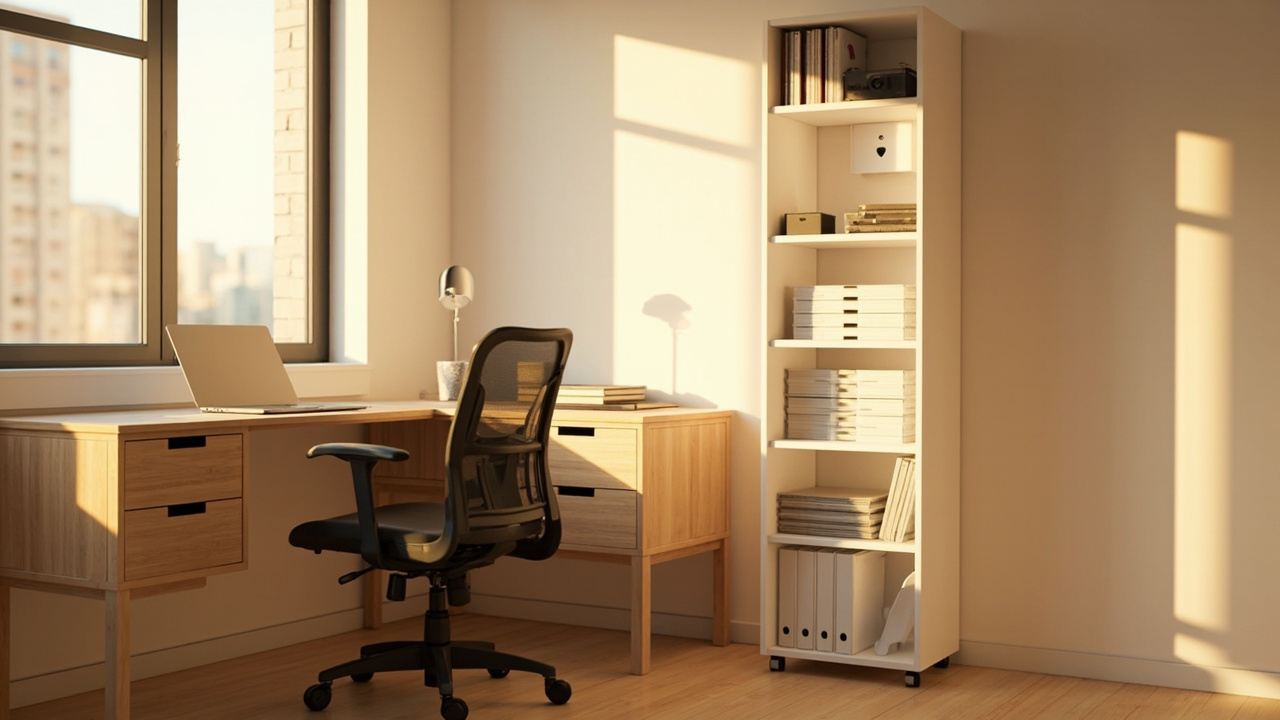
Prefer a tower under ~12–14 inches wide so alcoves and closet nooks still clear the chair path. Anchor or tip-resist tall units, especially in homes with kids or pets. Stack clear drawers on lower shelves for backup ink and cables (bagged), and leave the bottom shelf as a weekly dump zone for incoming boxes.
The FOTOSOK 8-tier slim tower ($69.99) is the vertical anchor here — roughly 11.6 inches wide and about 71 inches tall, so it earns cubic feet without a wide cabinet footprint. Pair it with under-shelf baskets on fixed shelves when you need more capacity without widening the base.
Under-Desk Drawers & Rolling Pedestals
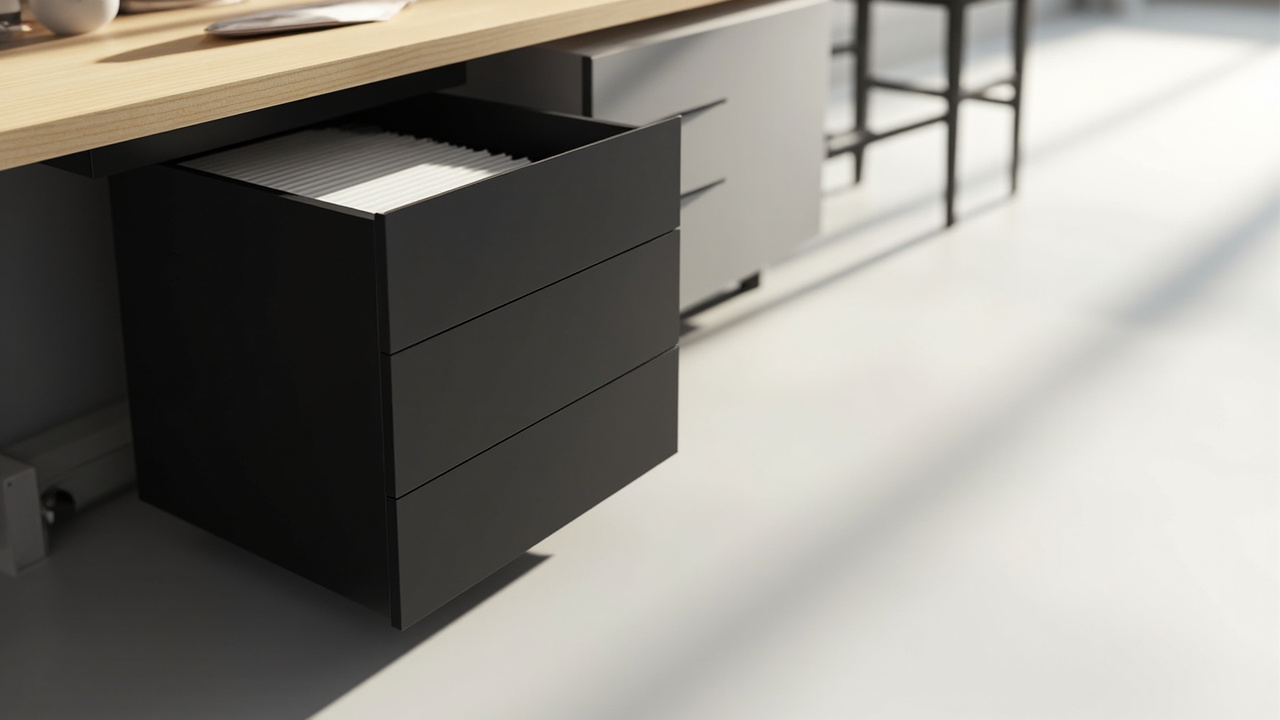
Measure first. Height under ~25 inches fits most sitting desks; standing desks and thick crossbars change the math. Split drawers into file + supply, and use a lock when the office shares a bedroom or household traffic.
The Letaya 3-drawer mobile file cabinet ($99.99) rolls out for deep cleaning and parks under the desk for letter/legal/A4 hanging files. A printer can live on a dedicated tower shelf or roll out beside the pedestal — don’t park it on the desk surface if you’re fighting residual space. This unit is cubic storage only; route power and data on the home office cable management guide so the pedestal doesn’t become a cord snag.
Wall Shelves, Rails & Pegboards
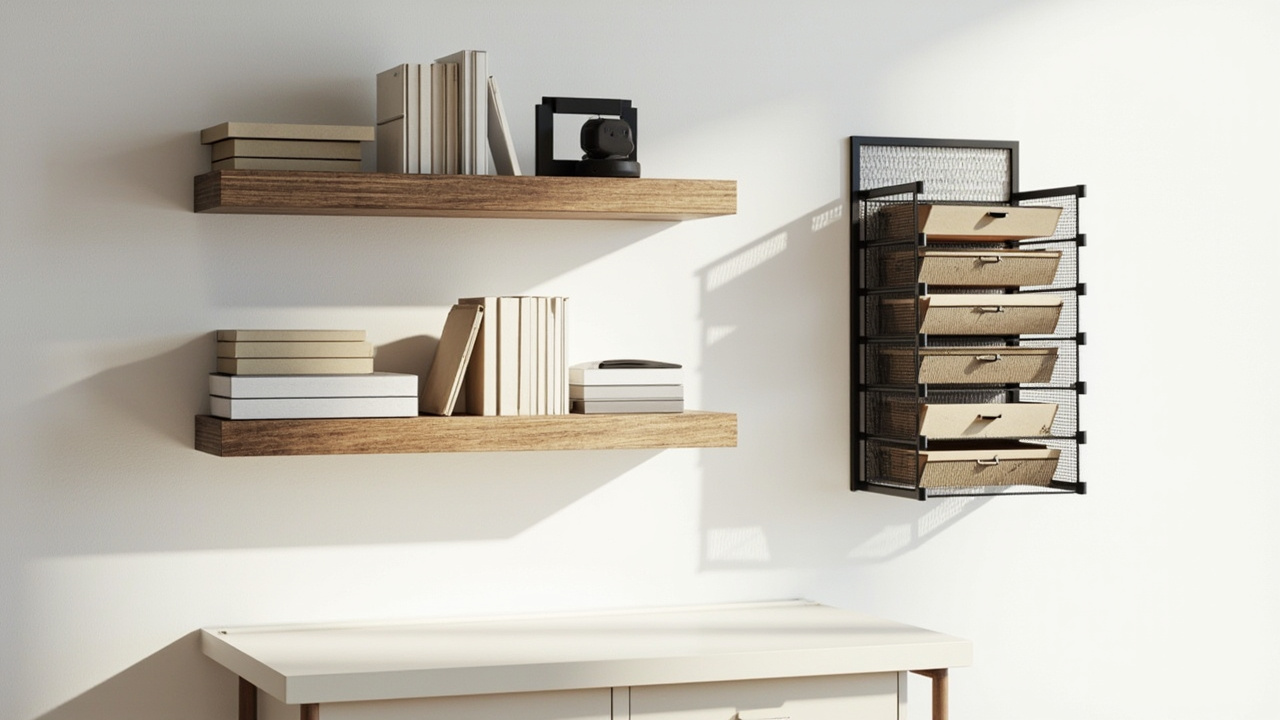
Studs carry heavy loads. Adhesive hooks only handle light tools within their rated weight. A floating shelf set holds books and light bins; a wall file pulls active paper off the desk so Zone 3 on the desk guide stays thin.
Use the BAYKA floating shelves set of 3 ($19.94) into studs for binders within the ~22 lb per-shelf rating. Mount the EasyPAG 5-tier wall file ($18.47) on a narrow strip beside the desk for mail, clipboards, and hanging folders. On-desk paper trays still belong on home office desk organization — this page owns wall cubic paper storage.
Closet, Over-Door & Shared-Room Storage
Closet offices win with rod + shelf + over-door pockets. No-closet apartments lean on door + wall only. Shared bedroom offices need closeable drawers or pocket storage so the visual load drops at the end of the day.
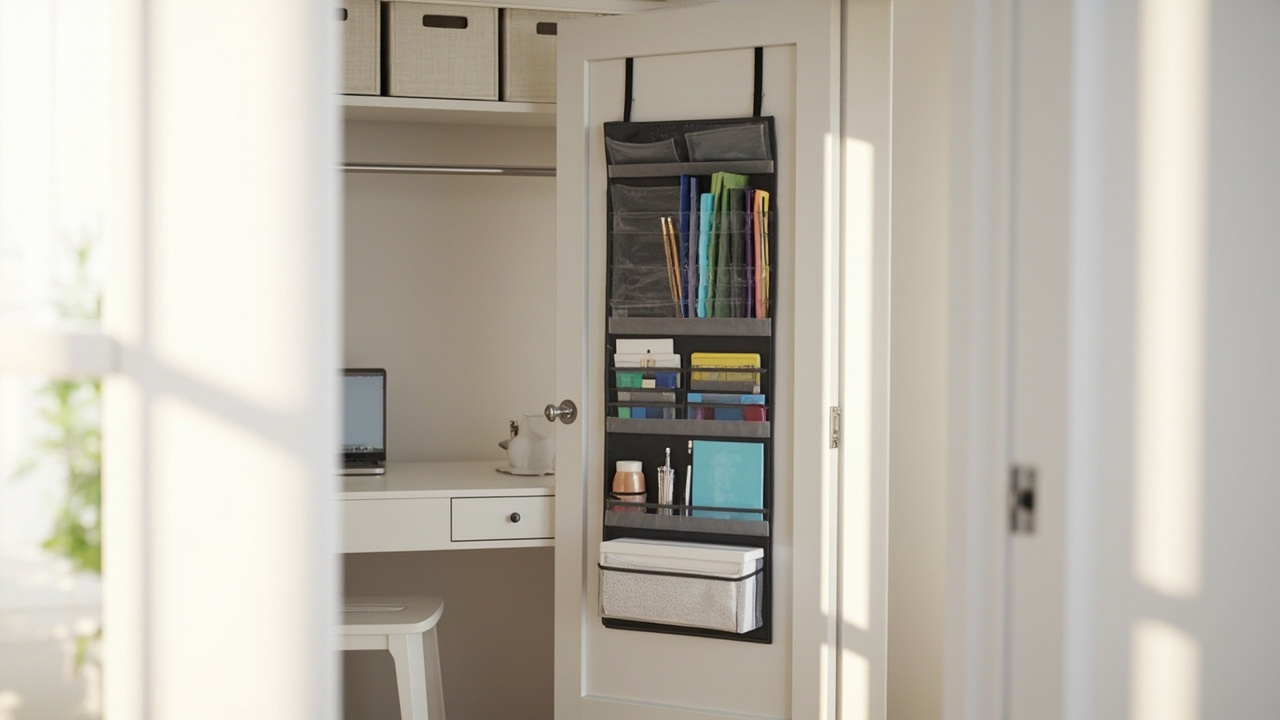
The ULG over-door organizer ($16.99) is the no-drill closet-office anchor — five large pockets plus side mesh, up to about 44 lb capacity when the door and hinges can take it. Confirm door thickness and clearance behind the door before you hang it. When the office shares clothing storage, pair this system with small closet organization so hangers and office pockets don’t fight the same rod.
Layout by Office Size
Closet Nook (<50 sq ft)
Zero wide cabinets. Start with the ULG over-door organizer ($16.99) and the EasyPAG wall file ($18.47). Add damage-free hooks for bags. Bring in a slim tower only if the door still opens fully — if the tower blocks swing, stay wall-and-door only.
Apartment Alcove (50–80 sq ft)
This is the most common small-office band. Place the FOTOSOK slim tower ($69.99) beside the desk, park the Letaya rolling file ($99.99) under the desk, and run one BAYKA shelf set ($19.94) above or beside the monitor wall. Keep the chair path clear; don’t add a second floor cabinet.
Spare-Room Corner (80–120 sq ft)
You can run the full 4-system stack, but deep furniture still kills the chair path. Combine the FOTOSOK tower ($69.99), Letaya pedestal ($99.99), BAYKA shelves ($19.94), and EasyPAG wall file ($18.47). Use under-shelf baskets on the tower to reclaim air without a wider base.
Constraint Guide: If-Then Scenarios
If you rent or cannot drill
Skip lag-screw floating shelves unless the lease allows and you hit studs. Hang the ULG over-door organizer ($16.99) on the office or closet door, stand the FOTOSOK slim tower ($69.99) freestanding, and use damage-free utility hooks only within their weight rating. Rolling pedestals need no wall fasteners.
If your budget is under $75
Build a starter kit before the metal file pedestal. Combine the ULG over-door organizer ($16.99), the EasyPAG wall file ($18.47), and the BAYKA shelf set ($19.94) if studs and lease allow — still under ~$55 at list before tax. Delay the Letaya pedestal. Pair the spend with declutter on a budget so you aren’t buying cubic feet for junk.
If you have zero floor left
Go 100% wall + door until you purge. Mount the BAYKA floating shelves ($19.94) into studs, add the EasyPAG wall file ($18.47), and hang the ULG over-door organizer ($16.99). No tower until residual width and chair path return. Run small-space decluttering before the next furniture order.
If the office shares a bedroom
Mute visual noise at night. Park locked paper in the Letaya rolling file ($99.99) and hang closeable pockets on the ULG over-door organizer ($16.99). One-in-one-out on supplies so the bedroom doesn’t become a supply closet. Keep open shelves to books you don’t mind seeing after hours.
If you carry a heavy paper or printer load
Don’t solve paper on the desk surface alone. File active and archive paper in the Letaya mobile file cabinet ($99.99) and overflow weekly mail on the EasyPAG wall file ($18.47). Archive quarterly. Keep on-desk trays thin via home office desk organization — this page owns the cubic overflow.
If walls are plaster or you can’t find studs
Prefer freestanding and door systems. Stand the FOTOSOK slim tower ($69.99), hang the ULG over-door organizer ($16.99), and skip heavy floating shelves. Adhesive hooks stay within rated weight for headphones and bags only — binders need studs or the tower.
Common Mistakes
- Buying bins or furniture before measuring residual width and under-desk height. You’ll block the chair path or return the pedestal. Measure first — every time. I’ve returned more than one unit that looked fine in photos and failed the tape measure.
- Filling the floor with wide cabinets that kill roll-out and door swing. Inverse of the vertical-first rule: slim tower beats lateral filing in under-80-sq-ft rooms.
- Re-solving desk surface and cables on this page. Trays, desk dividers, and cord routes belong on the desk-org and cable-mgmt sisters. Mixing scopes creates duplicate systems and dead products.
- Overbuying opaque decorative storage that hides dead inventory. Pair tower shelves with clear drawers so you can see pens, ink, and sticky notes — and run one-in-one-out monthly.
- Mounting heavy shelves without studs or ignoring weight ratings. Rental drywall and plaster fail under binders. Use freestanding + over-door when studs aren’t real.
Monthly Storage Reset
Keep the system honest with a short rhythm:
- Empty the bottom tower shelf weekly (incoming box dump zone).
- One-in-one-out on supplies — new notebook in, dead notebook out.
- Archive paper quarterly from the wall file and the pedestal drawers.
- Re-check chair path and door swing after any new furniture lands.
- Fold the habit into a broader declutter maintenance routine so storage creep doesn’t rebuild in 30 days.
When you’re ready to expand beyond storage, return to the home office organization hub, the whole-room home office organization system, home office desk organization, and home office cable management. My reset habit is the same every month: clear the chair path first, then add cubic feet. New to the site? Start at start here.