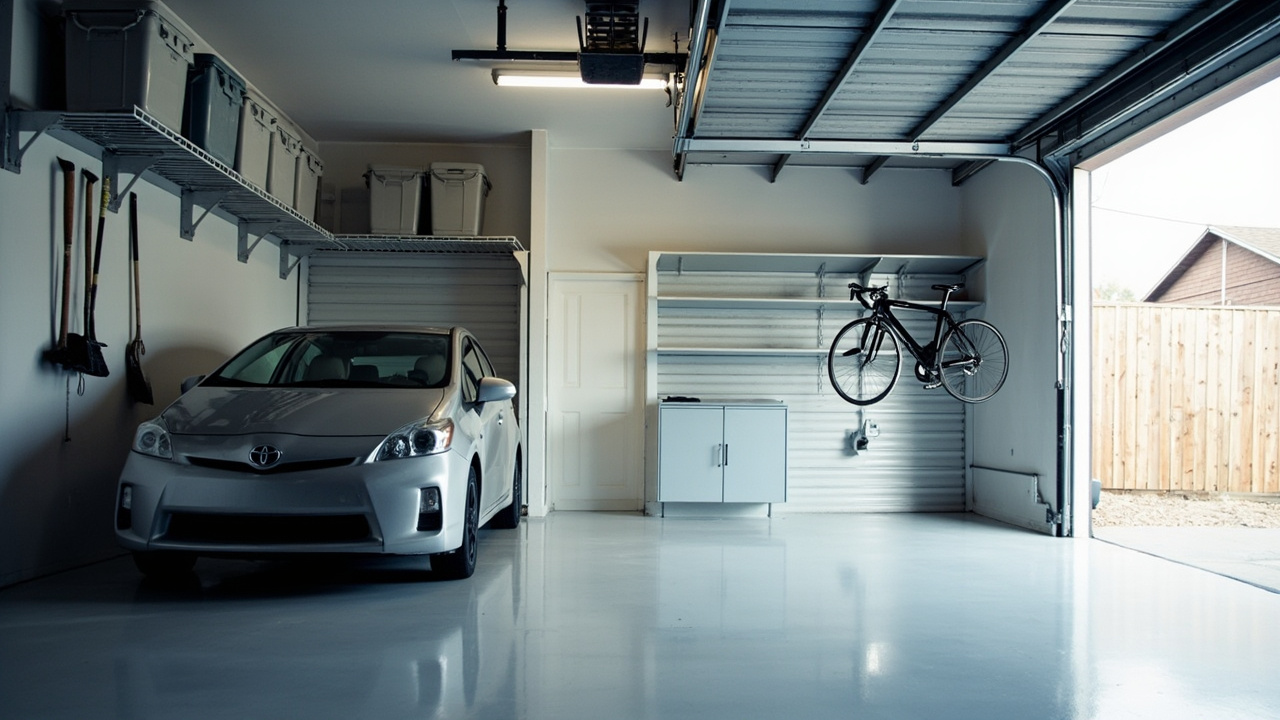
Why Garage Zones Beat Random Storage
Garage zone organization divides your space into 5 functional areas based on use frequency and category. Instead of a single pile of mixed gear, each zone gets a dedicated storage system matched to what lives there. The result: a garage where you can find a screwdriver in 10 seconds instead of 20 minutes.
The core idea is simple. Items you grab daily belong on the wall at arm’s reach. Seasonal bins go overhead. Hazardous materials sit behind a locked door. Sports gear parks near the people door so kids can grab a bike and go. When every item has a zone, retrieval time drops and clutter stays contained.
This zone-based approach builds on the broader garage organization system covered in our hub guide. The difference here is depth: this page breaks down each zone with layout-by-size mapping, constraint-based scenarios, and product picks for every budget. For clearing out before you zone, the declutter-fast method walks through a 4-quadrant purge system.
What Is a Garage Zone?
A garage zone is a dedicated area with a specific storage type, access frequency, and product category. Unlike random shelving where everything lands wherever, zones enforce a “like goes with like” rule.
Why Zoning Works Better Than Bins Alone
Bins without zones create a different problem: labeled containers piled everywhere. You move three bins to reach the one you need. Zones assign a physical location to each category so retrieval becomes muscle memory. This framework overlaps with the 5S method for home organization - Sort, Set in Order, Shine, Standardize, Sustain.
Before You Zone: The 3-Step Prep
Empty and Inventory
Pull everything out. Sort into keep, donate, and trash piles. Count items per category - this determines how much wall rail, shelving, or cabinet space you need. Photograph the empty garage before you start.
Measure Your Space
Measure wall length, ceiling height, and door swing clearance. Key numbers: wall stud spacing (16 or 24 inches on center), minimum ceiling height for overhead racks (8 feet), and maximum shelf depth before it interferes with car door opening (12-18 inches along car-side walls). Record these on a simple sketch.
Declutter Before You Buy
The number-one mistake is buying bins and shelves before sorting. You don’t know what storage you need until you’ve purged. Cross-reference the declutter-fast method for a systematic one-day purge, or follow the 5S method for home organization for a repeatable framework. Only after decluttering do you know your real storage needs.
The 5-Zone System
The zone system works because it matches storage type to access frequency. Daily-use items live at arm’s reach on the wall. Twice-a-year seasonal bins go overhead. Dangerous stuff gets locked up.
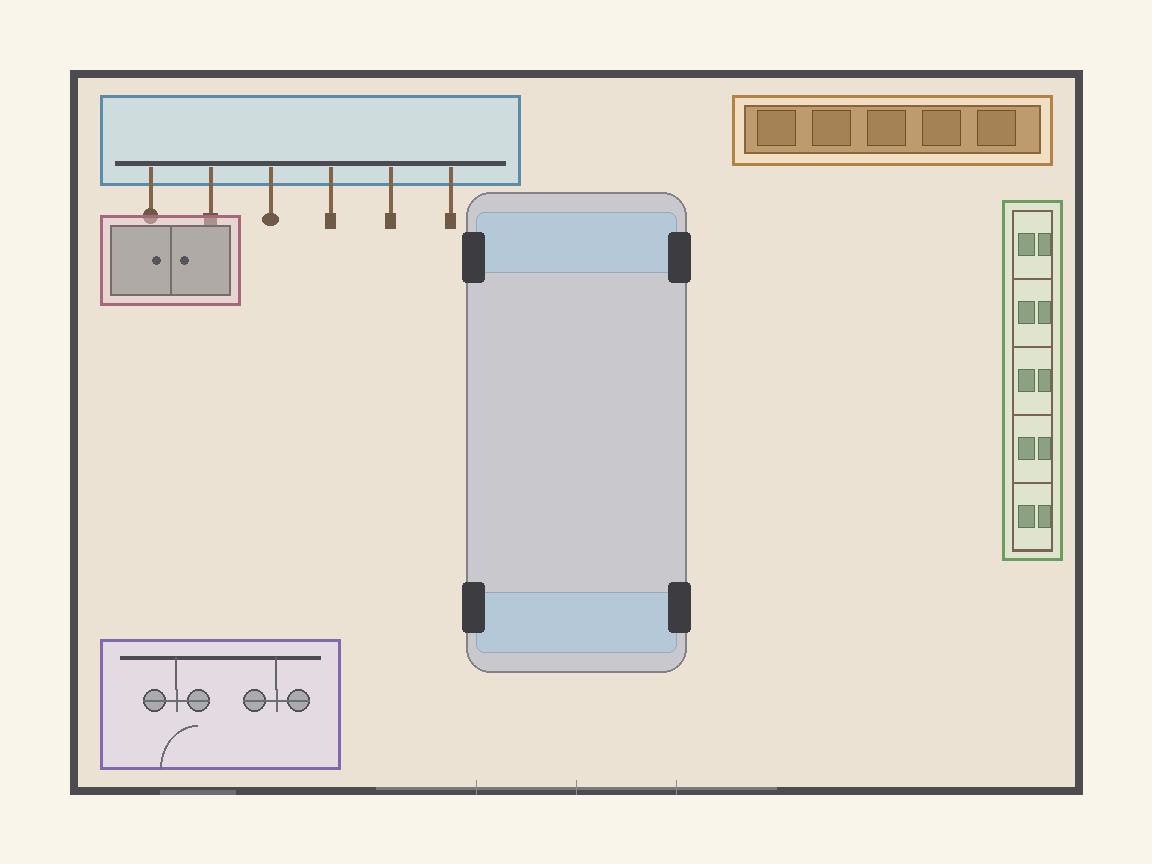
Visualizing the 5 Zones
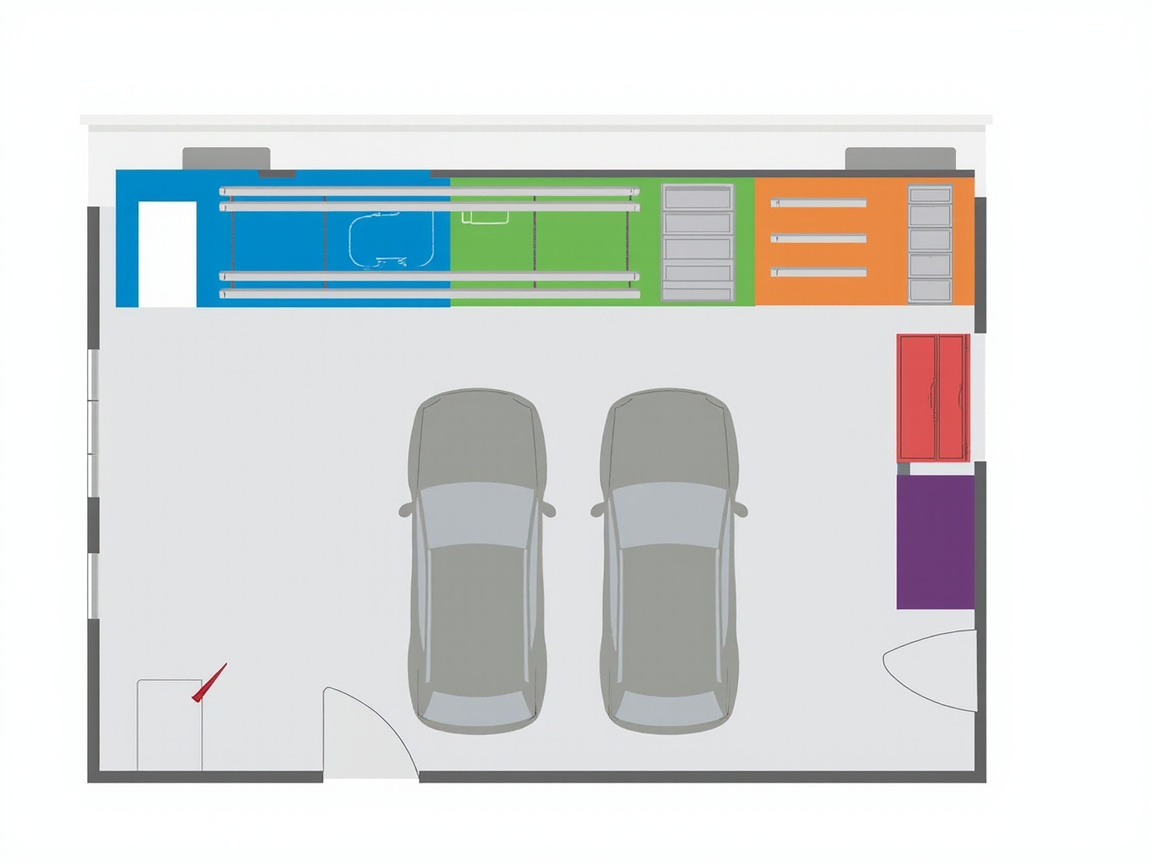
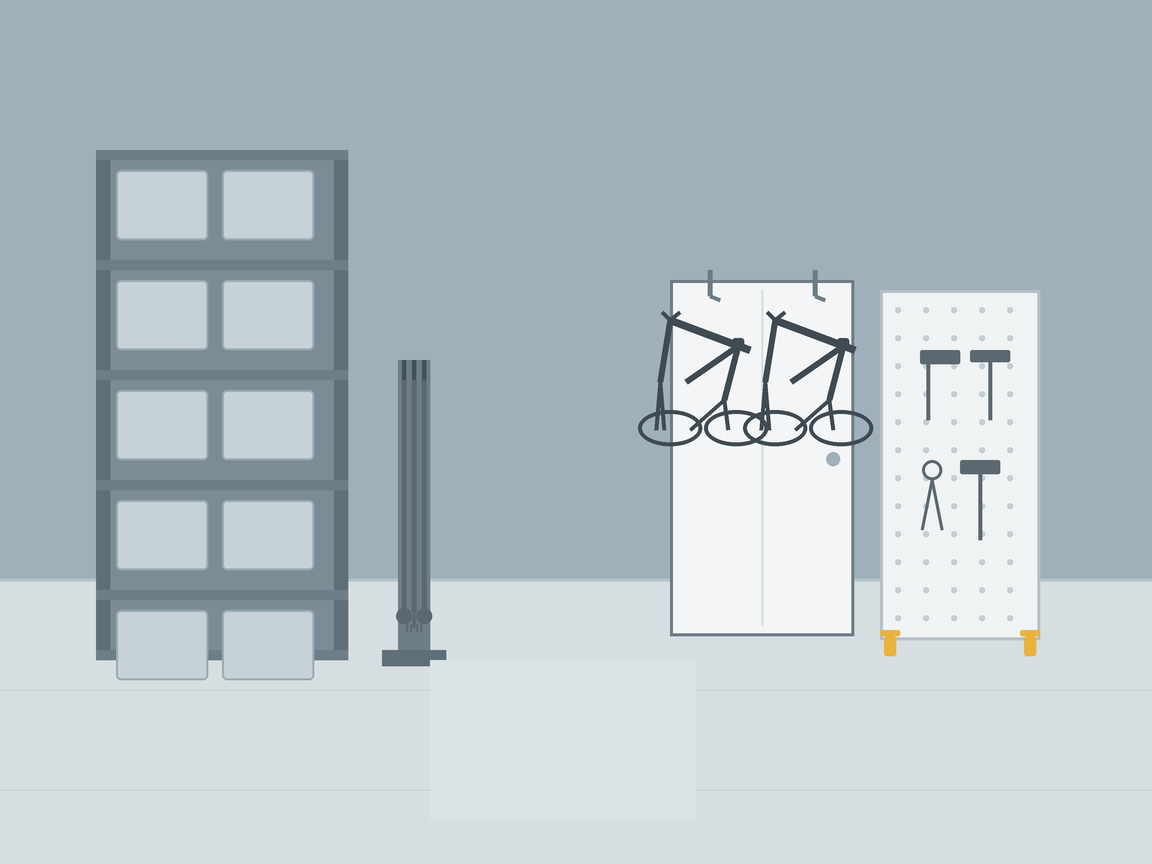
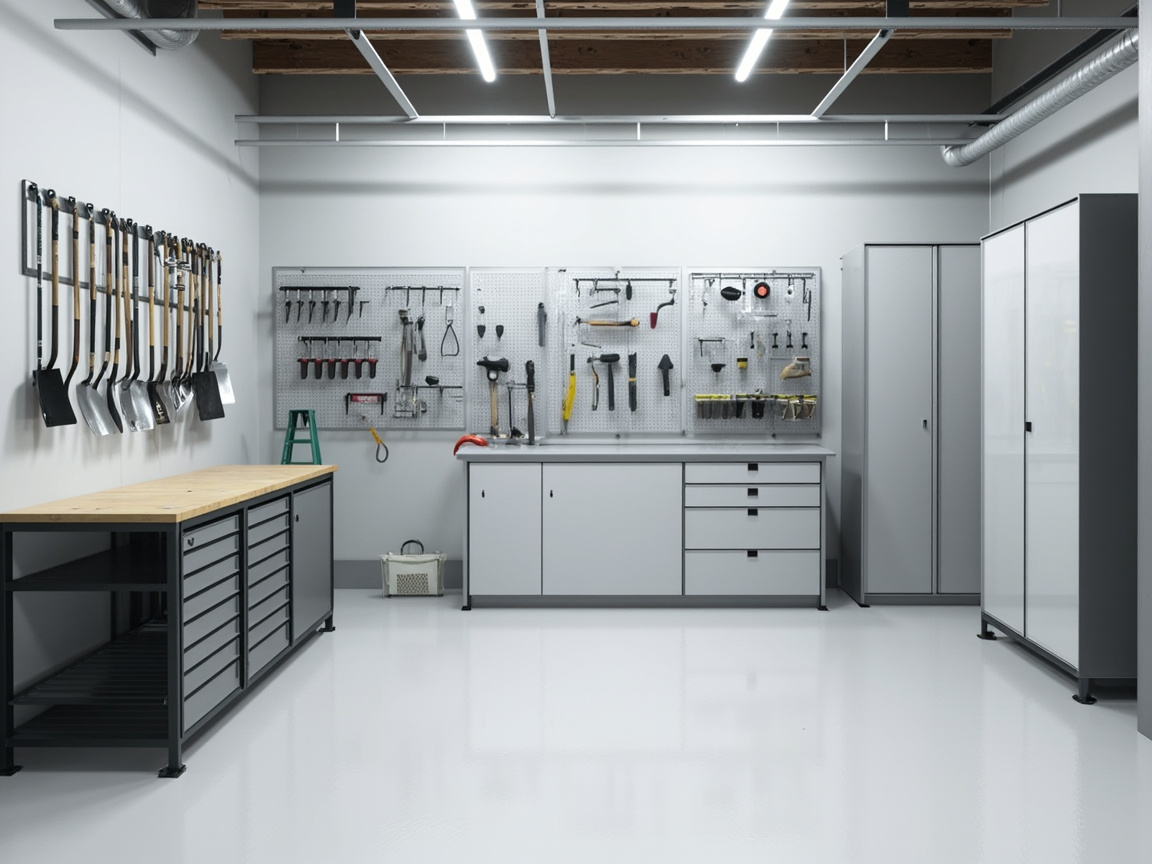
Zone 1 - Wall and Tool Zone
What lives here: Long-handled tools (shovels, rakes, brooms), hand tools, extension cords, ladders.
Storage system: Wall-mounted rails and pegboards. Uses vertical wall space and keeps the floor clear.
Layout principle: Along the longest wall, closest to the garage door.
Install a 48-inch rail like the PIYILO Wall Tool Organizer ($29.97) - 6 double-layer hooks hold shovels, rakes, and brooms on a single steel rail. For hand tools, the Spampur Pegboard Panel Set ($39.99) gives you 4 metal panels with 50 hooks. Mount pegboard above your workbench so screwdrivers and wrenches stay visible.
For deeper guidance on wall-mounted options, check the hooks and racks for vertical storage guide.
Zone 2 - Overhead and Seasonal Zone
What lives here: Seasonal items (holiday decor, winter gear, camping equipment), infrequently used items.
Storage system: Overhead ceiling-mounted racks. Uses dead air space above car height.
Layout principle: Above parking area, minimum 24 inches clearance from ceiling fixtures.
The FLEXIMOUNTS 4x8 Overhead Storage Rack ($145.98) spans 4 by 8 feet and holds 750 lbs. Install it 22-40 inches from the ceiling, leaving at least 5 feet of clearance for your vehicle. Distribute weight evenly and never exceed the manufacturer rating.
Zone 3 - Shelving Zone
What lives here: Storage bins (labeled by category), automotive fluids, paint, hardware bins.
Storage system: Freestanding heavy-duty metal shelving. No wall mounting needed - rental-friendly.
Layout principle: Along back or side wall, away from car door swing path.
The JOJUOU 71” 5-Tier Metal Shelving ($39.99) stands 71 inches tall with 5 adjustable tiers rated at 350 lbs each. At under $40, it’s the best value in heavy-duty garage shelving. For choosing between shelving types, the shelf organizers guide breaks down depth, weight ratings, and adjustability.
Use labeled bins on the shelves to keep categories separated. The storage bins guide covers size, material, and lid options.
Zone 4 - Cabinet and Secure Zone
What lives here: Power tools, hazardous materials (pesticides, paint thinner), valuables, automotive accessories.
Storage system: Lockable metal cabinet. Keeps dangerous items away from children.
Layout principle: Corner or end of wall run, away from water heater and furnace.
The Letaya Metal Garage Storage Cabinet ($174.99) stands 72 inches tall with 5 adjustable shelves and a 3-point lock. Each shelf holds 180 lbs. The powder-coated steel resists moisture and rust. Letaya is a specialized garage cabinet brand - this niche pick has fewer customer reviews than mainstream brands but offers a competitive feature set at its price point.
Zone 5 - Sports and Recreation Zone
What lives here: Bikes, balls, helmets, camping gear, sports bags, kids’ outdoor toys.
Storage system: Wall-mounted bike hooks plus freestanding sports organizer rack.
Layout principle: Near the pedestrian door (not car door) for easy grab-and-go.
For bikes, the monTEK Swivel Bike Wall Mount ($74.99, 4-pack) swings 150 degrees so bikes store flush against the wall. Each hook holds 66 lbs. For everything else sports-related, the HUOZHI Sports Equipment Garage Organizer ($84.98) combines ball storage bins, 2-tier wire baskets, a side bat rack, and a rolling cart in one unit. HUOZHI is a niche garage and fitness brand - this all-in-one design is unique in the market but has fewer reviews than mainstream organizers.
Zone Priority Order
When budget or space is tight, install zones in this order: Zone 1 first because it clears the floor immediately. Zone 3 second because it handles the most items per dollar. Zone 2 third because it adds storage without using floor space. Zone 4 fourth because it addresses safety. Zone 5 last because bikes and balls can use temporary hooks.
Garage Workflow Audit
Before designing zones, observe what actually happens in your garage for one full week. Zones that match your real workflow outperform zones designed around an idealized system every time. This 1-week audit catches the difference between “items I think I use weekly” and “items I actually pulled out last Tuesday” — and the two lists are rarely identical.
The 1-Week Audit Log
Keep a small notebook on your workbench or use a notes app on your phone. Every time you open the garage door to grab, return, or store something, write three things: (1) the item, (2) the time of day, (3) where you had to walk to get it. After 7 days you’ll have a frequency map that tells you which items deserve Zone 1 placement (daily pull) versus Zone 2 overhead (twice-a-year swap) versus Zone 4 cabinet (rare hazardous).
Log entries look like: “Tuesday 7:14am — snow shovel — back wall, behind bikes.” The “behind bikes” detail is the audit’s real value: it tells you a bike is blocking your snow-shovel retrieval path, which means your sports zone placement is hurting your winter tool access.

Translate Audit into Zone Priority
Once the week is up, sort your log entries into four buckets by frequency. Daily items go to Zone 1 (wall and tool, arm’s reach). Weekly items belong on Zone 3 shelving (eye level). Monthly-to-seasonal items move to Zone 2 overhead. Quarterly or hazardous items go to Zone 4 cabinet. A typical single-driver household audit lands at roughly 30 percent daily, 35 percent weekly, 25 percent monthly, 10 percent quarterly — but your numbers will vary based on hobbies and profession.
For the full pre-zoning workflow that includes the purge step before the audit, the Garage Declutter Checklist: 7 Steps + 5-Phase System covers a 7-step method that pairs naturally with this audit. Use the audit to inform zone layout, then run the checklist to clear out items the audit revealed you never touch.
A wall-mounted rail like the PIYILO 48-inch Wall Tool Organizer ($29.97) anchored at the back wall — exactly where your audit showed daily-pull items cluster — is the highest-ROI first purchase for translating your audit into physical zones.
When to Skip the Audit
Skip the 1-week audit if your garage is under 200 square feet (one-car, single-side access) or if you’re moving into a new build with no contents yet. In a small garage, the spatial constraints force zone placement more than usage patterns do — there’s only one wall, so daily tools go on that wall regardless of audit data. In an empty new-build, you’ll spend a year building real workflow habits before an audit has data to capture. For everyone else — most 2-car and deep garages — the audit pays for itself in avoided reinstalls.
Layout by Garage Size
Your garage dimensions dictate which zones get priority and how much storage you can fit. Here’s how the 5-zone system adapts to 4 common garage sizes.
1-Car Garage (12 by 22 Feet = 264 sq ft)
You’re sharing space with a parked car, so clearance is tight.
- Zone 1: Back wall only - one 48-inch rail plus pegboard above the workbench
- Zone 2: Compact 3x6 foot overhead rack above the car hood
- Zone 3: Single shelving unit along the side wall, max 12-inch depth to preserve car door clearance
- Zone 4: Corner placement, slim profile cabinet
- Zone 5: Wall-mounted hooks on the pedestrian door side
Budget anchor: roughly $300 for a slim rail, compact overhead rack, shelving, hooks, and a small cabinet.
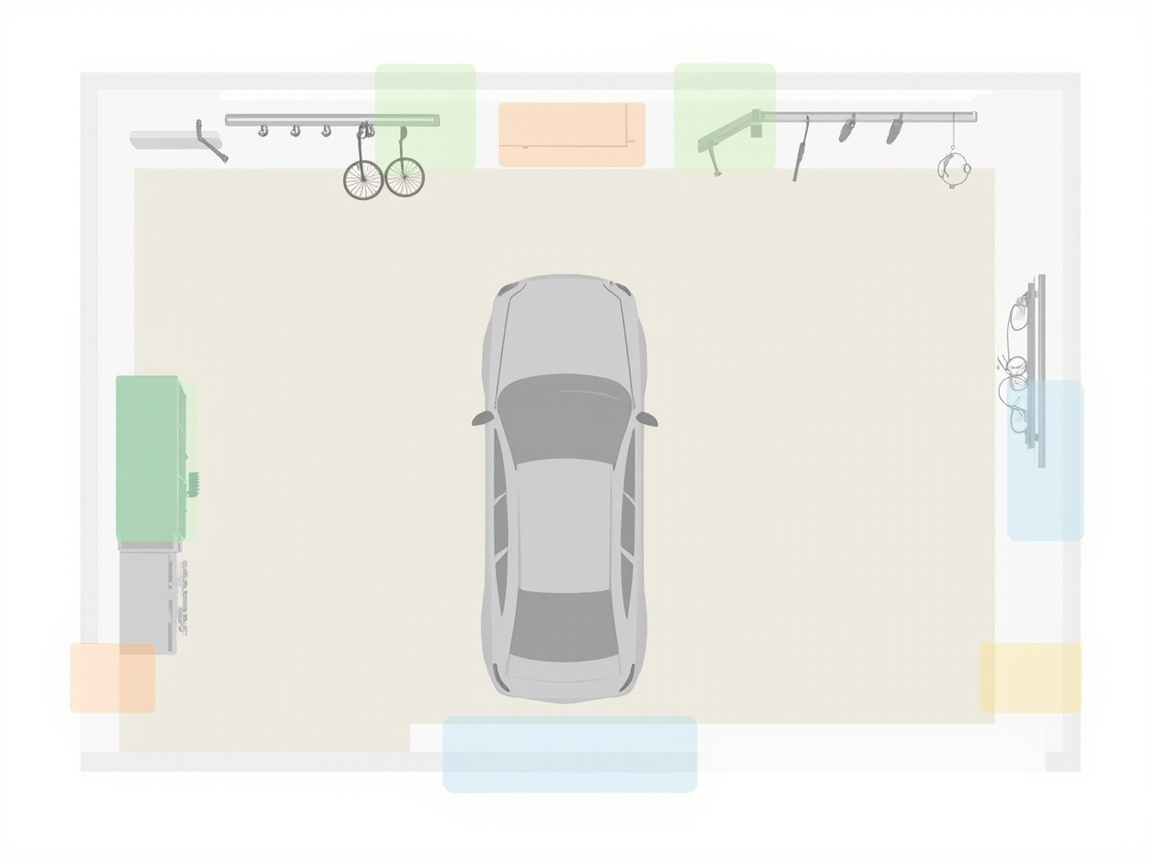
2-Car Garage (22 by 24 Feet = 528 sq ft)
More wall space but two cars reduce floor area.
- Zone 1: Both side walls - two 48-inch rails plus pegboard panels
- Zone 2: One 4x8 foot overhead rack per parking bay
- Zone 3: 2-3 shelving units along the back wall, 18-24 inch depth is fine
- Zone 4: Full 72-inch cabinet at the back corner
- Zone 5: Dedicated wall section near the pedestrian door
Budget anchor: roughly $600 for rails, pegboard, overhead rack, shelving, cabinet, bike mount, and sports organizer.
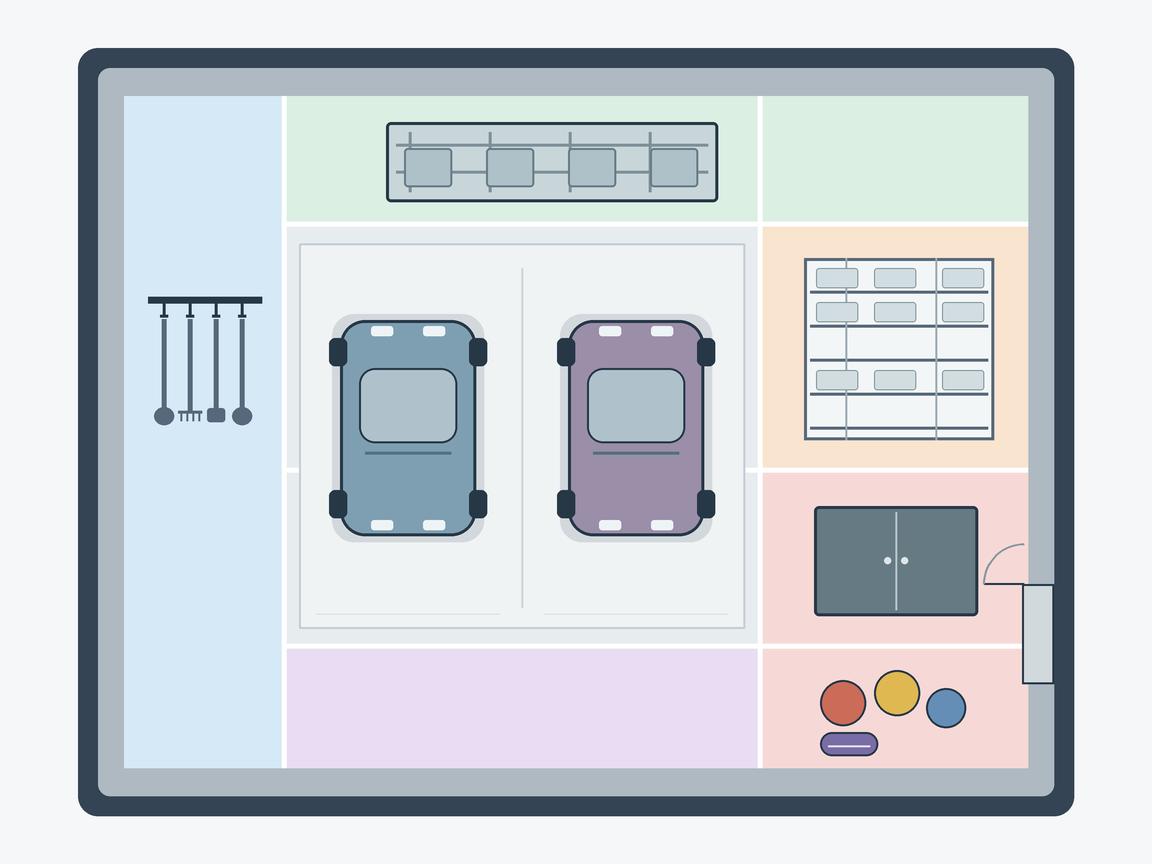
Deep Garage (24 by 30+ Feet = 720+ sq ft)
Extra depth allows a full workshop zone at the back.
- Zone 1: Full back wall workshop - two 48-inch rails plus pegboard plus workbench
- Zone 2: Two 4x8 foot overhead racks for maximum seasonal storage
- Zone 3: 3-4 shelving units, 24-inch depth acceptable
- Zone 4: Two cabinets flanking the workbench
- Zone 5: Full corner section with rolling sports cart
Budget anchor: roughly $900-plus for proportional scaling of the 2-car layout.
For workshop-heavy setups, add a freestanding Sttoraboks 35-Tool Stand Organizer ($39.06) - holds 35 tools with zero wall mounting required.
Narrow or Single-Side Garage (10 by 20 Feet = 200 sq ft)
Only one usable wall. Maximize vertical over horizontal.
- Zone 1: Single 48-inch rail plus pegboard on the one usable wall
- Zone 2: Compact 3x6 foot rack only (ceiling clearance is limited)
- Zone 3: One slim shelving unit, 12-inch depth max
- Zone 4: Wall-mounted shallow cabinet (not freestanding)
- Zone 5: Over-door hooks for bikes, no floor footprint
Budget anchor: roughly $200 for a rail, pegboard, compact overhead rack, slim shelf, and hooks.
Constraint Guide by Scenario
Physical dimensions aren’t the only factor. Budget, renting status, and how you use your garage all affect which storage systems make sense. Here are 4 scenarios that map to real-world constraints.
If You Rent - No Drilling
Renters can’t drill into walls. You need freestanding and damage-free solutions.
- Freestanding shelving replaces wall rails: the JOJUOU 5-Tier Shelving ($39.99) needs zero wall mounting
- The Sttoraboks 35-Tool Stand ($39.06) holds 35 tools without a single screw
- Over-door hooks for bikes and coats - damage-free and removable
- 3M Command Strips for lightweight pegboard panels (up to 16 lbs)
Total rental-friendly zone kit: about $120 for shelving, tool stand, and command hooks.
If Your Budget Is Under $200
Prioritize Zone 1 (Wall and Tool) plus Zone 3 (Shelving) - highest return on investment for organization.
- Wall tool organizer: PIYILO 48-inch rail ($29.97) - best value per dollar
- Shelving: JOJUOU 5-Tier ($39.99) - under $40 for heavy-duty
- Pegboard: Spampur Panel Set ($39.99) - hand tools visible and organized
- Skip the overhead rack ($145-plus) - use labeled bins on the top shelf instead
- Basic bike hooks from the hardware store ($10-15)
Budget allocation: rail $30 plus shelving $40 plus pegboard $40 plus hooks $15 plus bins $50 plus labels $10 equals $185. For more budget-conscious organizing strategies, the declutter on a budget guide covers systematic low-cost approaches.
If You Don’t Park a Car - Storage-Only Mode
No car means full floor space available. Freestanding cabinets and shelving can go in the center.
- Cabinet zone can be freestanding in the middle: Letaya Cabinet ($174.99) anchors the center
- Sports zone: rolling cart instead of wall-mounted - the HUOZHI Sports Organizer ($84.98) has 360-degree wheels
- No need for overhead storage - all ceiling-to-floor space is yours
- Zone layout shifts: everything moves to freestanding units
If Your Garage Is Primarily a Workshop
Workshop priority means Zone 1 gets the lion’s share of space.
- Dual rail system: PIYILO 48-inch rail ($29.97) for long tools plus Spampur Pegboard ($39.99) for hand tools
- Freestanding tool stand: Sttoraboks 35-Tool ($39.06) beside the workbench
- Secure cabinet for power tools: Letaya Cabinet ($174.99) with 3-point lock
- Overhead rack for bulk material storage: FLEXIMOUNTS 4x8 ($145.98)
Small-Garage Adaptations Checklist
Garages under 250 square feet get treated like they cannot host a zone system. That’s wrong — they just need different zone sizing. This checklist turns the full 5-zone framework from earlier in this guide into a small-garage-ready variant. Tick each item once you’ve handled it; by the time all 5 are checked, your 1-car garage runs on the same logic as a 2-car layout.
5-Point Small-Garage Checklist
- Wall rail on the single longest wall — a 48-inch rail holds the same 6 long-handled tools whether your garage is 200 or 500 square feet. The PIYILO 48-inch Wall Tool Organizer ($29.97) is the cheapest zone element to install and the highest visibility payoff.
- Overhead rack above the car hood, not above the parking spot — the hood section gives 8-foot ceiling clearance without blocking the overhead door track. The compact FLEXIMOUNTS 2x8 rack ($109.98, referenced in our full small-garage guide) is sized exactly for this footprint.
- Single shelving unit, max 12-inch depth — anything deeper blocks car door swing clearance. A 12-inch-deep shelf preserves the parking envelope and still holds labeled bins for Zone 3 hardware.
- Wall-mounted shallow cabinet (not freestanding) — freestanding cabinets eat floor space a small garage cannot spare. A shallow wall-mount cabinet holds the same hazardous materials as a freestanding unit, in 6 inches of wall depth.
- Over-door hooks for bikes, no floor footprint — bikes parked on the floor reduce parking clearance to zero. Two over-door hooks clear the floor and keep the parking path open.
When to Read the Full Small-Garage Guide
This checklist is a quick-start for 1-car and narrow garages. If your garage falls below 200 square feet, has only one usable wall, or shares space with a water heater or HVAC unit that constrains layout, see the full Small Garage Organization: Space-Saving for 1-Car Garages guide. It covers the 4-zone variant (wall, overhead, shelving, cabinet — no dedicated sports zone due to space), 24-inch ceiling clearance workarounds, and how to handle parking + storage when you cannot separate them visually.
Common Mistakes
Buying Storage Before Decluttering
You buy 5 bins and 2 shelves, then realize you only needed 2 bins. Declutter first, measure what’s left, then buy exactly what you need.
Ignoring Weight Ratings on Overhead Storage
Loading 200 lbs onto a rack rated for 150 lbs is a recipe for ceiling anchors pulling out. The FLEXIMOUNTS 4x8 rack holds 750 lbs. Check the manufacturer label and distribute weight evenly.
Wall-Mounting Into Drywall Only
Screwing a loaded tool rail directly into drywall means it pulls out within weeks. Drywall anchors hold 10-30 lbs; a loaded rail with 10 tools can hit 100 lbs. Always anchor into wall studs (16 or 24 inches on center) using lag bolts.
Storing Flammables Near Heat Sources
Gasoline next to a water heater. Paint thinner near a furnace pilot light. Fire and explosion risks show up in garages everywhere. Store all flammables in a vented metal cabinet at least 10 feet from any heat source.
Not Planning Zone Layout Before Installing
You mount shelving on a wall, then realize it blocks the car door or the overhead door track. Installing zone by zone without measuring the full layout leads to rework and patched holes. Draw your zone map on paper first (Step 2 of prep). Test placement with painter’s tape before drilling anything.
Maintenance: The Quarterly Zone Reset
Monthly Quick Check
Walk each zone and return anything that’s out of place. Check the overhead rack for sagging or loose brackets. Verify cabinet locks still function. Sweep or vacuum each zone floor. This takes 10 minutes and catches small issues before they become big ones.
Quarterly Deep Reset
Every 3 months, do a full zone audit:
- Zone 1: Re-hang tools that migrated. Audit hand tool inventory for missing items.
- Zone 2: Rotate seasonal items - bring summer gear down, send winter gear up (or vice versa).
- Zone 3: Check bin labels. Anything unlabeled or mislabeled gets relabeled.
- Zone 4: Audit hazardous materials. Check expiration dates on paint and chemicals.
- Zone 5: Check bike hooks and sports rack for wear. Tighten loose bolts on the rolling cart.
For a full home maintenance system, the declutter maintenance routine covers quarterly checklists across all rooms. The zone cleaning method applies the same zone-based logic to cleaning tasks - pair it with this storage system for a complete garage upkeep plan.
Pricing Tiers and Budget Options
The 8 products in this guide span from $29 to $175. Here’s how they break down by budget tier.
Entry Tier (Under $50 per Zone)
- PIYILO 48-inch Wall Tool Organizer ($29.97) - clears 6 long-handled tools
- JOJUOU 5-Tier Metal Shelving ($39.99) - 1,750 lbs across 5 shelves
- Spampur Pegboard Panel Set ($39.99) - 50 hand tools organized
- Sttoraboks 35-Tool Stand ($39.06) - freestanding, no drilling
Mid Tier ($50-$100 per Zone)
- monTEK Swivel Bike Wall Mount ($74.99) - 4-pack vertical bike storage
- HUOZHI Sports Equipment Organizer ($84.98) - rolling sports station
Premium Tier ($100+ per Zone)
- FLEXIMOUNTS 4x8 Overhead Rack ($145.98) - 750 lbs, 32 cubic feet
- Letaya Metal Storage Cabinet ($174.99) - lockable, 72-inch tall
Cost Breakdown by Zone
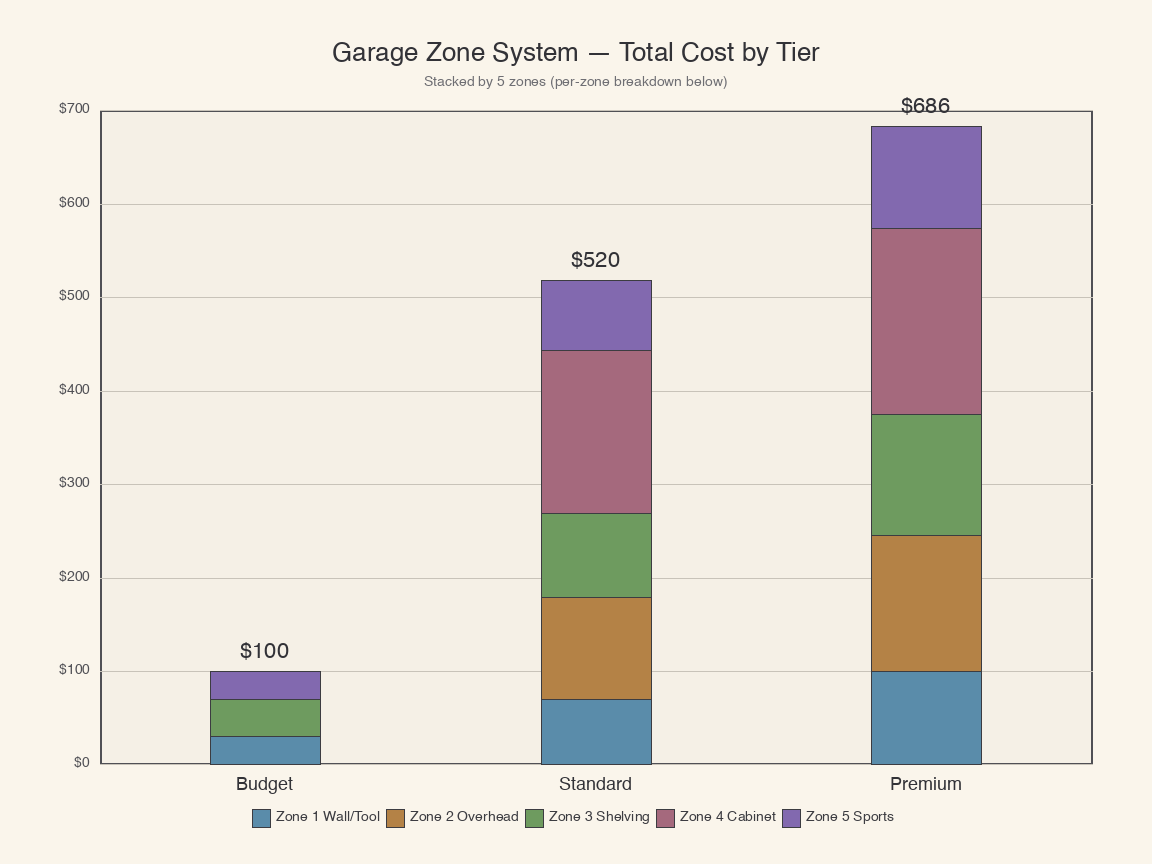
The pricing tiers earlier in this guide group products by individual price bracket. What most readers actually need is the total-system number: “what does a full 5-zone setup cost me, end-to-end?” This section breaks down costs zone by zone, then adds them up to a budget total so you can plan your spend before you click buy.
Per-Zone Cost Breakdown
| Zone | Storage System | Entry Cost | Mid Cost | Premium Cost | Notes |
|---|---|---|---|---|---|
| Zone 1 — Wall and Tool | 48-inch rail + pegboard | $30 | $70 (rail + pegboard) | $100 (rail + pegboard + tool stand) | Long-handled tools, daily pull |
| Zone 2 — Overhead and Seasonal | Overhead rack (4x8 or 2x8) | $110 (2x8 compact) | $146 (4x8 full) | $160 (4x8 heavy-duty) | 8-foot ceiling minimum |
| Zone 3 — Shelving | 5-tier metal shelving | $40 | $90 (single unit + bins) | $130 (2 units + bins) | Hardware, labeled bins |
| Zone 4 — Cabinet and Secure | Lockable metal cabinet | $130 | $175 | $200 (with internal shelving) | Hazardous, valuables |
| Zone 5 — Sports and Recreation | Bike hooks + sports bin | $30 | $75 (4-pack hooks) | $110 (hooks + rolling cart) | Bikes, balls, outdoor gear |
Per-zone cost factors: ceiling height (low ceilings skip Zone 2), garage width (narrow garages cannot fit 24-inch shelving), wall material (drywall-only walls require command-strip alternatives for Zone 1), and whether hazardous materials exist (Zone 4 is mandatory only if you store paint, gas, or chemicals).
Total System Cost by Tier
Adding up a typical 5-zone system at three budget tiers:
| Tier | Zone 1 | Zone 2 | Zone 3 | Zone 4 | Zone 5 | Total |
|---|---|---|---|---|---|---|
| Budget ($200 cap) | $30 rail | $0 (skip overhead) | $40 shelving | $0 (skip cabinet) | $30 hooks | ~$100 + $40 bins and labels |
| Standard ($400-500) | $70 rail+pegboard | $110 compact rack | $90 shelving+bins | $175 cabinet | $75 bike hooks | ~$520 |
| Premium ($700+) | $100 rail+pegboard+stand | $146 full rack | $130 shelving+bins | $200 cabinet+shelves | $110 hooks+cart | ~$690 + $50 accessories |
For systems where some zones are intentionally skipped — a 2-zone wall + shelving setup for the smallest garages, or a 3-zone setup without sports storage — subtract the omitted zone’s mid-tier cost. The 1-car narrow-garage layout referenced earlier in this guide runs about $300 in actual purchased products (rail + compact rack + slim shelving + hooks), which lands between Budget and Standard tiers.
Where to Save vs Where to Spend
Save on: shelving (multiple brands hit acceptable quality under $50), bike hooks (basic hooks at hardware stores work as well as branded 4-packs for under $20), and bin sets (skip clear-sided premium bins; opaque stackables from any home improvement store handle Zone 3 hardware equally well).
Spend on: overhead rack (weight rating failures are catastrophic — buy from established brands like FLEXIMOUNTS with documented 750 lb ratings) and lockable cabinet (cheap cabinets have weak locks that fail within months; the Letaya Cabinet at $174.99 with 3-point locking is the cheapest reliable choice for Zone 4 hazardous storage). For a deeper comparison of cabinet types, see the Garage Storage Solutions: A 4-Type System guide.
For label and bin selection that affects Zone 3 cost accuracy, the Storage Bin Buying Guide walks through size, material, and stackability tradeoffs that change how many bins your Zone 3 shelving actually needs. To stretch the budget further across the whole house, the declutter on a budget method covers systematic low-cost approaches that pair well with the Budget tier above.