Garage cabinet storage comes in two paths — modular steel units you bolt together in an afternoon, and built-in cabinetry anchored to wall studs for a permanent workshop. For most homeowners, modular wins: steel construction handles 180 lbs per shelf, locks secure expensive tools, and you can reconfigure as projects change. This guide compares both paths across 7 product types, weighs them against rental, budget, and moisture constraints, and gives you a 5-zone layout for organizing real tools — not just holiday decor. The garage organization hub frames the room; the 4-type storage system places cabinets among rails, racks, and shelves.
Why Garage Cabinets Beat Open Shelving for Tool Storage
Open shelving collects sawdust, lets humidity corrode metal tools, and exposes valuables to anyone who walks in. Cabinets with locking doors solve three problems at once: security for power tools that cost $200-800, dust protection for precision tools like calipers and drill bits, and visual decluttering that makes the garage feel like a workshop instead of a storage unit.
The difference shows up fast. A garage with open shelves looks cluttered within a week of any project. The same garage with closed cabinet doors looks clean even when the shelves inside are full. If you haven’t decluttered yet, start with the declutter-fast method before buying cabinets — you’ll buy fewer units once the junk is gone.
Before you shop, though, you need to understand the two fundamental paths.
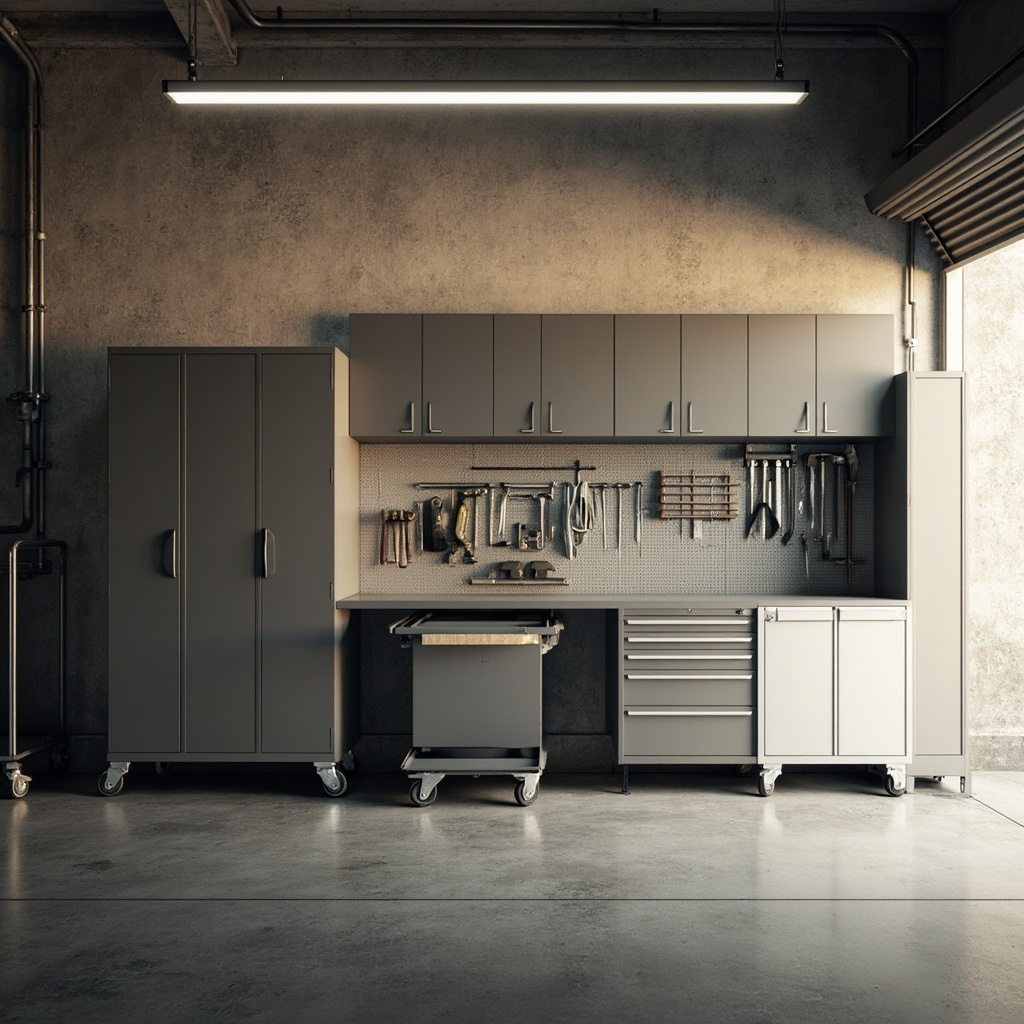
Modular vs Built-In: The Core Decision
Modular Steel Cabinets — The Default Path
Modular steel cabinets are bolt-together units made from 0.8-0.9mm cold-rolled steel with a powder-coated finish. You assemble them in an afternoon with basic hand tools. Shelves adjust in 2-inch increments, doors lock with a single key, and you can move the entire unit if your layout changes.
The Yizosh 72” Metal Storage Cabinet is the workhorse of this category: 5 shelves rated at 180 lbs each, two locking doors, and a 72-inch height that maximizes vertical storage. Pair it with the Letaya Tall Metal Storage Cabinet at $144.99 if you need a second unit on a tighter budget.
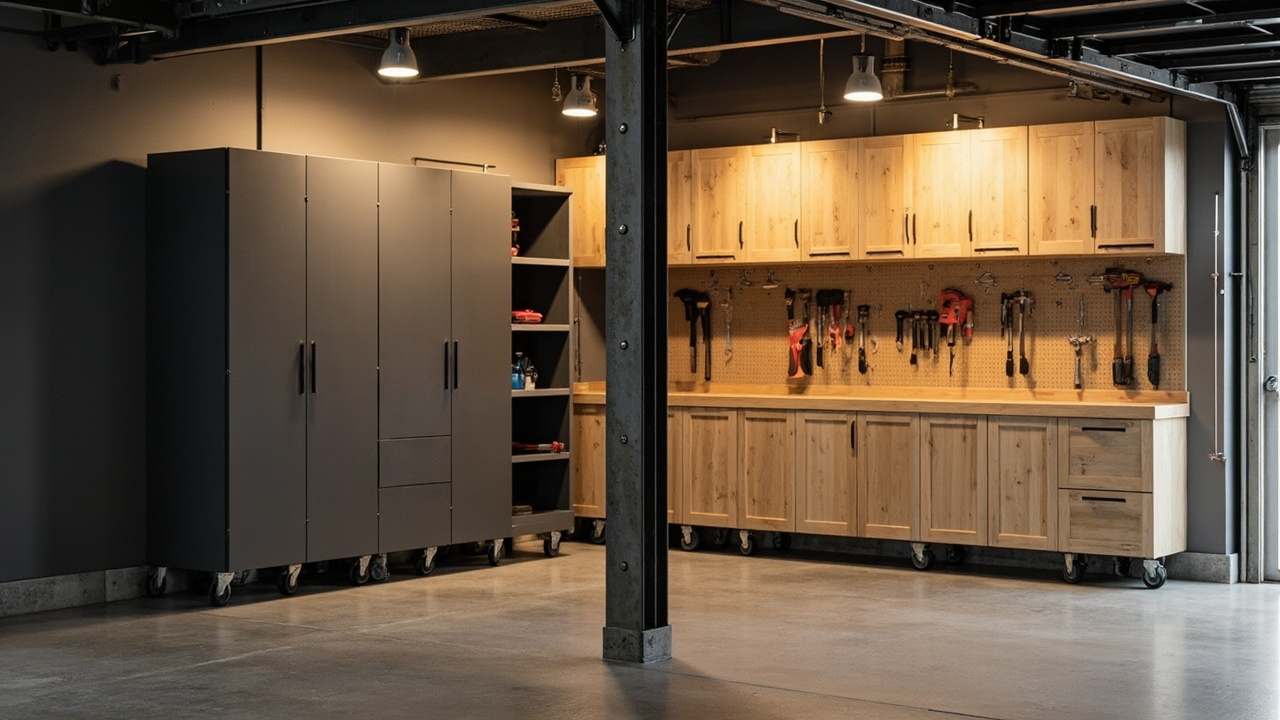
Built-In and Wall-Anchored Systems — The Permanent Path
Built-in systems are anchored to wall studs and designed to stay. They include Gladiator-style wall tracks, custom cabinetry installed by franchise companies, and hybrid systems that combine pegboard backs with modular bases. Custom installs from companies like GarageExperts or Garage Kings run $2,000-8,000 depending on linear footage and finish.
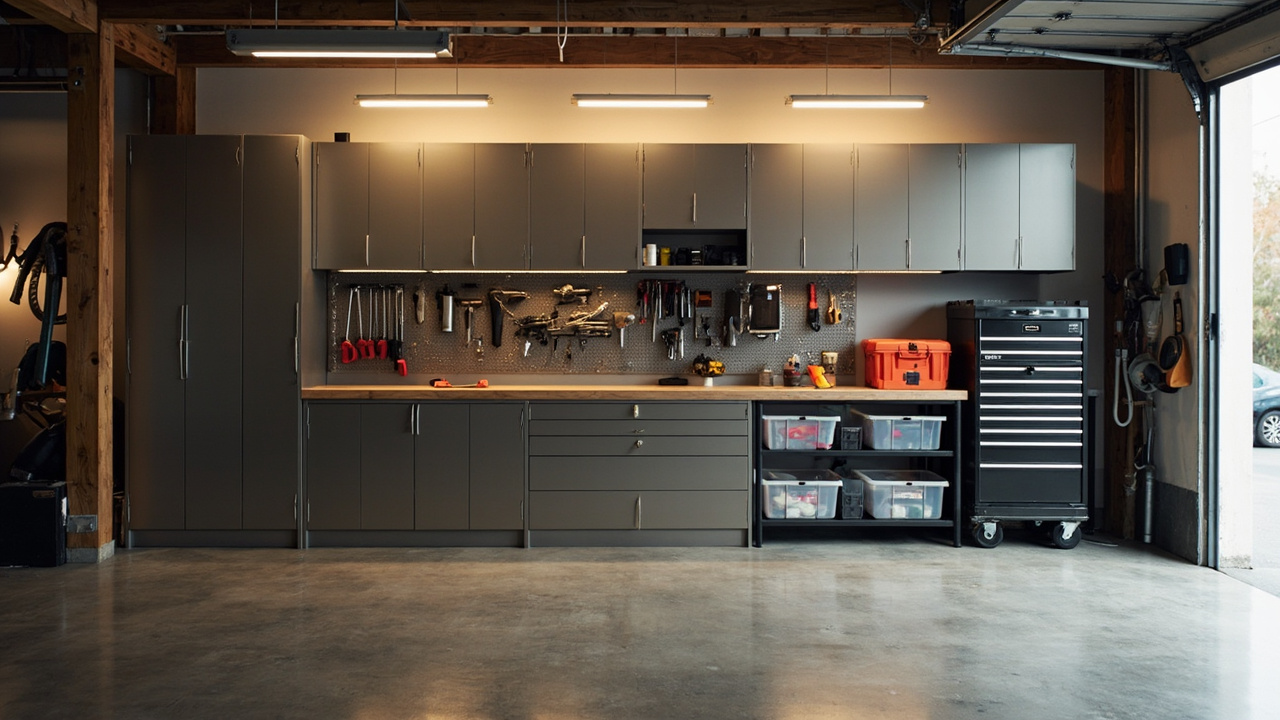
The bridge between modular and built-in is a pegboard wall system. The Ultrawall 48x36” Pegboard Organizer mounts to studs but costs $119.99 — a fraction of custom work. It holds 30+ hand tools visibly, which means you grab what you need without opening a door.
The Decision Framework
Your choice comes down to tenure, budget, and how permanent your workshop feels. Renters should stick to modular — you take it with you when the lease ends. Homeowners planning to stay 5+ years can justify built-in or hybrid. Budget under $200 per cabinet points to modular steel. Budget above $500 per cabinet opens the door to custom built-in.
Layout by Garage Size
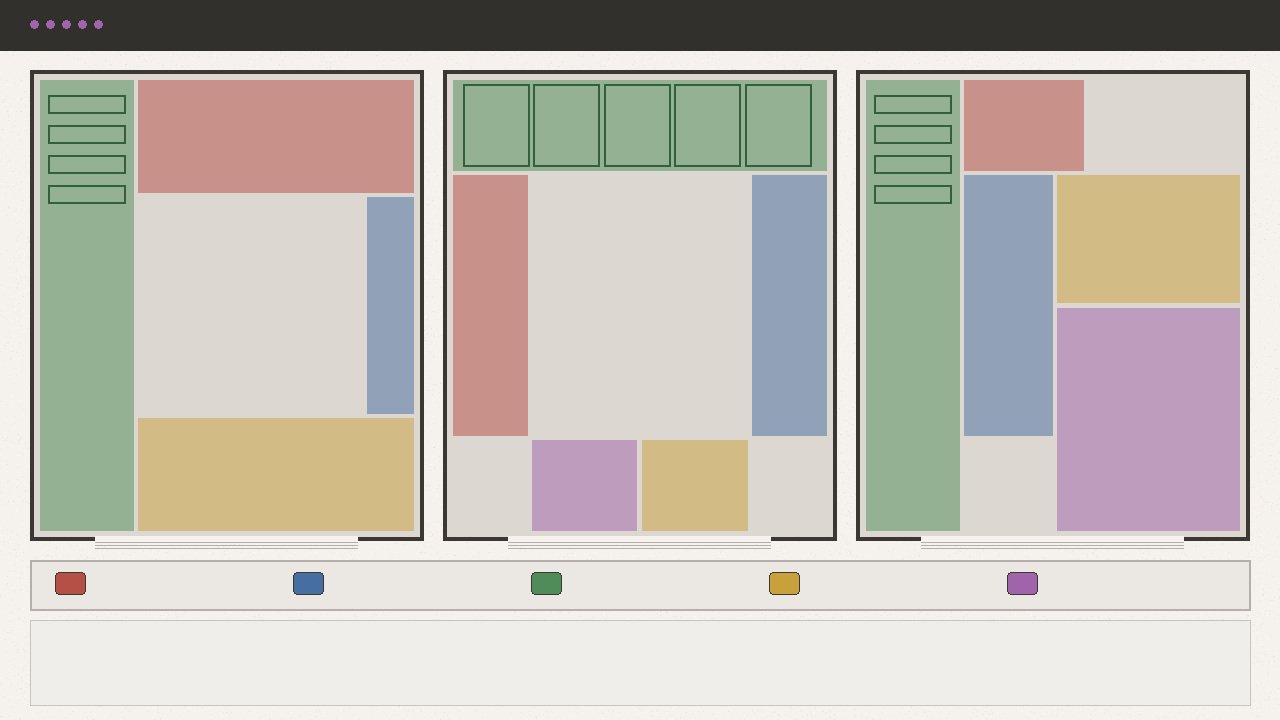
1-Car Garage (12x22 ft) — Vertical Priority
In a single-car garage, every inch of wall matters. Ceiling-height tall cabinets on one wall give you the most storage per square foot. A pegboard above the workbench handles hand tools you reach for constantly. The Yizosh 72” cabinet plus the Ultrawall pegboard and the WEN 48” workbench cover the three core zones. For more space-saving strategies, see small garage organization.
2-Car Garage (22x22 ft) — Zone System
A two-car garage has room for a modular cabinet wall with 3-4 units side by side. Add a rolling cabinet for mobile tool access so you don’t walk back and forth during a project. The Letaya rolling cabinet rolls to the car or driveway on 4 casters. For bulk items that don’t fit standard depths, the SISESOL wide cabinet at 36 inches wide handles auto parts and paint gallons.
Deep Garage (24x24+ ft) — Hybrid System
Larger garages can run a hybrid: built-in cabinet run on one wall, modular additions on another. Place a resin cabinet near the exterior door where temperature swings and humidity are worst. The Suncast resin cabinet handles that moisture-prone zone without rusting.
Constraint Guide
If You Rent — Modular Only, No Wall Anchors
Renters can’t drill into studs or mount permanent tracks. Rolling cabinets and freestanding units are the entire toolkit. The Letaya rolling cabinet and the Letaya tall locker both stand on their own. You take everything when the lease ends, and the next tenant never knows you were there.
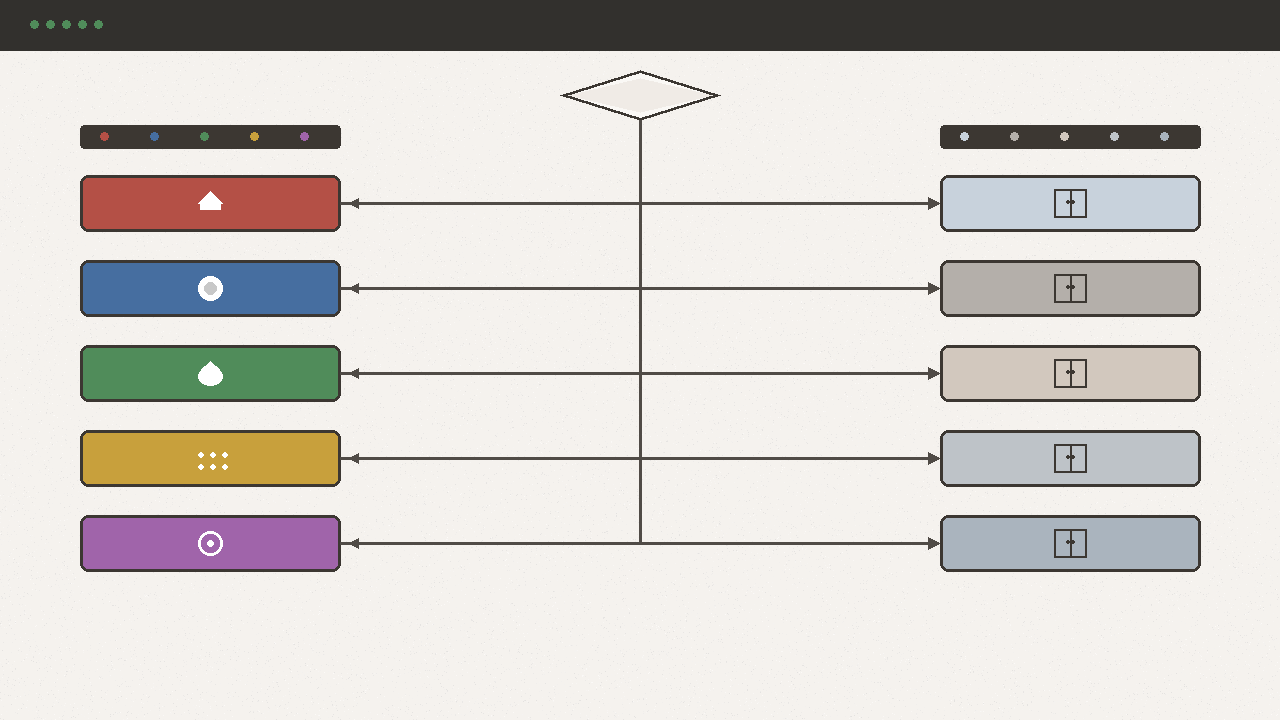
If You’re on a Budget Under $150 per Cabinet — Steel Tall Lockers
The Letaya tall locker at $144.99 gives you 5 shelves behind a locking door for less than $150. Skip the workbench with storage initially — add it later when the budget recovers. Pair it with a budget-friendly bin system for small parts organization inside.
If Your Garage Gets Damp — Resin, Not Steel
Steel rusts in coastal and humid climates within 12-18 months, even with powder coating. The Suncast resin cabinet is rust-proof, dent-resistant, and rated at 200 lbs per shelf. Keep moisture-sensitive items on the upper shelves, not the bottom one.
If You Already Have a Pegboard Wall — Add Cabinets Below
A pegboard wall handles the tools you grab 5+ times per project. Cabinets below handle the tools you use once a month. The Ultrawall pegboard above with a Yizosh tall cabinet below gives you visible tools and hidden storage in the same footprint.
If You Need Mobility — Rolling Over Stationary
Some tools live at the workbench. Others need to roll to the car or driveway. The Letaya rolling cabinet has 4 heavy-duty casters with locking wheels. The WEN workbench is semi-stationary but has drawers that keep project tools contained between sessions.
The 7 Cabinet Types Explained
Tall Steel Locking Cabinet
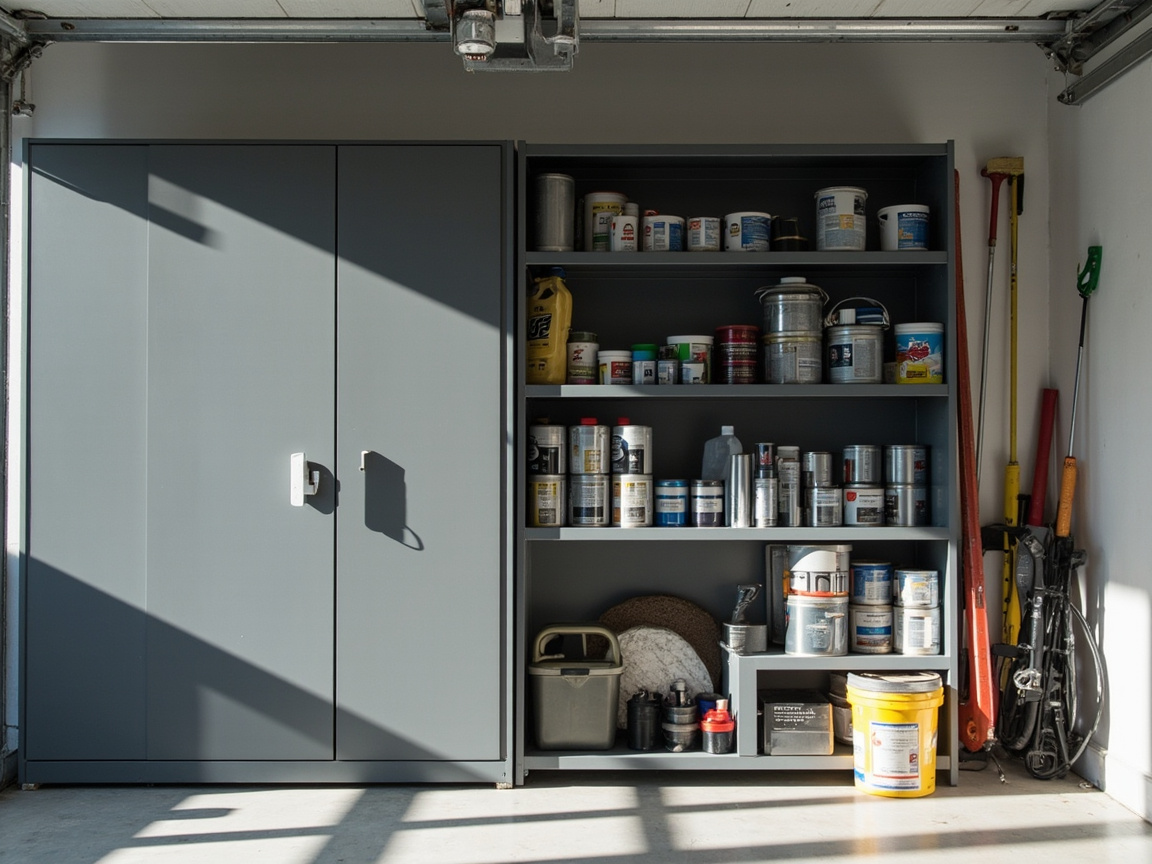
The Yizosh 72” cabinet is the category leader: 72-inch height, 5 adjustable shelves at 180 lbs each, two locking doors. Best for power tools, automotive supplies, and paint that needs to stay upright and secured.
Wide and Deep Cabinet
The SISESOL wide cabinet measures 36 inches wide by 18 inches deep — dimensions that fit bulky items standard cabinets reject. Best for auto parts, large power tools, and bulk supplies that don’t fit in a standard 30-inch unit.
Rolling and Mobile Cabinet
The Letaya rolling cabinet has 4 heavy-duty casters with locking wheels. Best for tools you use at the car or workbench but don’t want to carry.
Pegboard Wall System
The Ultrawall 48x36” pegboard is a powder-coated steel panel with included accessories. Best for hand tools you grab 5+ times per project — visible, reachable, no door to open.
Workbench with Storage
The WEN 48” workbench has a 48-inch work surface, built-in power outlets, an LED light, and a pegboard back. Two drawers and a lower shelf hold tools between sessions. Best for DIY projects and small engine repair.
Resin and Outdoor Cabinet
The Suncast resin cabinet is built from rust-proof resin rated at 200 lbs per shelf. Best for damp garages, outdoor-adjacent storage, and coastal climates where steel fails within a year.
Budget Tall Locker
The Letaya tall locker stands 71 inches tall with 5 shelves and a reinforced steel frame at $144.99. Best for maximizing storage per dollar when you need height but not premium features.
How to Measure Your Garage Before Buying
Step 1: Measure Wall Run Length
Run a tape measure from corner to the nearest door, window, or obstruction. Note electrical outlets and light switches — cabinets shouldn’t block access to either. A standard 30-inch wide cabinet needs 31 inches of clear wall.
Step 2: Check Ceiling Height Clearance
Standard 72-inch tall cabinets need at least 73 inches of clearance. Measure from the floor to the lowest obstruction: garage door track, opener rail, or any overhead storage. If the door track dips below 78 inches, tall cabinets may not fit on that wall.
Step 3: Verify Floor Levelness
Place a level on the cabinet wall run. If the floor slopes more than 1/4 inch over 6 feet, you’ll need shims under the cabinet feet. Unlevel floors cause doors to bind and locks to misalign over time.
Common Mistakes
- Buying Cabinets Before Measuring
Nearly a third of negative cabinet reviews cite fit problems. Measure the wall run, ceiling clearance, and floor levelness before you order anything. If you’re starting from scratch, declutter the garage first so you know exactly what you’re storing.
- Ignoring Weight Capacity per Shelf
Yizosh shelves hold 180 lbs each — but stacking five 1-gallon paint cans (45 lbs per shelf) across five shelves adds up to 225 lbs of paint alone. Distribute heavy items across shelves instead of loading one to capacity.
- Choosing Steel in a Damp Garage Without Rust Prevention
Coastal garages turn powder-coated steel cabinets rusty within 12-18 months. Use the Suncast resin cabinet in moisture-prone zones, or apply rust-inhibitor spray to steel cabinets annually.
- Forgetting to Anchor Tall Cabinets
A 72-inch tall cabinet loaded top-heavy will tip. Anchor it to wall studs with the included hardware or buy anti-tip straps rated for 200+ lbs. This is a safety issue, not an aesthetic one.
- Blocking Garage Door Opener Clearance
Wall cabinets mounted above 6 feet 6 inches may interfere with the garage door track. Check the door travel path before mounting anything above 78 inches. The vertical storage hooks guide covers clearance rules for wall-mounted systems.
Maintenance: Quarterly Garage Cabinet Reset
Every 3 Months
Empty one cabinet zone at a time, wipe down the shelves, and audit expired chemicals — paint, adhesives, and solvents go bad. Reorganize tools that migrated from their assigned zones during projects.
Annually
Check lock mechanisms and lubricate hinges with a dry-film lubricant. Inspect for rust or dents, and touch up powder coating with appliance touch-up paint. Re-level the cabinets if the floor has settled over the year.
Related
- Garage organization hub — the 5-zone system overview
- 4-type garage storage system — cabinets are one of four storage types
- 5-zone garage layout framework — places each cabinet type by zone
- Complete garage organization guide — the full garage reset
- Space-saving strategies for 1-car garages
- Declutter your garage before buying cabinets
- KonMari method for decluttering before organizing
- Quick decluttering before cabinet installation
- Budget-friendly decluttering approach
- Choosing storage bins that go inside garage cabinets
- Vertical storage hooks for garage walls
Key Takeaways
- Modular steel cabinets beat open shelving for tool security, dust protection, and visual decluttering.
- The modular-vs-built-in choice depends on how long you’ll stay and what your budget allows per cabinet.
- Always measure wall run, ceiling clearance, and floor levelness before ordering — fit issues drive most returns.
- Match material to environment: steel for dry garages, resin for damp or coastal ones.
- A 5-zone layout — tool wall, workbench, cabinet wall, bulk storage, seasonal — prevents tools from migrating between projects.
- Anchor tall cabinets to wall studs. A loaded 72-inch cabinet is a tip-over risk without it.
- A quarterly reset keeps the cabinet system working as projects and seasons change.