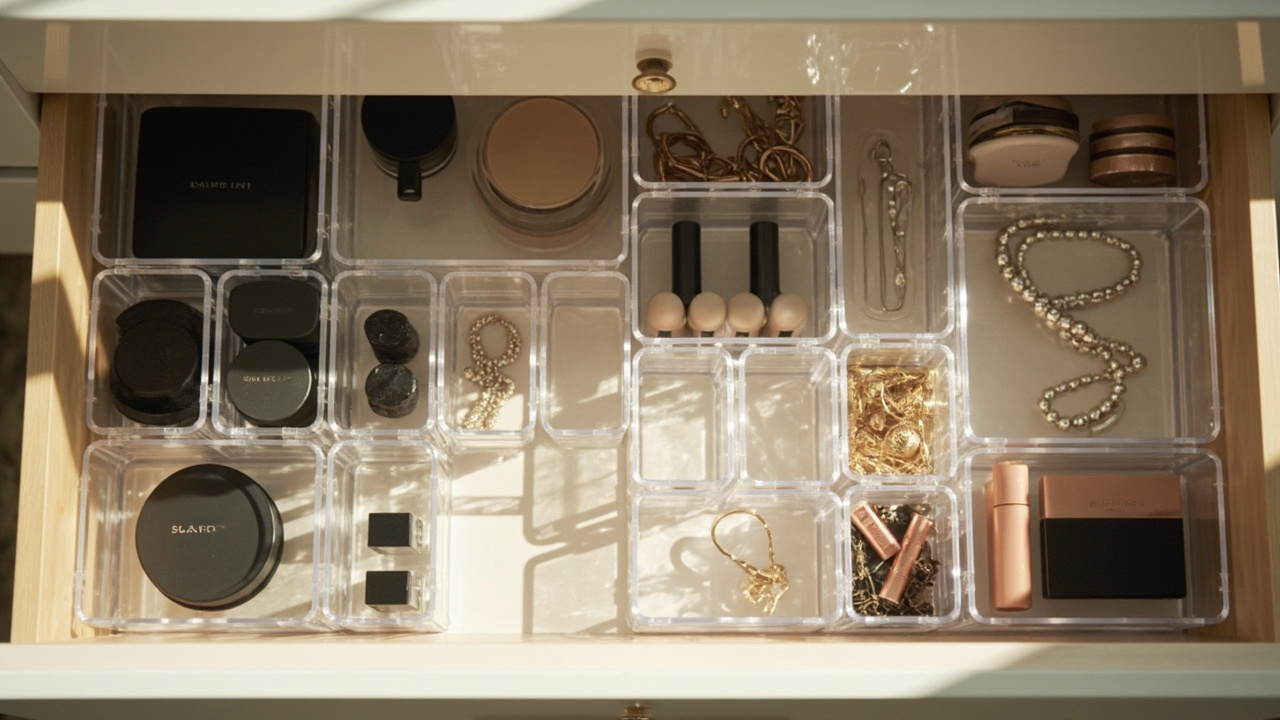
Most drawer organizer guides lead with product recommendations. This one starts with measurement. Most returns happen because people buy before measuring. Spend 10 minutes with a tape measure and the rest of the decision falls into place.
The wrong organizer wastes $15 to $40 and migrates to the junk drawer within six months. The right one makes every drawer feel twice as deep — you stop digging for the tape measure or the right screwdriver, and the drawer becomes the place things live, not the place things get lost.
This guide walks through the 5 factors that actually matter — Material, Size, Visibility, Stackability, Durability — then matches each factor to room-specific recommendations and picks that work.
Measure First: The 10-Minute Pre-Buy Workflow
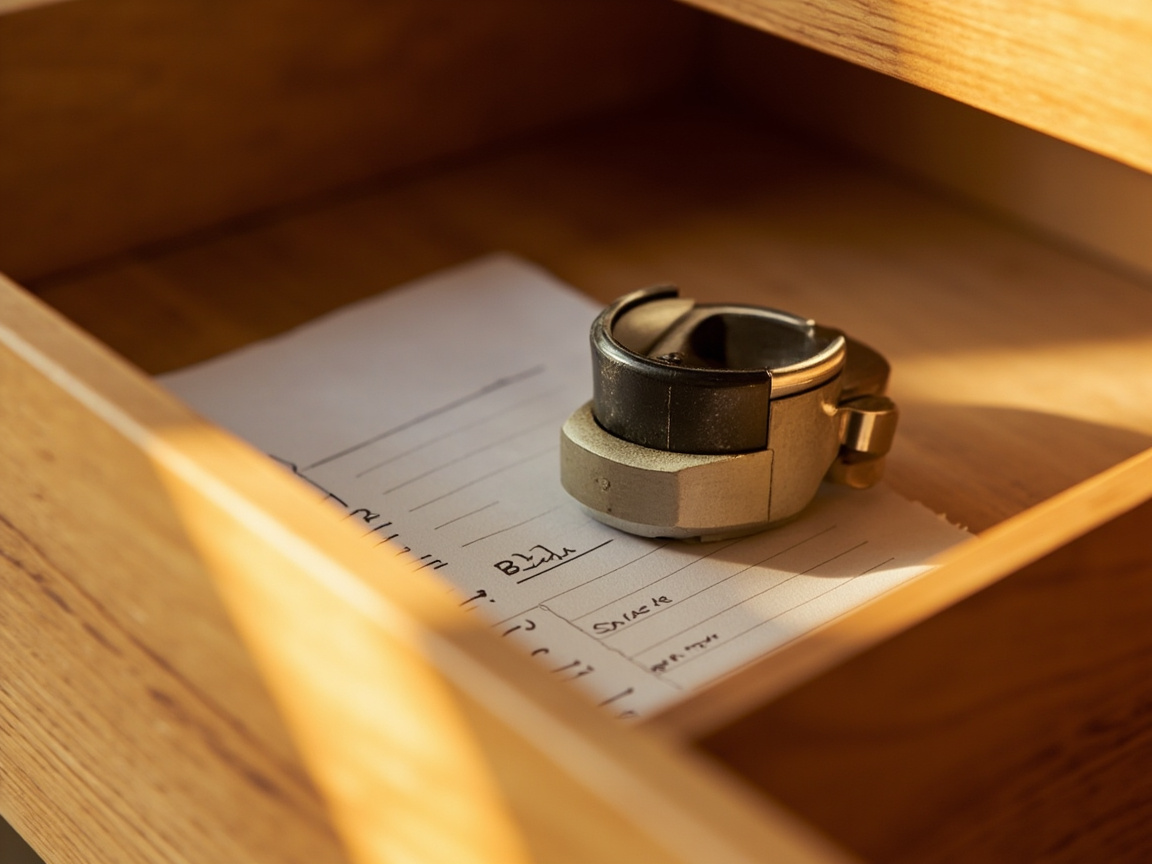
Before browsing Amazon, write down four numbers for each drawer you’ll organize:
- Interior width (left to right, inside the drawer walls)
- Interior depth (front to back, inside the drawer)
- Interior height (top of the drawer bottom to the bottom of the drawer face)
- Usable height above the drawer face (clearance between drawer top and the next drawer or counter — affects stackable inserts)
Now apply three rules:
- Subtract 1 to 2 inches per dimension for finger access. A 16-inch-deep drawer needs organizers no deeper than 14 inches.
- Add at least 0.5 inch of clearance on width if the organizer is rigid (plastic, bamboo). Expandable dividers can run drawer-edge to drawer-edge.
- Match organizer height to the shallowest dimension — a 4-inch dresser drawer cannot accept a 6-inch-tall cutlery tray.
IKEA’s kitchen drawer guide groups trays by drawer size — 15 inch, 18 inch, 24 inch, 30 inch — because most kitchens follow those standards. For non-standard dresser, vanity, and desk drawers, the four measurements above are the only reliable inputs.
Pre-declutter before measuring. Removing items you’ll never use means you may need fewer pieces than you think — the KonMari method guide walks through how to decide what sparks joy, and our decluttering before organizing system covers rapid triage for multi-drawer clearing.
Types of Drawer Organizers
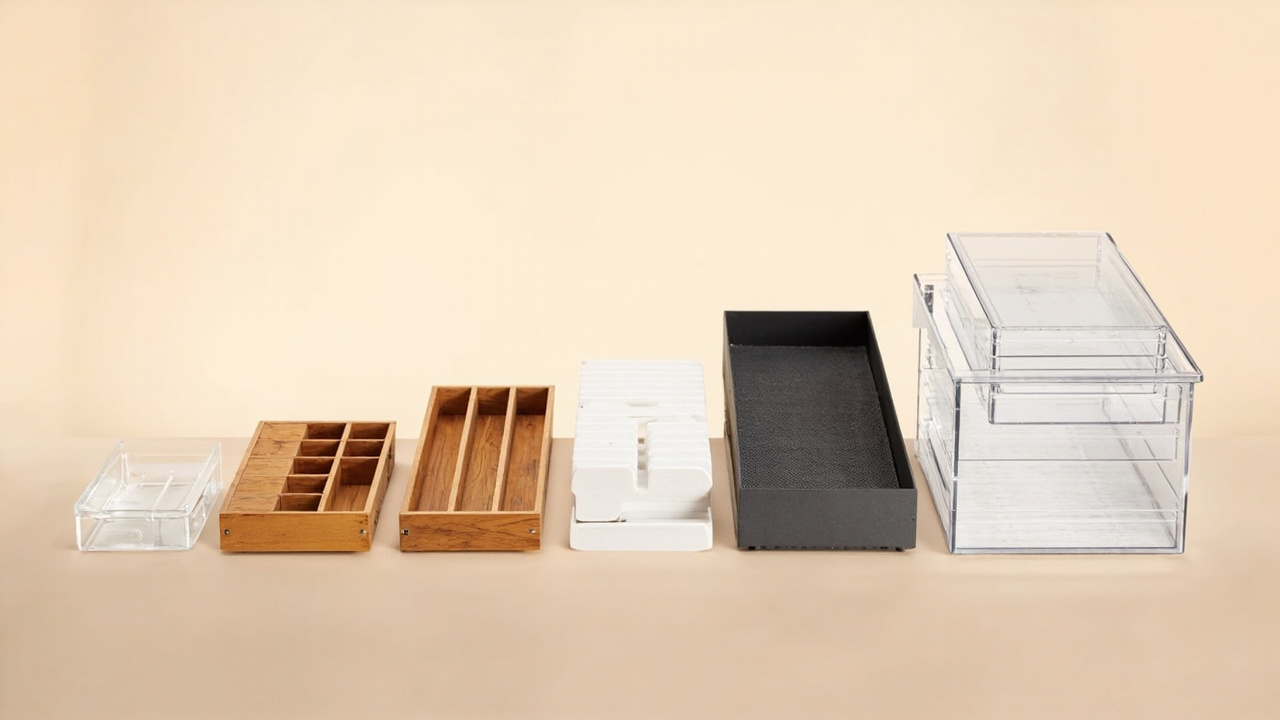
Five categories cover roughly 95% of what’s sold on Amazon. Each fits a different drawer scenario.
Rigid Plastic Trays
Clear or colored plastic trays in fixed sizes (3×3, 6×3, 9×3, 9×6 inches are common). Best for bathroom vanities, junk drawers, and office desks where visibility and easy cleaning matter. Stackable when empty — they nest to save cabinet space. Drawbacks: can stain, less premium feel.
Bamboo and Wood Trays
Solid bamboo or beechwood trays, often with fixed compartments for silverware. Best for visible kitchen drawers and nightstands where aesthetics matter. Drawbacks: heavier, harder to clean if not sealed, more expensive ($25-50 vs $15-25 for plastic).
Expandable and Adjustable Dividers
Spring-tension or slotted dividers that expand to fit drawer width (typically 11-19 inches). Best for dresser drawers, closet drawers, and any drawer holding clothes, linens, or items that shift shape (pajamas, workout gear). Drawbacks: less compartmentalization for tiny items.
Mesh and Metal Inserts
Powder-coated wire mesh trays. Best for office drawers, kitchen drawers with utensils, and any drawer that needs air circulation. Drawbacks: small items can fall through gaps, less tidy look.
Acrylic Modular Systems
Premium clear acrylic with modular compartments (think Home Edit aesthetic). Best for makeup vanities, medicine cabinets, and visible drawers where the “Pinterest look” matters. Drawbacks: highest price ($30-60), scratches more easily than plastic.
How to Choose: 5 Key Factors
Factor 1: Material
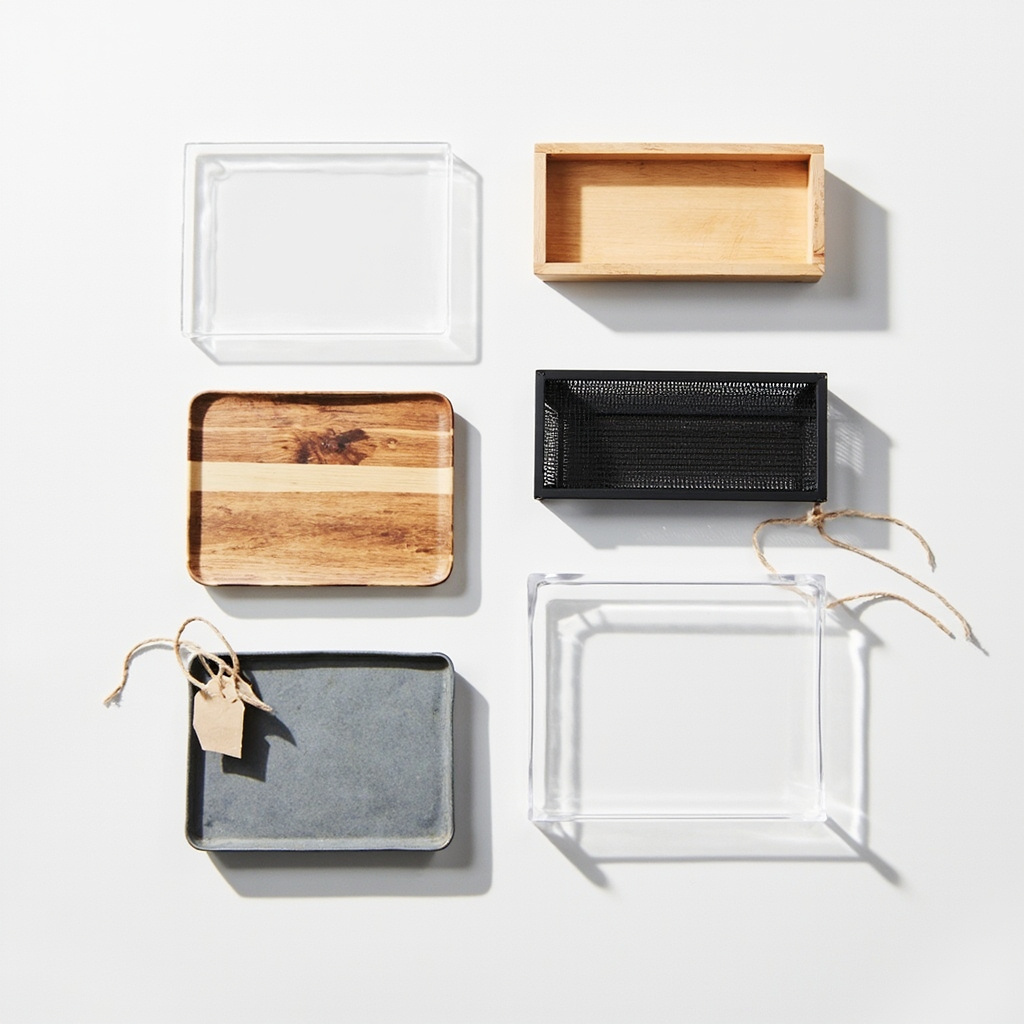
Material drives price, durability, and aesthetic. Plastic wins for hygiene (wipes clean) and budget. Bamboo wins for visible kitchen and bedroom drawers. Metal wins for office and heavy-use drawers. Acrylic wins for vanity displays.
The same material rules apply whether you’re organizing drawers or shelves — our plastic vs fabric bins guide covers material science in detail, and the principles transfer directly.
Factor 2: Size and Fit
The most common mistake is buying before measuring. Match organizer dimensions to interior drawer dimensions minus 1 to 2 inches clearance per side. For non-standard drawers, expandable dividers adapt to fit. Rigid trays need exact-match sizing.
If your drawer is wider than 18 inches, plan for two or more smaller organizers rather than one oversized one. Oversized trays flex and warp; smaller trays stay rigid and last longer.
Factor 3: Visibility
Clear vs opaque changes how you use the drawer. Clear trays work for daily-use drawers where you reach in often — you see what’s there without picking up each piece. Opaque bamboo works for dressers where the closed-drawer aesthetic matters more than in-drawer visibility.
The decision tree is the same one we use for bins: see our clear vs opaque bins guide for the full visibility framework, then apply it to drawers.
Factor 4: Stackability and Modularity
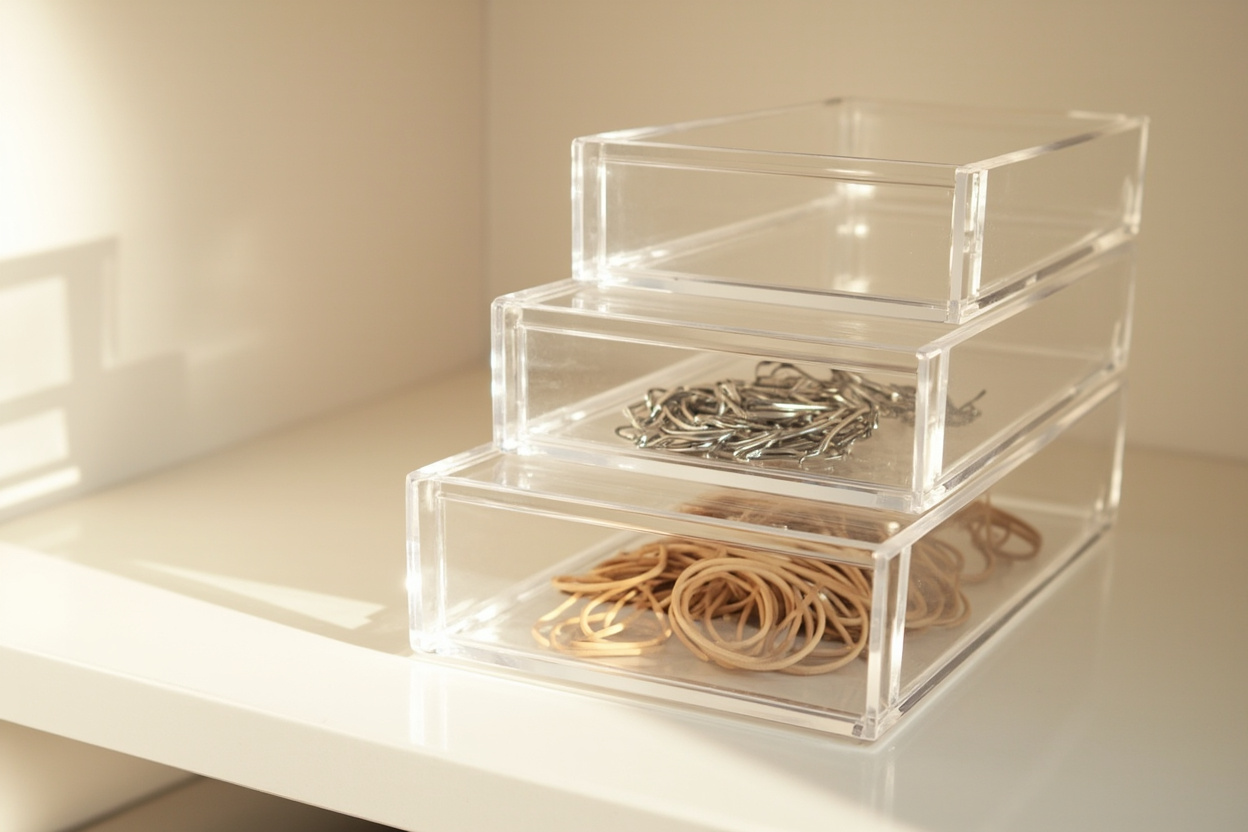
Stackable trays nest when empty and stack when full — reclaiming cabinet space. Modular systems let you reconfigure compartments as your needs change. For tiny-item drawers (makeup, hardware, office supplies), modular beats fixed-size every time.
The Vtopmart 44-pc clear plastic set comes in four sizes with 200 silicone non-slip pads included — best value when you need to fill multiple drawers and want them to coordinate.
Factor 5: Durability and Weight Capacity
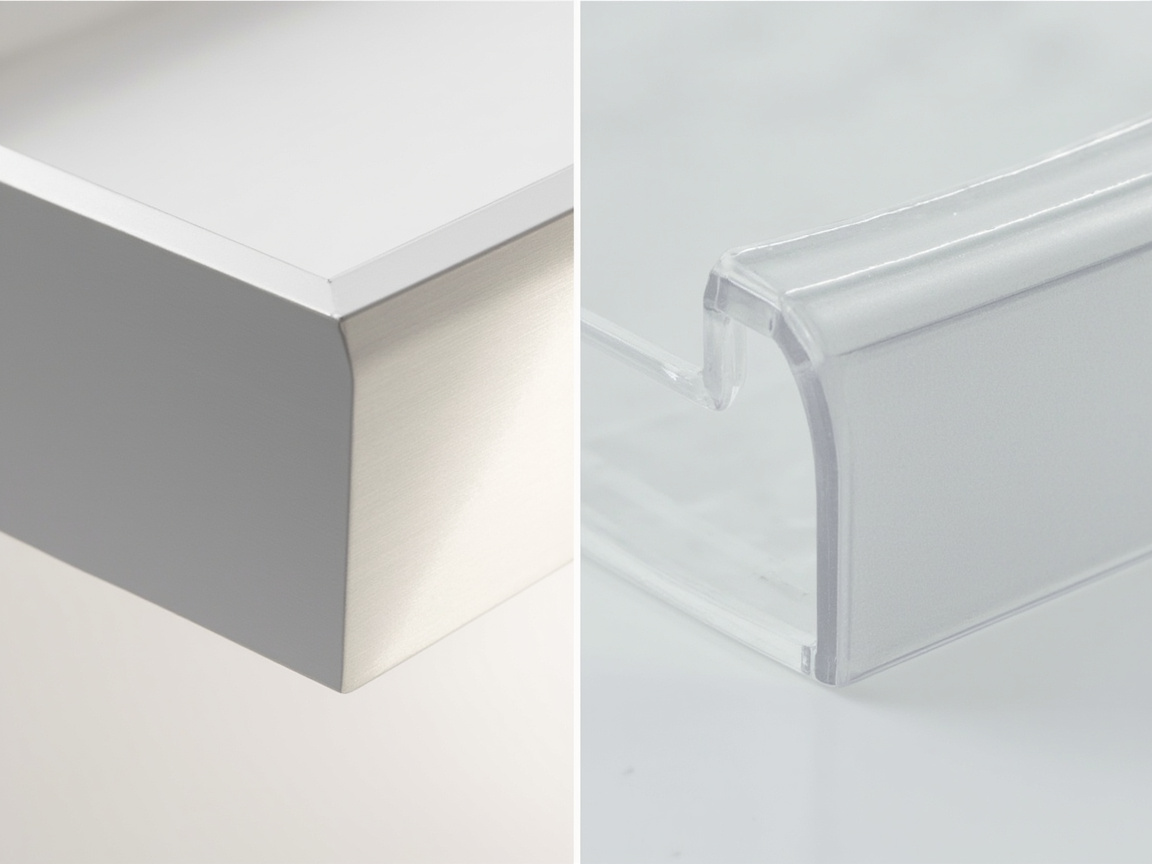
Three durability signals matter:
- Wall thickness — thicker walls last 5+ years; thin walls flex and crack within 18 months of daily use.
- Hinge quality — relevant for expandable dividers with moving parts; cheap plastic hinges snap on first adjustment.
- Edge finishing — smooth edges last; rough edges catch and tear clothing and small items.
For utensil drawers holding silverware, weight capacity matters. Cheap bamboo can crack under heavy cutlery if the walls are thin. The ROYAL CRAFT WOOD luxury bamboo tray uses thick 9-slot bamboo that handles daily silverware load without cracking.
Room-by-Room Recommendations
Kitchen — Silverware, Utensils, and Junk Drawers
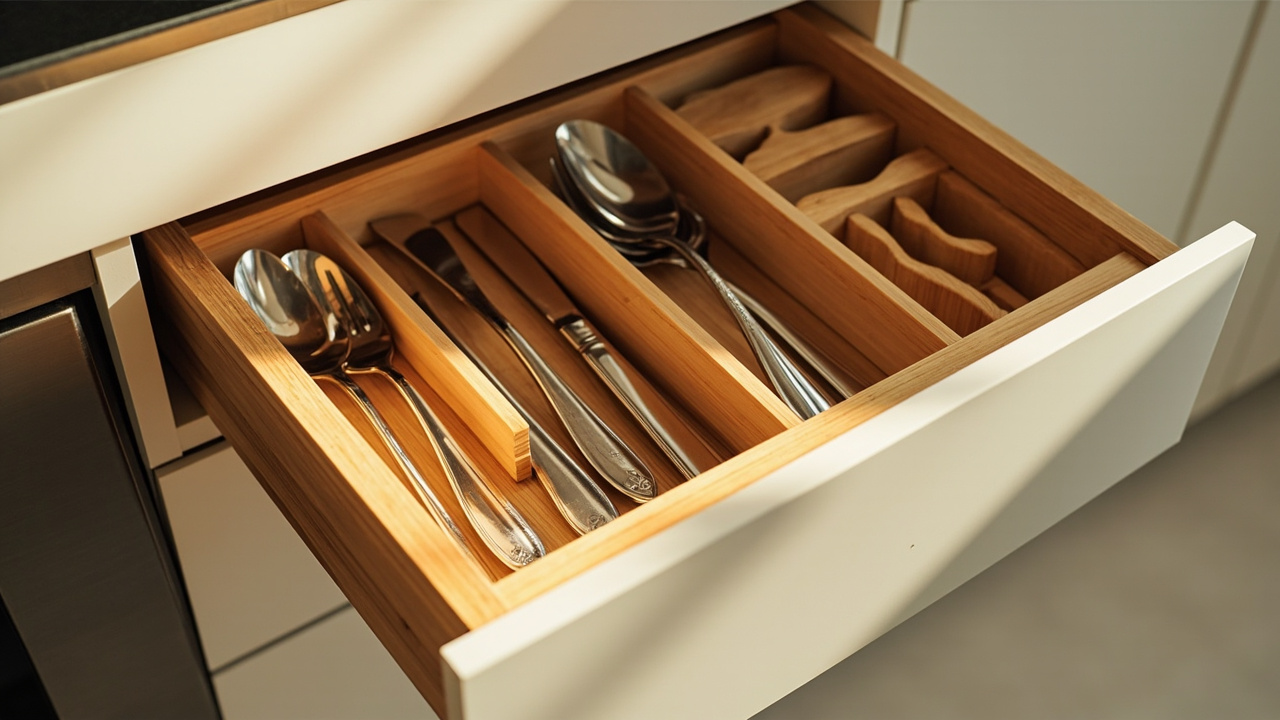
Bamboo trays for silverware (premium aesthetic, durable for daily cutlery). Plastic stackable trays for the junk drawer (visibility plus easy cleaning). Expandable dividers for spice drawers where bottle sizes vary. For the broader kitchen drawer context — pantry, cabinets, drawers — see our kitchen pantry guide.
The Pipishell bamboo expandable tray adjusts to fit 13-22 inch drawer widths, so it works for both standard 18-inch silverware drawers and wider 22-inch kitchen utility drawers.
Bathroom — Vanity and Makeup Drawers
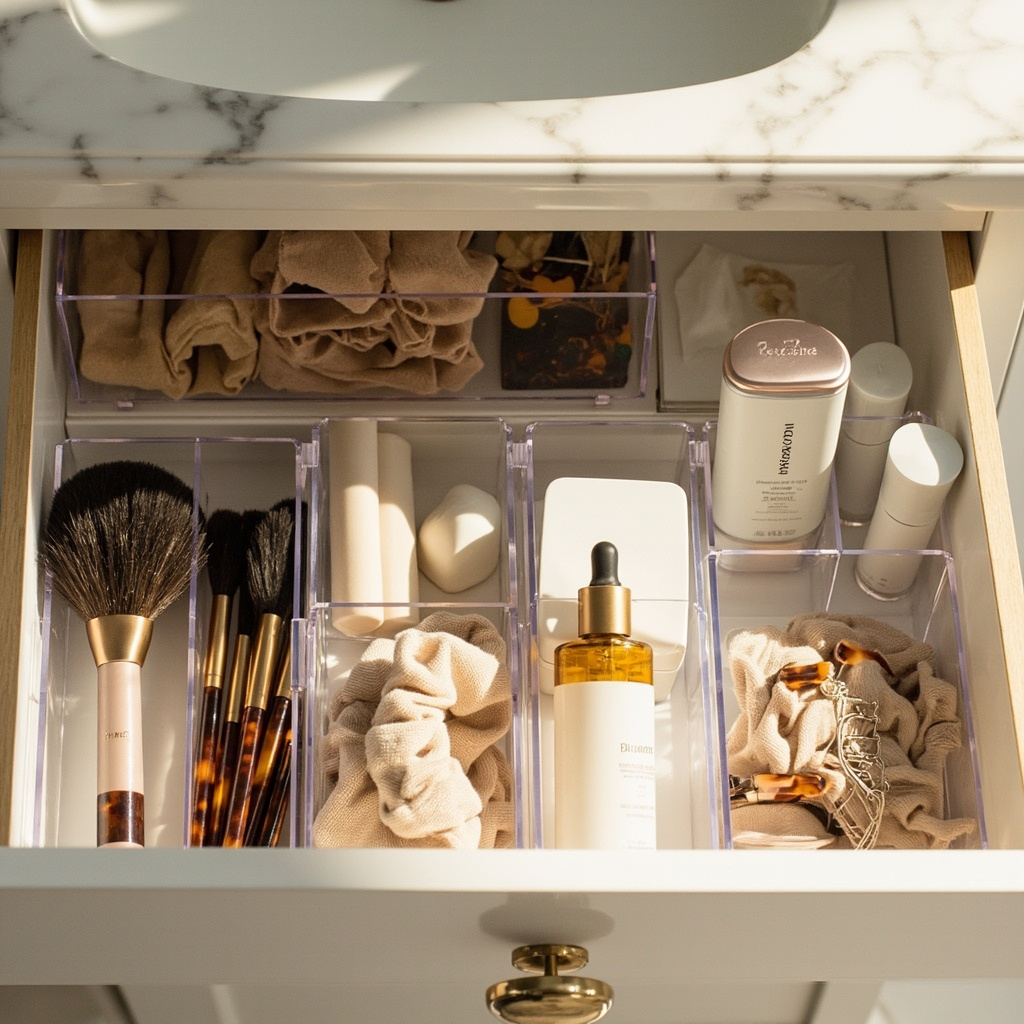
Clear plastic or acrylic trays in 4-6 sizes. Visibility matters because you reach for specific items daily. Stackable saves space when drawers run shallow.
The small-item logic applies across rooms — for spice organization in the kitchen, our spice organization guide uses the same clear-tray approach for similar-sized bottles and jars.
Bedroom — Dresser Drawers
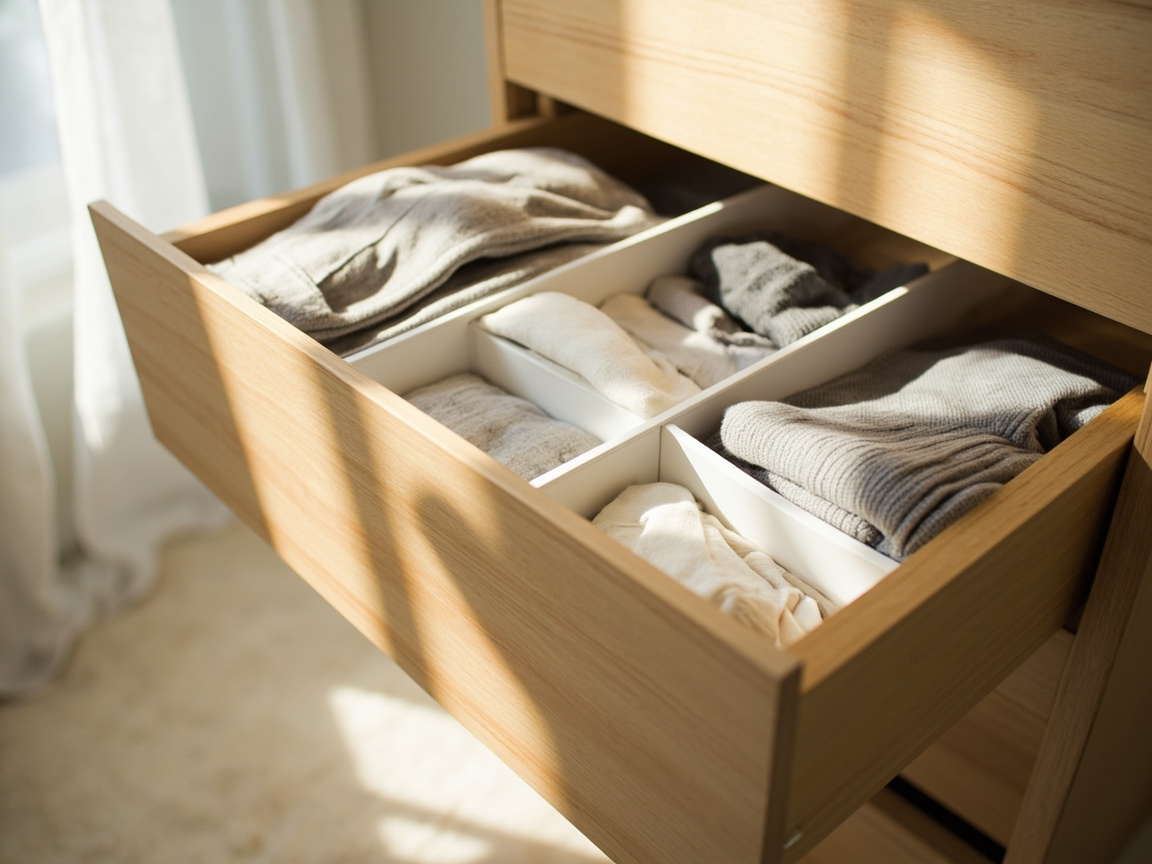
Adjustable dividers sized for clothing (4-inch-tall is the sweet spot). Multiple shorter dividers let you reconfigure as wardrobe changes. Avoid rigid trays in dresser drawers — clothes compress, fixed sizes waste space.
The Lifewit 5-pack dresser dividers adjust from 11 to 17 inches and stand 4 inches tall — perfect for folded shirts, underwear, and socks in standard dresser drawers.
Office and Desk Drawers
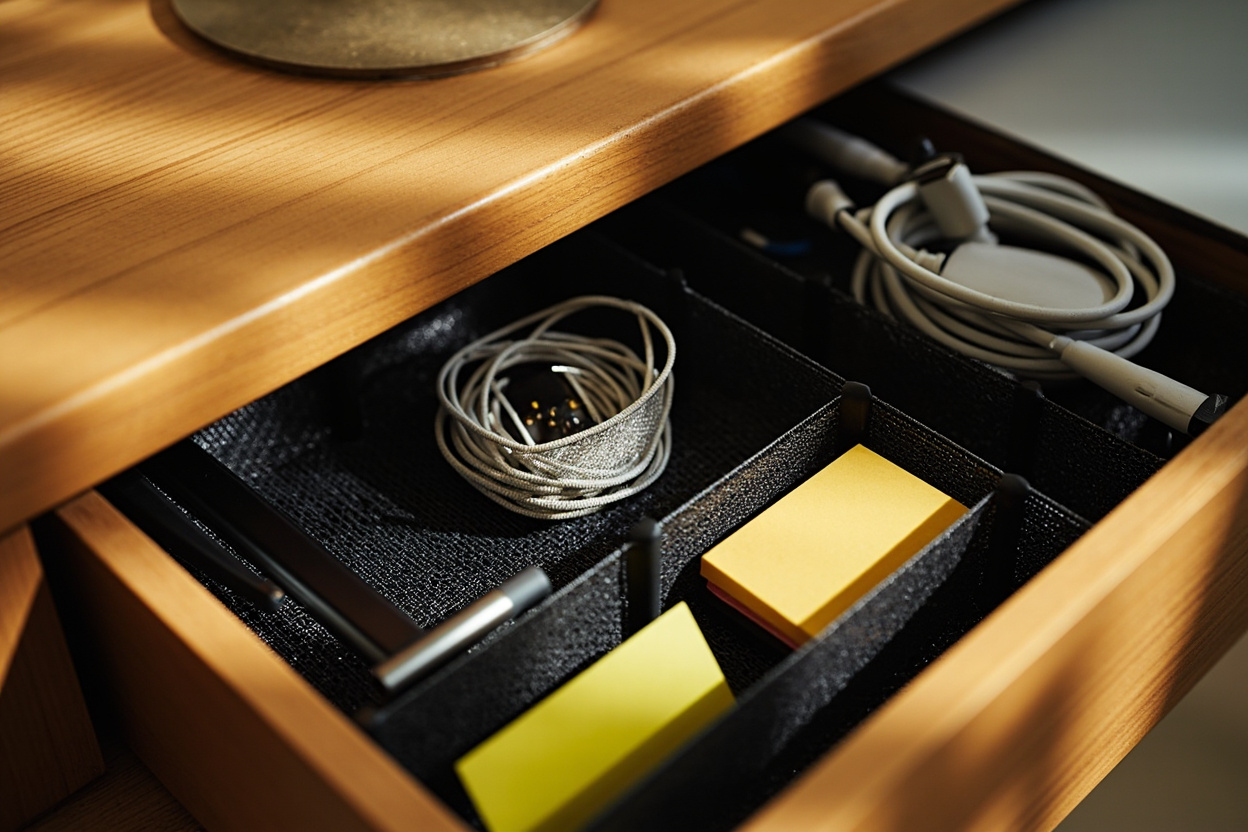
Mesh or metal inserts for office supplies (pens, paperclips, sticky notes) — air circulation matters less for dry goods but visibility matters more. Modular plastic for tech cables and adapters.
The Marbrasse expandable mesh tray ships with 10 adjustable compartments and 5 dividers — enough to sort pens, USB cables, sticky notes, and SD cards in one drawer.
Small-space drawer logic transfers between rooms — the small kitchen organization guide covers the same “fit more in less space” thinking that applies to cramped desk drawers.
Closet Drawers (Walk-in and Reach-in)
Multi-pack expandable dividers work best — closet drawers tend to be wide (24-36 inches) and shallow. Avoid single trays that don’t fill the width. The Vtopmart 12-pack closet dividers outfit several drawers at once for around $30 — best per-piece value when you have more than one closet drawer to organize.
For broader organizing principles that apply to closet drawers — pantry, cabinets, and beyond — our pantry organization checklist uses the same factor framework for kitchen zones and adapts to closet storage.
Common Mistakes to Avoid
Five mistakes show up consistently across Amazon 1-star reviews, Reddit organizing threads, and editorial listicles:
- Buying organizers before measuring — cited in Reddit r/organization as the #1 return reason. Without interior measurements minus 1 to 2 inches of clearance, the organizer either doesn’t fit or wastes space.
- Choosing aesthetic bamboo over function for deep kitchen drawers — Amazon 1-star reviews on bamboo sets (including the B07SRV3SN8 Pipishell) cite “generic fit” and “wasted space in deep drawers” — fixed-size bamboo trays don’t adapt to deeper drawers the way expandable plastic does.
- Mixing too many sizes within one drawer — even when each organizer fits, mixing 4+ different sizes in one drawer creates visual chaos. Best-of listicles like NY Mag Strategist’s drawer organizer roundup consistently recommend 1-3 sizes per drawer.
- Skipping non-slip pads — plastic and bamboo organizers slide around inside the drawer when you open and close it. The fix costs pennies — silicone non-slip pads stick to the bottom of each organizer. The Vtopmart 44-pc clear set includes 200 silicone pads, addressing this exact complaint.
- Ignoring drawer depth — buying tall trays for shallow drawers — Amazon 1-star reviews on adjustable dividers repeatedly cite “doesn’t fit my drawer height” as the top complaint. Always measure interior height before buying; dresser drawers are typically 4-6 inches while kitchen utility drawers can be 8-12 inches.
Constraint Guide: Pick by Situation
Six if-then branches to pick the right organizer in under 60 seconds:
- If your drawer is deeper than 18 inches → use stackable trays (one tier of cutlery plus one tier of utensils) to fill the vertical space.
- If your drawer is shallower than 3 inches → use low-profile expandable dividers (4-inch dividers won’t fit shallow dresser drawers).
- If you store clothes in the drawer → use adjustable dividers (clothing compresses, fixed sizes waste space).
- If the drawer is in a visible living space (kitchen island, nightstand) → use bamboo or acrylic (aesthetic matters when the drawer stays open).
- If you have a junk drawer (mixed items) → use clear plastic modular sets (visibility plus reconfigurable compartments as contents change).
- If you rent and can’t modify drawers → avoid permanent adhesive mounts; use non-slip pads only, and skip organizers that require screwing into the drawer walls.
Recommended Options
Eight products spanning all 5 Key Factors. Each picks one specific use case.
For makeup, bathroom vanity, and small-item drawers, the Vtopmart 44-pc clear plastic set covers 4 sizes with non-slip pads included — Amazon Best Seller rank #4 in Drawer Organizers.
For kitchen silverware on a budget, the WOWBOX 25-pc clear plastic set is Amazon Best Seller rank #1 and covers 4 sizes for kitchen, bedroom, bathroom, and office at $17.
For premium visible kitchen drawers, the ROYAL CRAFT WOOD luxury bamboo tray brings designer-grade 9-slot bamboo at $40 — fits kitchen islands where the drawer is part of the visible design.
For adjustable bamboo that grows with your silverware collection, the Pipishell bamboo expandable tray adjusts from 13 to 22 inches and costs $26 — best balance of bamboo aesthetic and fit flexibility.
For budget clear plastic in 4 sizes, the Vtopmart 25-pc clear set at $18 covers makeup, desk, and small-item drawers — best value for single-room setups.
For office desks with pens, USB cables, and tech accessories, the Marbrasse expandable mesh tray ships with 10 compartments and 5 dividers at $21 — powder-coated mesh handles daily drawer slides without snagging clothing or cables.
For bedroom dresser drawers with clothing that compresses, the Lifewit 5-pack dresser dividers at $16 adjust from 11 to 17 inches wide and stand 4 inches tall — the right height for folded shirts, underwear, and socks.
For walk-in closet or multi-drawer bedroom setups, the Vtopmart 12-pack closet dividers at $30 outfit several drawers at once — best per-piece value when you have more than one drawer to organize.
Putting It All Together
Drawer organizer selection comes down to measurement first, then matching 5 factors to the drawer’s room and contents. The framework — Material, Size, Visibility, Stackability, Durability — applies to any drawer in any room.
For the broader framework applied to bins and shelves, see our storage bin buying guide, plastic vs fabric bins comparison, and clear vs opaque bins guide. For deeper organization philosophy, the KonMari method guide and declutter fast system help you decide what makes it into the drawer in the first place. For room-specific drawer context — pantry, kitchen, bathroom, bedroom, closet — explore the room hubs linked throughout this guide.