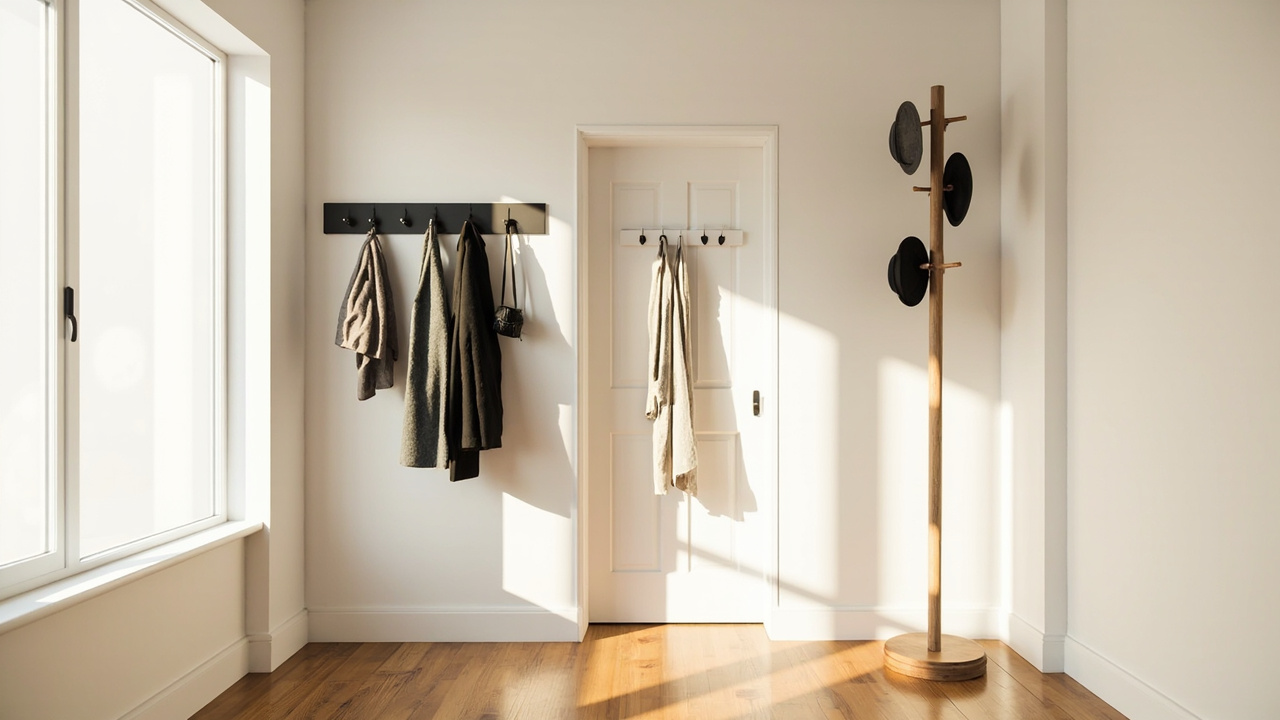
Entryway coat hooks come in three systems. Wall-mounted rails drill into studs or drywall for permanent capacity. Over-the-door racks slip over the top of a standard door with no tools. Standing coat trees hold themselves up on a weighted base. Wall hooks win for daily capacity, over-door wins for a 5-minute install with zero wall damage, and standing wins when the wall is off-limits.
Why entryway coat hooks matter
Coats end up on chair backs, bags land on the floor, and hats disappear into a closet nobody opens. Hooks are the highest-traffic hardware in the whole space, touched two to four times per person per day, which is why they fail loudly when the wrong system goes up.
In the four-zone framework on the entryway organization hub, coat hooks own the vertical zone. Choose the wrong system there and the damage is specific: anchors ripped out of drywall, a door hinge sagging under winter coats, or a top-heavy rack tipping onto a toddler. The entryway storage solutions guide covers the surrounding zones once the hooks are settled.
The 3 coat-hook systems at a glance
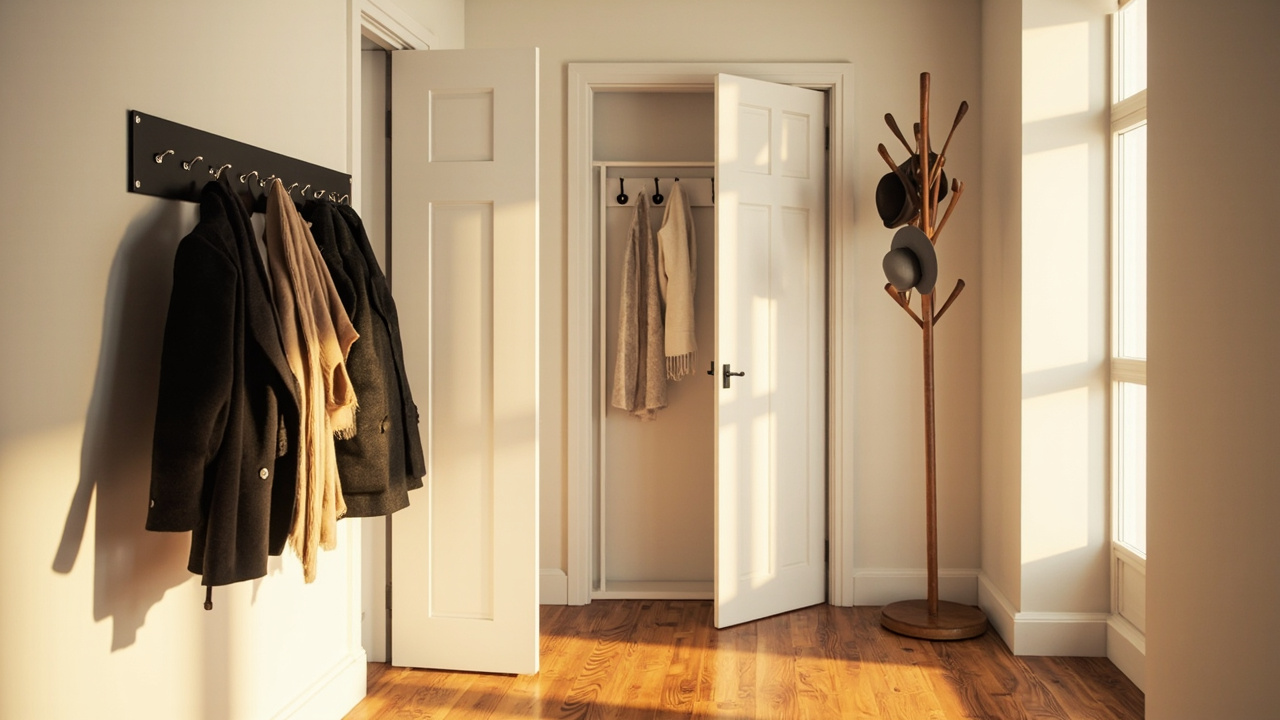
Install, capacity, and price side by side
| System | Install | Capacity | Wall damage | Price range |
|---|---|---|---|---|
| Wall-mounted | Drill plus anchors | 5 to 30 hooks | Screw holes | $10 to $65 |
| Over-the-door | Hang over door top | 4 to 14 hooks | None | $6 to $33 |
| Standing | Assemble only | 6 to 16 hooks | None | $15 to $25 |
The short version: if the wall is yours and you can drill, mount to the wall. If you rent or the entry has a metal or glass surface, go over the door. If the wall is brick or glass and you need the rack to move, go standing.
These systems aren’t mutually exclusive. A common working setup is a standing rack in the corner for guest coats, an over-door rack on the closet door, and a short wall rail at eye level for keys and leashes. For a broader look at hook styles beyond the entryway, see hooks and racks for vertical storage.
Layout by entryway size
Wall width and door clearance decide which system actually fits before capacity ever enters the conversation.
Small entryway under 36 inches
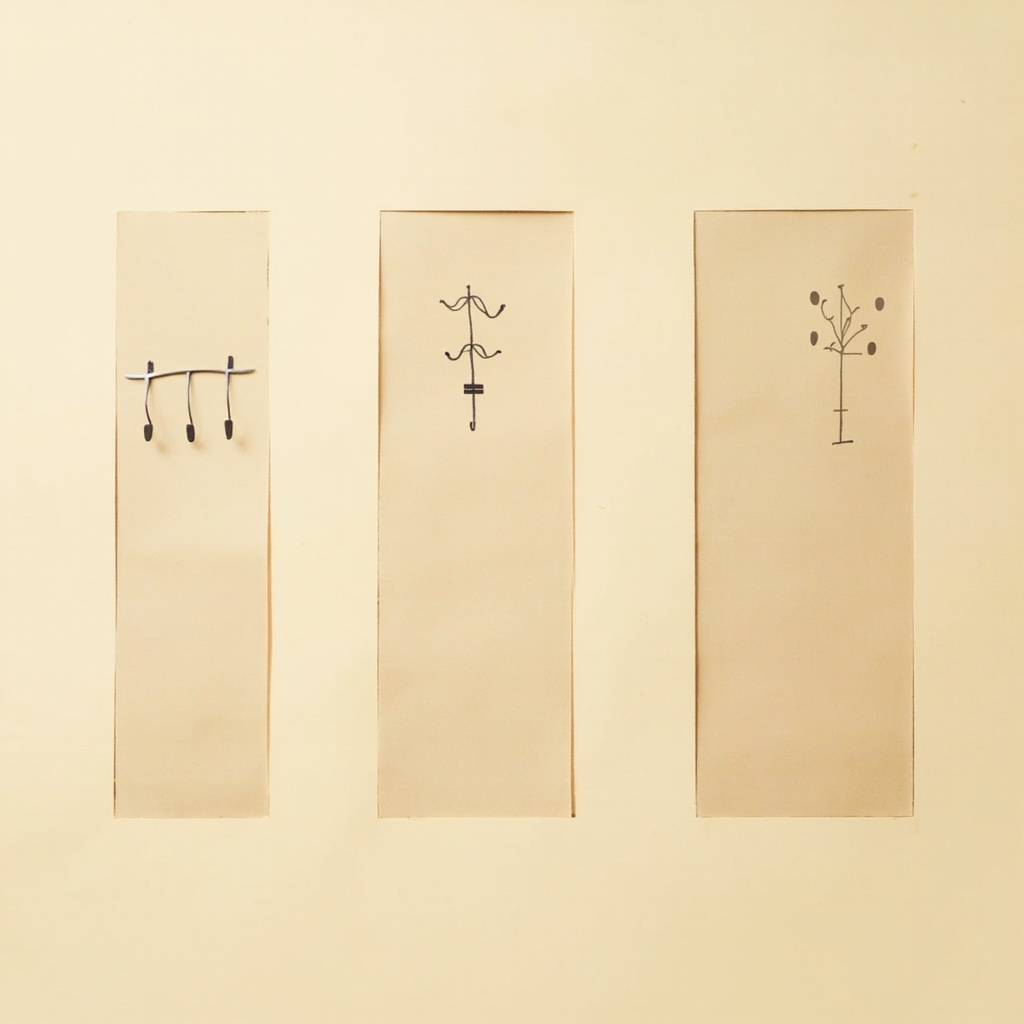
A single short rail is the only thing that won’t crowd the path. The VAEHOLD 5-hook wall rack spans 16 inches, which clears most narrow walls with room on both sides. Standing racks with a 13-inch base do fit a corner, but they block door swing in anything under 30 inches. If there’s no usable wall at all, the FYY over-door 4-pack skips the wall entirely. Skip hall trees and barn-door cabinets here.
Medium entryway 36 to 60 inches
This is the range where two systems start earning their space. A LYNK 14-hook over-door rack absorbs a family of four’s daily outerwear on the closet door, while a corner Pipishell solid wood coat tree catches hats and scarves. If you want a long-term anchor instead, the CBWLWJ 10-pack of double-prong hooks lets you set your own spacing across the whole wall.
Large entryway 60 inches or mudroom
Past 60 inches, aesthetics get a vote. The Kazai walnut coat rack reads as wall art in a finished foyer at $64.95. In a working mudroom, run two or three separate hook strips along the wall instead of one long rail so each family member has a defined landing spot, then add a standing rack in the corner for overflow and guest coats.
Wall-mounted coat hooks
Wall mounting gives you the highest capacity per dollar and the only setup that survives a decade of daily use. It also has the least forgiving install.
Install height and spacing
Mount the main row 60 to 66 inches from the floor. Add a 48-inch row if kids hang their own jackets, and a 72-inch row for seasonal gear. Space hooks 6 to 8 inches apart horizontally, otherwise coats overlap and the back hooks go unused. Find the studs first with a stud finder. The VAEHOLD rail spaces its five hooks about 3.2 inches apart, which suits scarves and bags more than bulky parkas, so treat its stated hook count as an upper bound.
Drywall anchors and weight limits
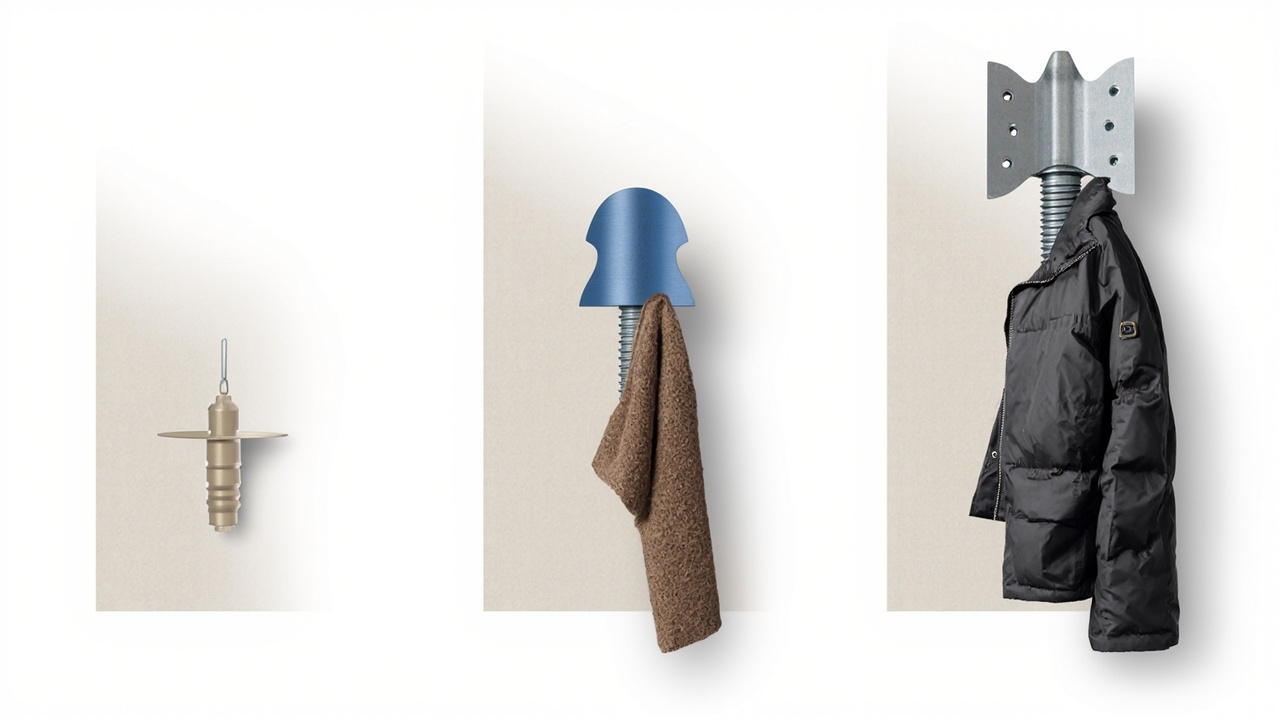
Standard drywall needs plastic expansion anchors for light loads or self-drilling threaded anchors rated 25 lb and up for coats. Plaster walls in pre-1960 homes call for toggle bolts once the load passes 50 lb. Brick or concrete needs a masonry bit and sleeve anchors, and once it’s in, a single six-hook rail carries 80 lb without complaint. A hollow-core door is not a wall and should never take wall-mount anchors. The CBWLWJ pack ships with 28 screws and 20 anchors, which is enough hardware to spread the load properly instead of overloading two points.
Picking a wall rail
One or two people can stop at the VAEHOLD rail. Four people or more should start with the CBWLWJ double-prong pack, since 20 hook ends across two strips beats one crowded rail. Renters who want the wall look without the holes can use the pickpiff stick-on hooks, rated 13 lb each on smooth painted or tiled surfaces.
Over-the-door coat hooks
Zero tools, zero holes, five minutes. That combination is why over-door racks are the default first purchase in a rental.
Door clearance and fit
Standard interior doors run 1-3/8 inches thick and take almost any over-door hook. Exterior and entry doors are usually 1-3/4 inches, so check the product spec before ordering. Clearance above the door is typically half an inch to an inch, and the hanger adds one to two inches of thickness to the door face. Close the door once with the rack empty to confirm it still seats flush against the frame.
Weight limits and door sag
Individual hooks hold 5 to 15 lb, but the hinge carries the sum. A fully loaded 14-hook rack can put 30 to 45 lb on the top hinge, and solid-core doors in daily use show visible sag inside a year at that load. Keep an interior door near 20 to 25 lb total and a solid-core door near 30 to 40 lb. Spread coats across the full width of the rack instead of clustering them at the center, and pull the heaviest parka off before slamming the door. The LYNK rack carries a lifetime warranty, which makes it the safer pick when the load is genuinely high.
Standing coat racks
A standing rack is the answer when there is no wall you’re allowed to touch and no door in the right place.
Floor space and footprint
Most freestanding trees sit on a 13 to 15 inch base and stand 60 to 72 inches tall. Corners are the natural home for them, since a rack in a walkway catches shins and sleeves. Leave at least 24 inches of clear path around the base. The Pipishell tree uses a 13-inch solid wood base, which is compact enough for a corner without feeling flimsy.
Tip-over safety and base weight
Base weight is the whole ballgame. Anything under 5 lb topples when a toddler runs past or a dog brushes a hanging coat, and hollow metal bases are the usual offenders. Solid wood holds better. Most manufacturers include an anti-tip strap or recommend a single screw into the wall, and in a household with kids that step isn’t optional. The WANGMUXIA adjustable coat rack sets to three heights, and running it at mid-height drops the center of gravity noticeably.
Constraint Guide by scenario
Physical size gets you halfway. These constraints decide the rest.
If you rent and can’t drill
Over-door hooks are the clean answer: either the FYY 4-pack at under $6 or the LYNK 14-hook rack if the household is bigger. A WANGMUXIA standing rack works as the backup with nothing but assembly. Adhesive hooks stick fine but can lift paint on removal, so test one in a low-visibility spot first. More renter tactics live in small entryway organization.
If the wall is brick, glass, or concrete
A standing rack is the only long-term option that doesn’t need a masonry drill, so start with the Pipishell solid wood tree. If a door exists anywhere in the entry, the LYNK over-door rack adds capacity without touching masonry. A glass-walled entry with no door leaves the standing rack alone on the field.
If you have 4 or more people
Anchor the system with the CBWLWJ 10-pack, which gives 20 hook ends and lets you assign one hook per person with room to spare. Add the LYNK 14-hook rack on the mudroom or closet door for the overflow. Aim for 30 hook ends across two systems and the pile on the bench disappears.
If the entryway is a formal foyer
The Kazai walnut rack hides its hooks behind wood, so an empty wall still looks intentional. Pair it with the Pipishell wood tree in the corner for guest coats. Skip white plastic over-door racks here, and match the hook finish to your door hardware.
If the entryway is under 30 inches wide
Standing racks block the path and hall trees are out of the question. A single 16-inch rail like the VAEHOLD 5-hook rack is the narrowest real solution, and if drilling is out, four pickpiff stick-on hooks spaced along the same stretch do the same job. Hooks on the inside of an adjacent closet door are the other move worth trying.
Common mistakes when choosing entryway coat hooks
The five failures that show up in reviews
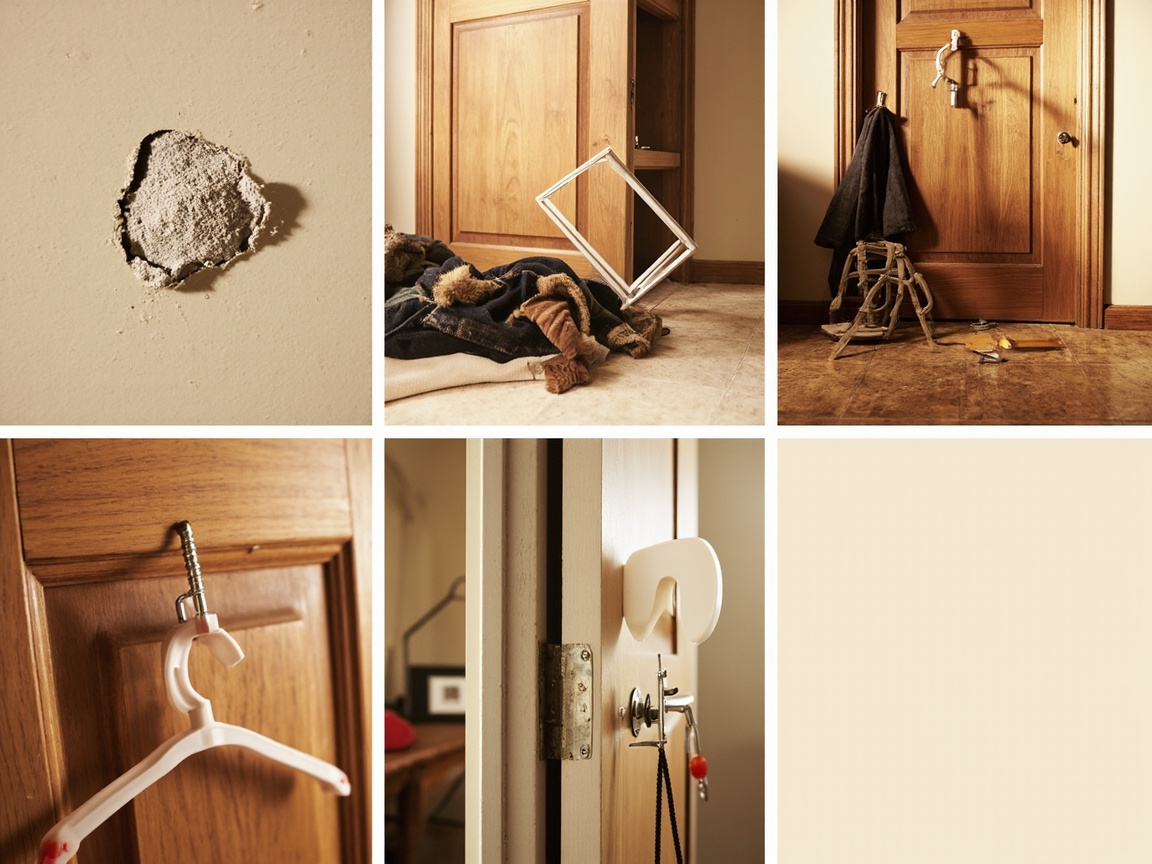
- Trusting plastic anchors with a winter coat. One-star reviews on almost every wall rail read the same way: the anchor pulled out the first cold week. Anything over 50 lb wants toggle bolts or a stud, not friction fit.
- Loading an over-door rack like it’s a wall. Fourteen hooks is not fourteen anchors. The hinge takes all of it, and the sag doesn’t reverse.
- Buying a tippy tree for a house with kids or dogs. A 4 lb hollow base goes over the first time someone runs past. Solid wood or an anti-tip strap, no exceptions.
- Mounting wall hooks on a hollow-core door. Closet doors are not walls. Use over-door hooks that clamp the door edge instead of anchors that grip nothing.
- Expecting plastic to behave like metal. Sub-$8 plastic hooks crack under a wet parka within one season. Metal hooks start around the same price, so there’s no reason to gamble.
Related guides
- Entryway organization hub for the four-zone framework these hooks plug into
- Entryway shoes and coats organization for pairing hooks with a shoe landing spot
- Entryway bench storage for the seat that sits under the hooks
- Entryway declutter method for clearing the wall before you drill
- Declutter fast guide for the coat purge that happens first
- How to choose storage bins for the gloves and hats the hooks can’t hold
Key takeaways
- Wall mounting wins on capacity, over-door wins on install speed, standing wins when the wall is off-limits.
- Set the main row at 60 to 66 inches and add a 48-inch row for kids.
- Match the anchor to the wall: threaded for drywall, toggle for plaster, sleeve for masonry.
- Cap an over-door rack near 20 to 25 lb on an interior door to protect the hinge.
- Standing racks need a solid base plus an anti-tip strap in any house with kids or pets.
- Measure the wall before ordering and subtract 6 to 12 inches for visual breathing room.