Most bedrooms don’t fail because there’s too much stuff. They fail because there’s no system. Clothes pile on the chair, the nightstand disappears under clutter, and the closet door barely closes. If your bedroom feels chaotic, the problem isn’t your stuff — it’s the lack of zones.
This guide breaks 21 bedroom organization ideas into a 4-zone system. Each zone handles a specific area, so you can fix one thing at a time instead of tearing apart the whole room on a Sunday afternoon. For the broader framework, see our bedroom organization hub.
Why Your Bedroom Feels Cluttered
Three patterns cause almost all bedroom mess:
- Scattered storage. Clothes live on the chair, shoes by the door, chargers on the nightstand — nothing has a designated home.
- Surface overload. Every flat surface becomes a dumping ground for stuff that belongs elsewhere.
- Closet bottleneck. The rod is packed, drawers won’t close, and you can’t find what you own because it’s stuffed behind three things you don’t wear.
The fix isn’t buying more bins. It’s assigning every category a zone — then using the ideas below to make each zone work.
The 4-Zone Bedroom Organization System
Here’s the framework. Every bedroom has four functional areas, and each handles specific items:
- Zone 1 — Under-Bed and Storage. Seasonal clothing, bulky bedding, items you access a few times a year.
- Zone 2 — Closet and Clothing. Everything on hangers, daily-wear rotation, accessories.
- Zone 3 — Nightstand and Surfaces. Bedside items, dresser top, visible flat areas.
- Zone 4 — Drawers, Jewelry, and Accessories. Small-item storage inside furniture.
Each zone has a job. When items cross zones (clothes on the nightstand, mail in the closet), clutter spreads. The 21 ideas below are organized by zone so you can work area by area.
The four zones at a glance
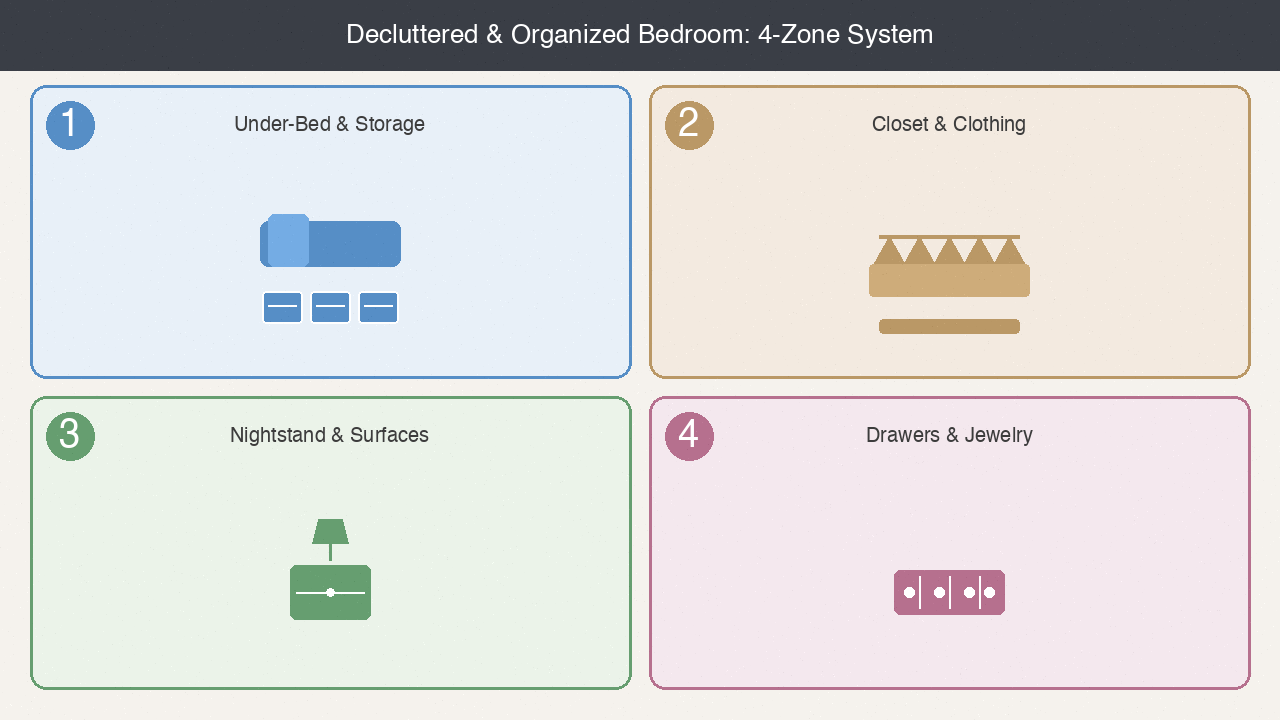
The four zones divide your bedroom by function — storage below, clothing in the closet, surfaces near the bed, and small items in drawers.
Zone 1: Under-Bed and Storage Ideas
Under-bed storage is the most underused space in most bedrooms. Before adding bins, measure your clearance — most beds sit 6 to 8 inches off the floor, which determines what fits underneath.
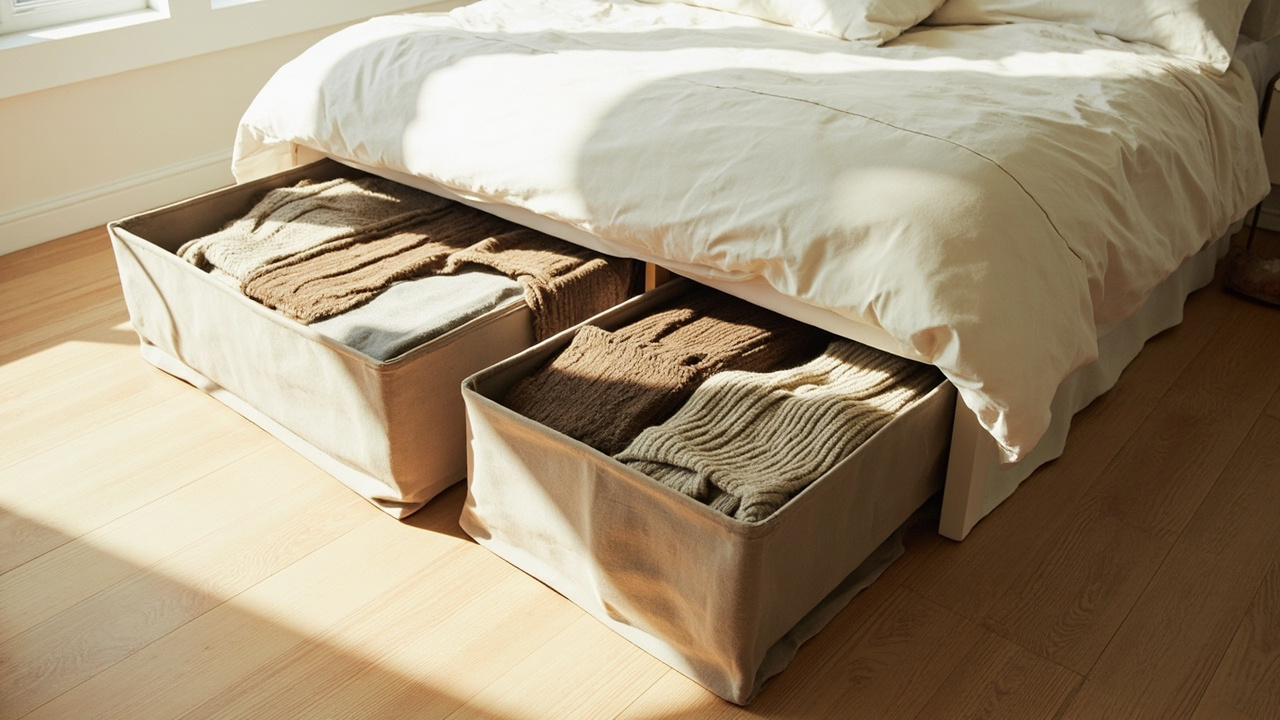
1. Use Under-Bed Storage Containers for Seasonal Items
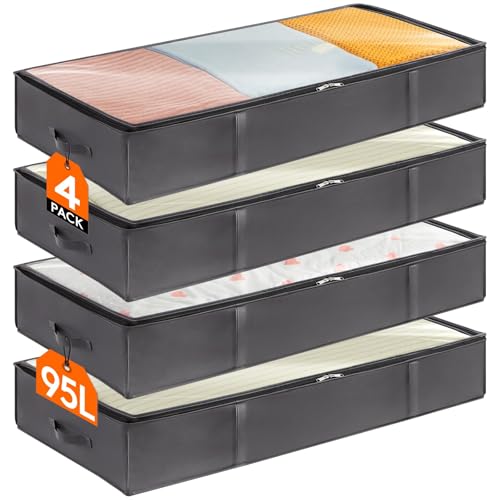
The fastest win in any bedroom: pull everything from under the bed, sort it, and put back only what belongs there in labeled containers. The Lifewit 95L Under Bed Storage Containers ($17.99 for a 4-pack) give you 95 liters per bag — enough for a queen-size comforter, two pillows, or a full season of sweaters. Choose fabric bins for breathability in humid rooms, or plastic totes for dust protection. For a deeper dive, see our under-bed storage ideas.
2. Vacuum-Seal Bulky Bedding
Comforters, duvets, and winter blankets take up massive space. A vacuum-seal bag compresses them to roughly a third of their original volume, freeing room on the closet shelf or under the bed. Look for bags in the $15 to $25 range with a hand-pump valve so you don’t need a vacuum cleaner to use them.
3. Label Everything Before It Goes Under
Once something disappears under the bed, you forget it exists. Label each bin by season (Spring/Summer, Fall/Winter) and category (bedding, outerwear, keepsakes). A label maker works, but masking tape and a Sharpie do the job too. For a full labeling method, see our guide on how to label anything.
4. Use the Space Behind the Headboard
Most bedrooms waste the 4 to 6 inches between the headboard and the wall. A slim rolling cart or narrow shelf unit fits back there for books, phone chargers, and a small plant. Measure the gap before buying — anything wider than the space will sit at an angle and collect dust.
5. Stack Clear Bins for Visible Storage
Clear bins let you see contents without opening them, which matters when you’re storing seasonal rotation items. Stack no more than 3 high for stability — taller stacks shift when you pull from the bottom. For help choosing between clear and opaque, see our guide on how to choose storage bins.
Zone 2: Closet and Clothing Ideas
The closet is your second-highest-impact zone. Maximize existing rod space before buying new furniture — a few smart hangers and hooks often solve the problem for under $30.
6. Declutter Before You Organize
Adding bins to a closet full of clothes you don’t wear just creates organized clutter. Do a purge first using the 6-month rule: if you haven’t worn it in 6 months, donate it. You’ll likely discover you need 30% fewer organizers than you thought. For a step-by-step process, see our bedroom declutter guide.
7. Use Cascading Space-Saving Hangers
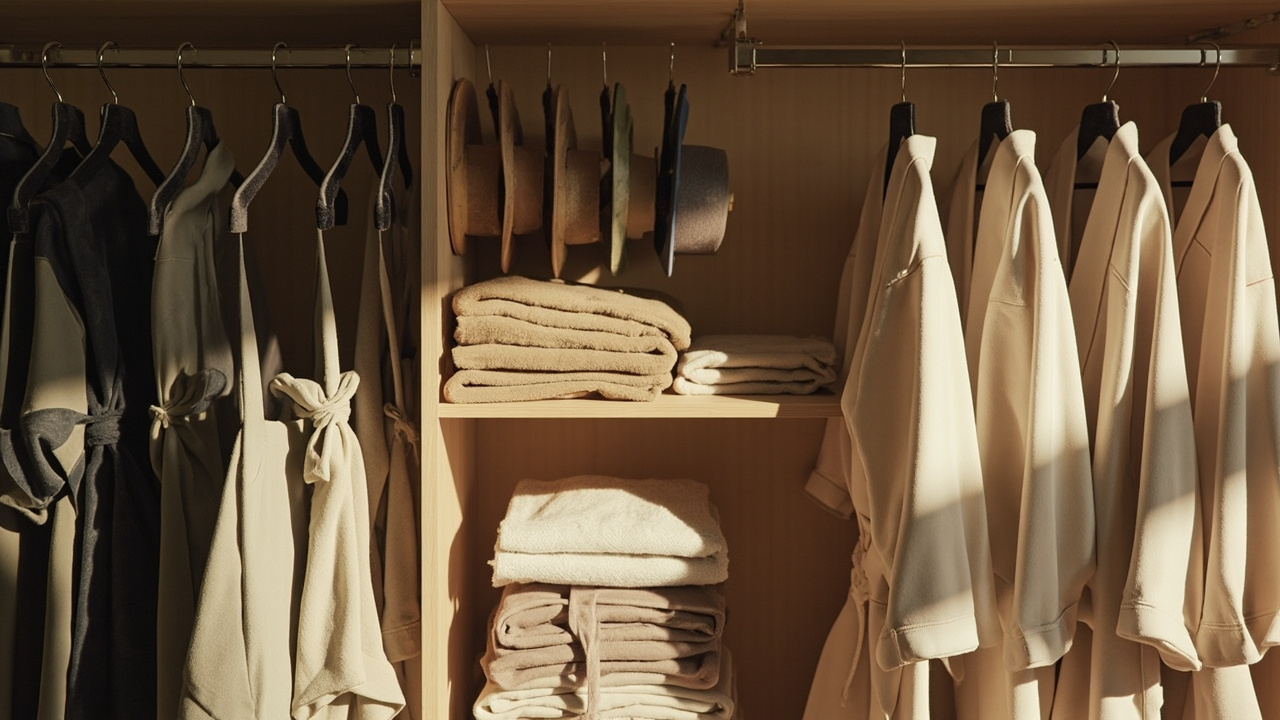
Each cascading hanger holds up to 5 pairs of pants vertically, reclaiming roughly 80% of rod space compared to traditional hangers. The JUUBAOOPN Space-Saving Pants Hangers ($12.74 for a 3-pack) come with non-slip velvet coating so pants don’t slide off. One pack handles 15 pairs of pants in the space of 3 regular hangers. For more hanger options, see our guide on how to choose hangers.
8. Mount a Hat Organizer on the Closet Wall
Caps, bags, and scarves take up shelf space if you let them. A wall-mounted hat organizer stores them vertically — each rack holds up to 15 items. The Durmmur Stainless Steel Hat Organizer ($7.99) installs three ways (screws, adhesive, or door hooks), so it works whether you own or rent. For more on the closet zone, see our bedroom closet organization guide.
9. Hang Over-Door Hooks for Instant Storage
No drilling required. Over-door hooks give you 5 instant hanging spots for robes, jackets, tomorrow’s outfit, or a bath towel. The Optish Over-Door Hooks ($9.99 for a 5-pack) fit standard interior doors and hold up to 25 pounds each. This is the single fastest closet upgrade you can make — it takes 30 seconds and zero tools.
10. Color-Code and Category-Sort Hanging Clothes
Group clothes by type first (shirts, pants, dresses), then sort by color within each group. This makes mornings faster — you can grab the blue shirt section without scanning the entire rod. It also reveals duplicates you don’t need (three nearly identical gray hoodies, for example).
Zone 3: Nightstand and Surface Ideas
Surfaces are where clutter is most visible. Keep them intentional — every item on a surface should earn its spot.
11. Edit Your Nightstand to Essentials Only
The rule: maximum 5 items on top of your nightstand. A lamp, a book, a water glass, a phone dock, and a small tray. Everything else goes in the drawer or leaves the bedroom. A cluttered nightstand is the first thing you see before sleep and the first thing you see when you wake up. For a full checklist, see our nightstand essentials guide.
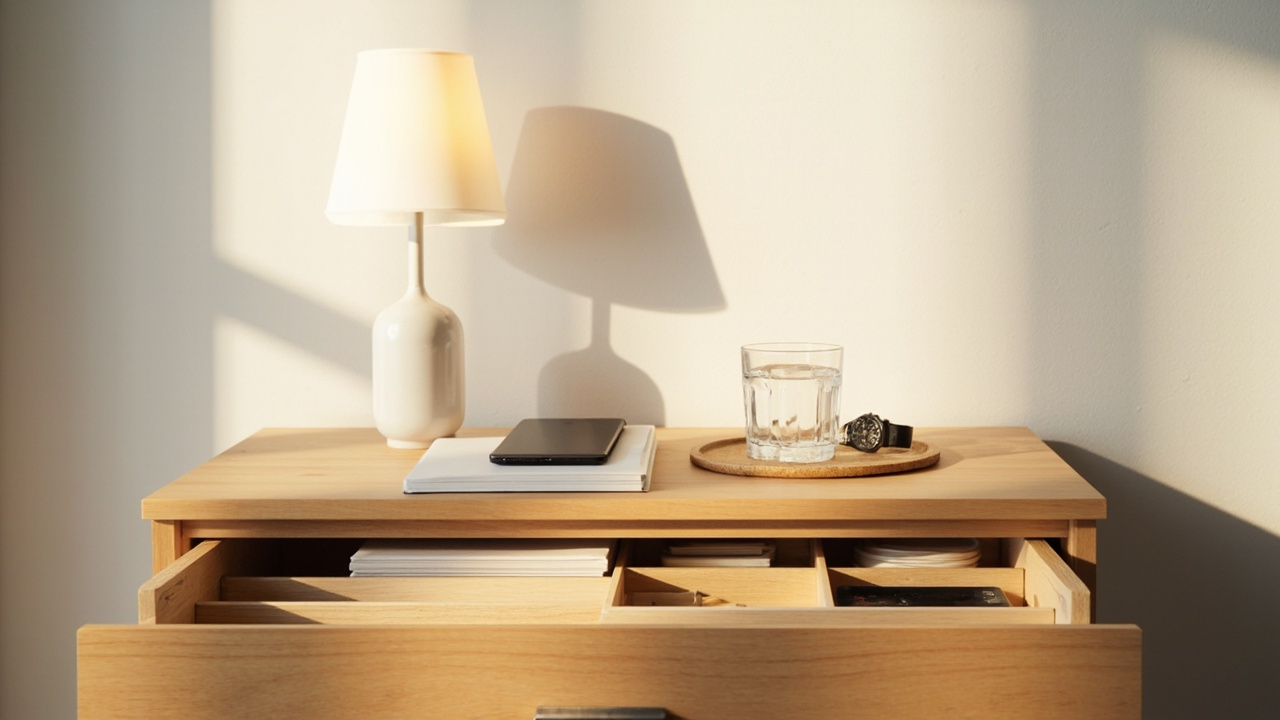
12. Add a Multi-Compartment Drawer Organizer
Turn a junk-drawer nightstand into a structured system. The SMARTAKE 13-Piece Drawer Organizer Set ($18.99) includes 5 different compartment sizes that snap together in any configuration. Use large bins for chargers and earbuds, small bins for hair ties and lip balm. The clear design means you can see contents at a glance.
13. Conceal Cables and Chargers
Charging cables sprawled across the nightstand are a common eyesore. Use adhesive cable clips along the table edge to route the cable neatly, or drop the excess cord into a small basket behind the nightstand. A 10-pack of magnetic cable clips costs about $8 and solves the problem permanently.
14. Reserve the Dresser Top for Daily-Use Items Only
A perfume tray, a jewelry box, and a lamp — that’s it. Everything else goes in drawers. The dresser top is prime real estate, and when it’s clear, the whole bedroom looks tidier. For more on this zone, see our dresser organization guide.
15. Use a Catch-All Tray for Keys and Wallet
A small leather or acrylic tray (4 by 6 inches) on the dresser catches pocket-dump items: keys, wallet, loose change, earbuds. Without a tray, these items scatter across the surface. With one, they stay contained in a defined border. A simple acrylic tray runs $8 to $12.
Zone 4: Drawers, Jewelry, and Accessory Ideas
Small items cause the most frustration because they tangle, disappear, and multiply. This zone is about giving every small thing a compartment.
16. Install Adjustable Bamboo Drawer Dividers
Custom compartments adapt to whatever you’re storing — socks in one section, underwear in another, belts in a third. The SpaceAid Bamboo Drawer Dividers ($23.98) expand from 17 to 22 inches and install in seconds with a spring-loaded mechanism. Bamboo looks better than plastic and won’t scratch drawer finishes.
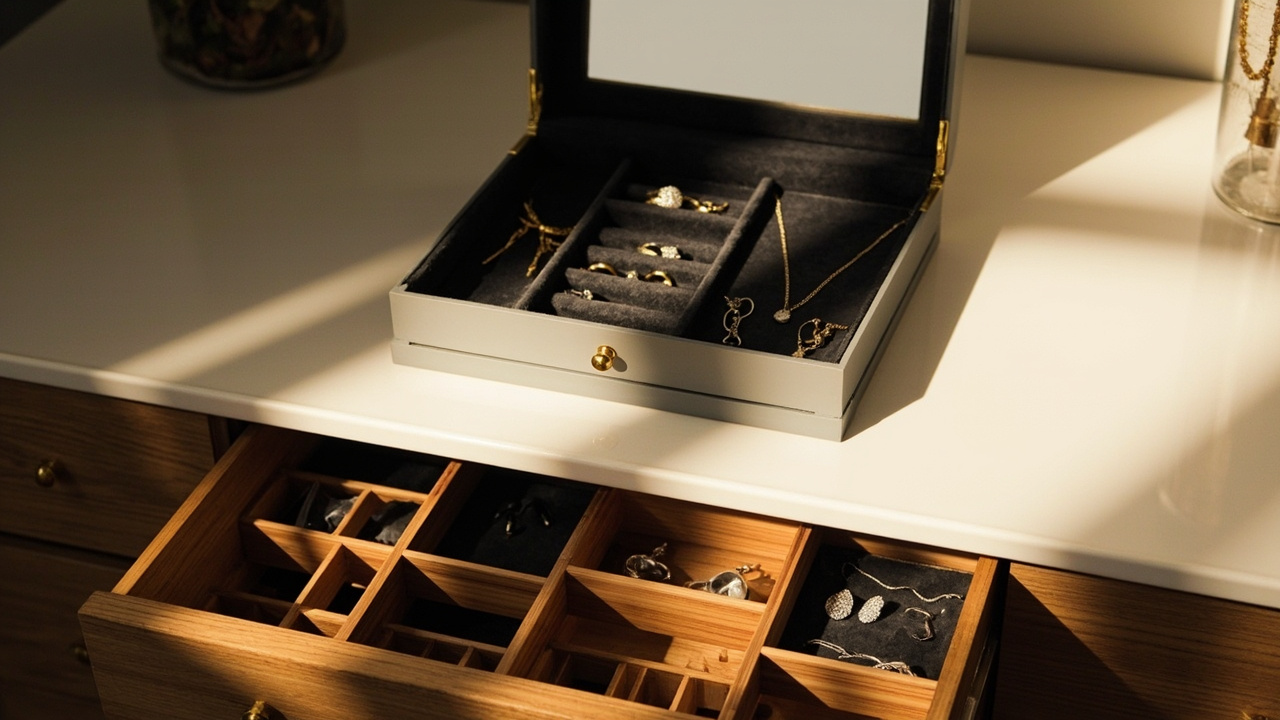
17. Upgrade to a Tiered Jewelry Box
Tangled necklaces and missing earrings happen when jewelry lives in a pile. A tiered jewelry box separates rings, necklaces, and earrings by layer. The SONGMICS 3-Layer Jewelry Box ($29.99) has two pull-out drawers plus a top compartment with ring rolls and earring slots. It fits on a dresser top and closes to keep dust out. For more ideas, see our jewelry and accessory storage guide.
18. Store Belts and Scarves on Dedicated Hangers
A multi-hook hanger or a set of S-rings keeps belts and scarves visible and tangle-free in the closet. One hanger holds 8 to 12 accessories in the space of a single shirt. This beats rolling them in a drawer where they unfold within a week.
19. Repurpose Divided Trays for Cosmetics
Acrylic divider trays from the kitchen aisle work perfectly for makeup drawers. Lipsticks stand upright in tall compartments, palettes lay flat in wide ones. You don’t need to buy cosmetic-specific organizers — a $10 divided tray does the same job.
20. Use Drawer Liners for Grip and Protection
Non-slip drawer liner keeps dividers from sliding when you open and close the drawer. It also protects drawer bottoms from scratches and spills. A roll of grip liner costs about $7 and lines 3 to 4 average drawers.
21. Rotate Seasonal Accessories Quarterly
Swap summer scarves and lightweight belts with winter gloves and hats every 3 months. Store off-season accessories in a labeled under-bed bin (Zone 1) so drawers don’t overflow. This keeps your daily-use drawers lean and relevant year-round.
Bedroom Ideas by Situation
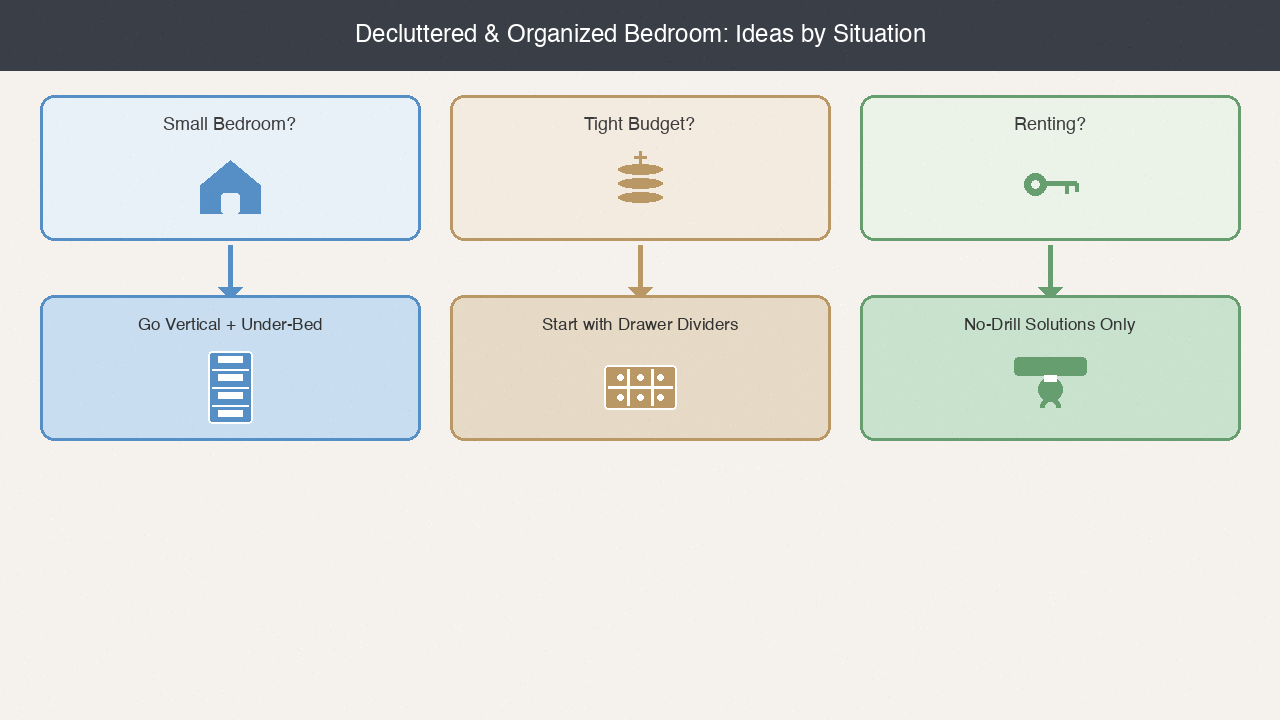
Not every idea applies to every bedroom. Here’s how to prioritize based on your situation.
If you have a small bedroom
Small bedrooms have no floor space for bulky furniture. Focus on under-bed storage containers, over-door hooks, and wall-mounted hat organizers. Keep surfaces completely clear — clutter makes small rooms feel smaller. Avoid large closet systems that eat walking space. For layouts by bed size, see our small bedroom organization guide.
If you’re on a tight budget
The highest-impact items cost under $15 each: cascading pants hangers ($12.74), a hat organizer ($7.99), and over-door hooks ($9.99). That’s under $31 for three closet upgrades. Skip expensive closet systems — decluttering is free and often solves half the problem. For more strategies, see our bedroom declutter checklist.
If you’re renting
Choose no-drill solutions only. Over-door hooks, adhesive hat organizers, and freestanding under-bed containers work without putting holes in walls. Command strips handle lightweight items like cable clips and small frames. Avoid wall-mounted shelves that require anchors — your landlord won’t appreciate the patching.
If you have ADHD
Reduce the number of steps between using something and putting it away. Use clear bins (see contents without opening), open hooks (items visible, not hidden in drawers), and avoid complex folding systems. Keep the nightstand to 5 items max. For a maintenance method that works with ADHD brains, see our small space decluttering method.
If you share the bedroom
Assign each person their own nightstand, drawer section, and closet rod. Label bins by owner. Use separate under-bed containers per person to avoid the “whose stuff is this?” conflict. A simple label on each side of the closet rod prevents most shared-space arguments.
Common Mistakes
1. Buying Organizers Before Decluttering
The leading mistake. Adding bins and dividers to a closet full of clothes you don’t wear just creates organized clutter. Always declutter first — you’ll likely discover you need 30% fewer organizers. Pull everything out, sort into keep/donate/trash piles, then buy only what your reduced inventory actually requires.
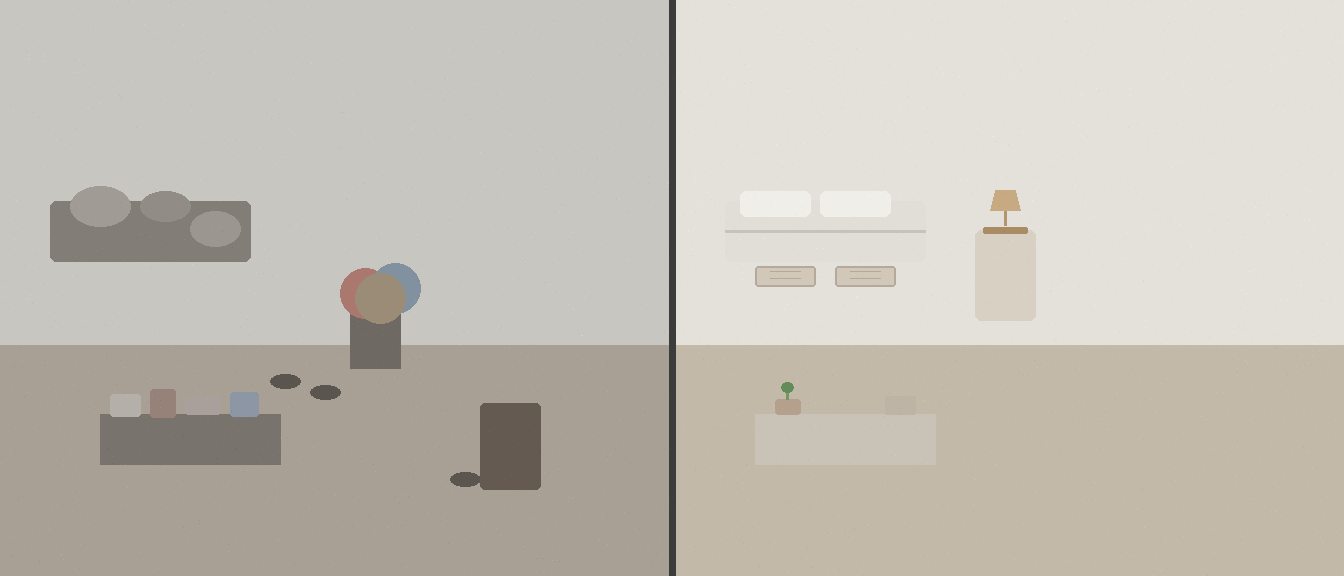
2. Choosing Organizers by Aesthetic Instead of Size
That velvet jewelry box looks beautiful online, but it won’t fit your chunky necklaces. Measure your drawer dimensions and your item sizes before buying. The SMARTAKE 13-piece set works because it offers 5 compartment sizes — you configure it to fit what you actually own, not what looks good in a product photo.
3. Skipping the Maintenance Step
Organization lasts about 2 weeks without a daily reset. Build a 5-minute nightly routine: clothes to hamper, surfaces cleared, drawer closed. Without maintenance, every system reverts to chaos — it’s not a flaw in the system, it’s human nature. The key is making the reset so short you don’t skip it.
4. Overstuffing Under-Bed Storage
Under-bed containers have weight and height limits. Overstuffing makes them impossible to slide, damages the fabric, and creates a dust trap. Fill to 80% capacity max — the extra 20% lets the bin slide without catching on the bed frame.
Shop the Ideas
| # | Product | Best For | Price |
|---|---|---|---|
| 1 | Lifewit 95L Under Bed Storage | Seasonal bedding, bulky sweaters | $17.99 |
| 2 | JUUBAOOPN Pants Hangers | Closet rod space, cascading pants | $12.74 |
| 3 | SMARTAKE Drawer Organizer | Nightstand and dresser drawers | $18.99 |
| 4 | SONGMICS Jewelry Box | Rings, necklaces, earrings | $29.99 |
| 5 | SpaceAid Bamboo Dividers | Custom drawer compartments | $23.98 |
| 6 | Optish Over-Door Hooks | No-drill hanging storage | $9.99 |
| 7 | Durmmur Hat Organizer | Caps, bags, vertical wall storage | $7.99 |
Start with one zone — we recommend Zone 1 because under-bed storage delivers the most noticeable improvement fast. Work through each zone over a weekend, and you’ll have a bedroom where everything has a home. For the full declutter-first process that should come before any organizing, grab our bedroom declutter checklist.